
East CNC Kazakhstan Blog
Articles about CNC machines, metalworking, and production modernization.
OPC UA Client/Server or PubSubOPC UA for MESOPC UA PubSub
OPC UA Client/Server or PubSub for MES8 min
A comparison of OPC UA Client/Server or PubSub for MES covering latency, scale, traffic, security, certificates, and actual support.
Latest Articles
8 min
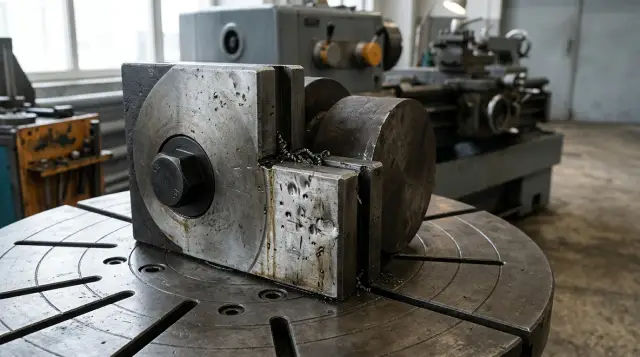
A vertical turning center punishes short workpieces
See how a vertical turning center handles a short large-diameter part: chips, deep boring, projecting jaws, and heavy-part clamping.
vertical turning centermachining short workpieceslarge diameter turning
8 min
How to run an OPC UA pilot on three machines
A practical OPC UA pilot on three machines: verify namespaces, time, quality, certificates, access rights, and connection recovery.
OPC UA pilotconnecting machines with OPC UACNC data validation
8 min
Declaration for a metalworking machine in the EAEU
Learn when a metalworking machine needs a declaration, when certification can replace it, and how to check the form under TR CU 010/2011.
metalworking machine declarationmachine conformity certificateTR CU 010/2011
8 min
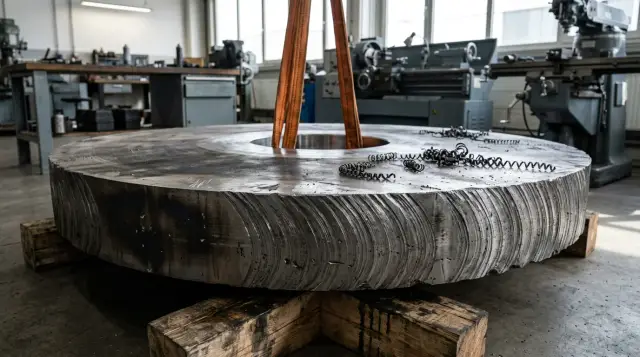
A vertical turning center is better for a 1.2-meter disc
A vertical turning center usually holds a 1.2 m disc better, but weight, loading, chips, floor space, and the foundation decide.
vertical turning centerlathe for 1.2 m dischorizontal turning center

8 min
One Robot for Two Machines vs. Separate Loading
A financial model shows when one robot serving two machines pays back faster than separate loading, accounting for cycles, downtime, grippers, and guarding.
two-machine robotCNC loading automationrobot payback
8 min
OPC UA for MES Is Not Enough Without a Job Model
When OPC UA is sufficient for MES and when ISA-95 Job Control is needed: boundaries of telemetry, jobs, states, resources and results.
OPC UA for MESISA-95 Job Controlmachine-to-MES integration
8 min
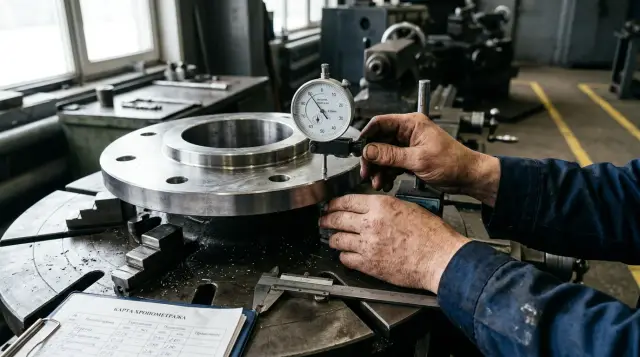
Is a vertical turning center justified for flanges?
Learn when a vertical turning center pays for one family of large flanges by calculating workload, setups, tooling, and backup orders.
vertical turning centerlarge flange machiningmachine workload calculation

8 min
What documents are needed to import a machine into the EAEU?
Learn which documents to prepare before importing a machine: contract, HS code, technical description, manual, test reports, and applicant details.
documents for importing a machineimporting a machine into the EAEUmachine declaration
8 min
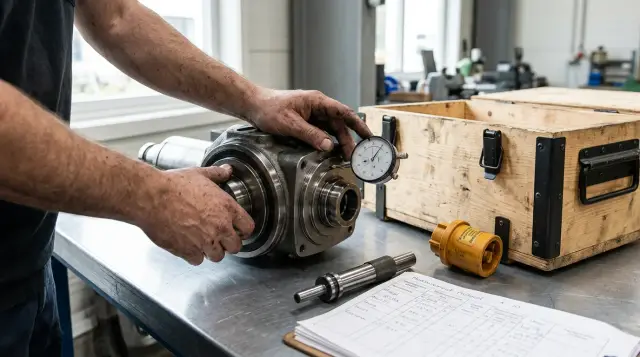
What spindle assembly delivery time is acceptable?
A method for determining the allowable delivery time for a spindle assembly using downtime cost, failure risk, repair time, and exchange-unit cost.
spindle assembly delivery timemachine downtime costexchange spindle
8 min
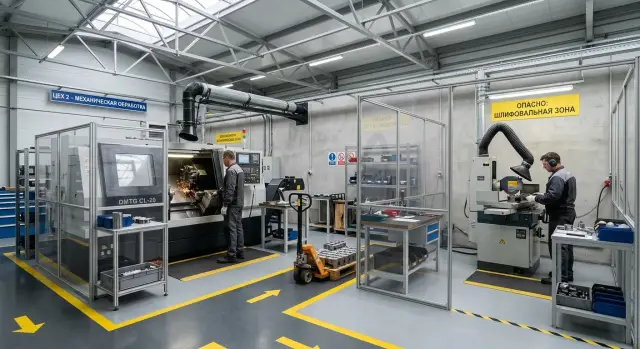
Grinding Dust Near CNC Machines: How to Separate the Zones
Grinding dust near CNC machines can be contained without rebuilding the shop floor: we break down screens, exhaust, walkways, bins, and daily checks.
grinding dust near CNC machinesshop floor zoningscreens and exhaust ventilation
7 min
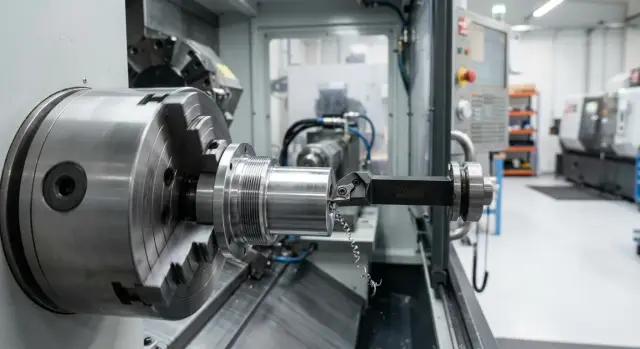
Automatic Deburring in the Cycle Without Manual Finishing
Automatic deburring removes the need for a manual operation after turning and drilling. We'll cover suitable edges, passes, common mistakes and how to verify results.
automatic deburringin-cycle deburringremove manual operation
7 min
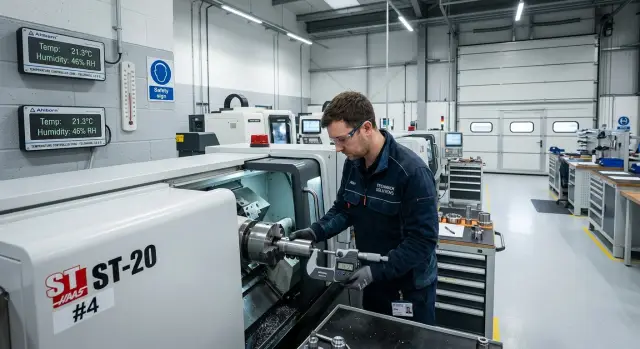
Stabilized shop climate: when heating isn’t enough
A stabilized shop climate is needed where tight tolerances, long cycles and sensitive materials quickly change dimensions and repeatability.
stabilized shop climatethermal expansion of metalmachining repeatability
8 min
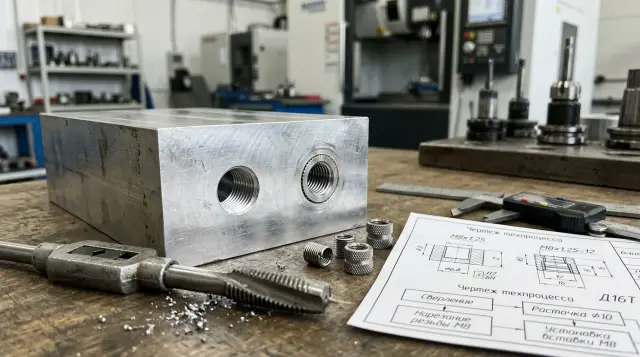
Threaded Insert or Thread in the Part: Which Is More Profitable?
Compare a threaded insert versus a thread cut directly into the part: strength, repairability, machining time, and cost for housings that are opened often in service.
threaded insert or thread in the partthreaded joint strengthhousing repairability
8 min
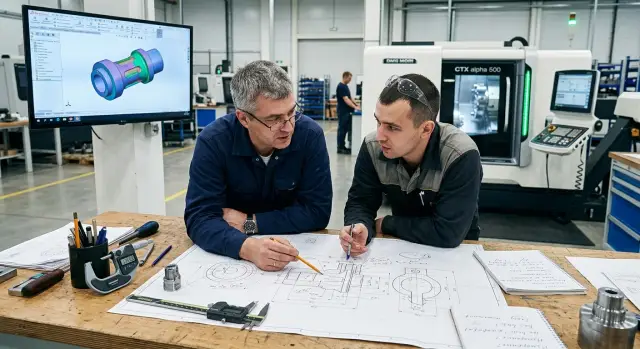
A Drawing Without Measurement Datums: What to Ask Before Quoting
A drawing without measurement datums often leads to a dispute after the first batch. Let’s look at what to clarify with the customer before quoting price and lead time.
drawing without measurement datumsquestions for the customer about a drawingpart measurement datums
8 min
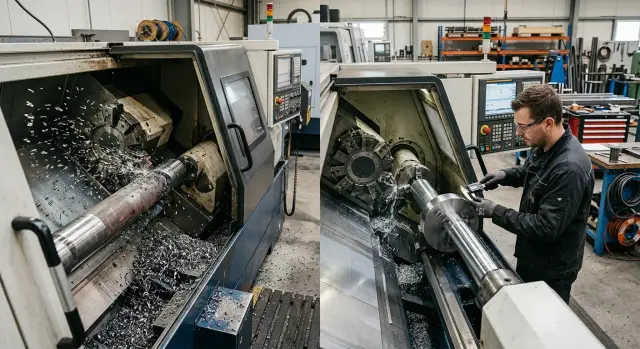
Rough and Finish Machining on Separate Machines: When It Pays Off
Separating roughing and finishing across machines helps reduce spindle overload, slow guide wear and make shift output estimates more accurate.
rough and finish machining on separate machinesseparating operations on CNCspindle load
8 min
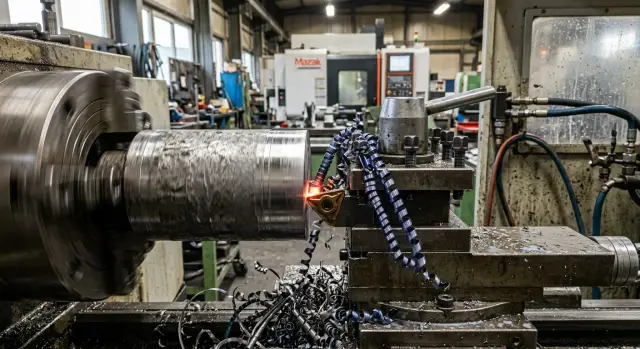
Insert Geometry for Rough Turning Without Cycle Losses
Insert geometry for rough turning affects chip formation, feed and cycle time. We cover how to choose by material, depth of cut and initial trials.
insert geometry for rough turningchoosing a turning insertchips in turning

8 min
Changing Carbide Grade: How to Check Cutting Parameters
Changing carbide grade requires a quick check: three tests on a new insert show whether the old cutting parameters can be kept without risking scrap.
carbide grade changecutting parameter checknew insert test
8 min
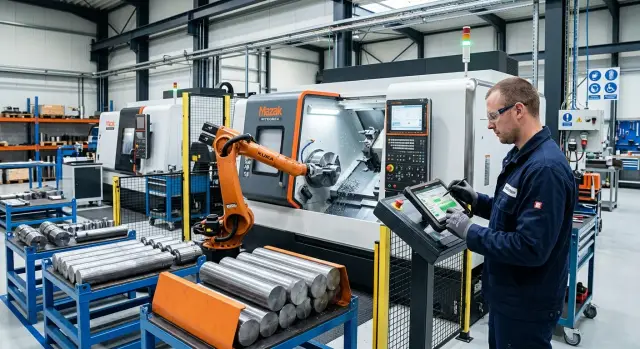
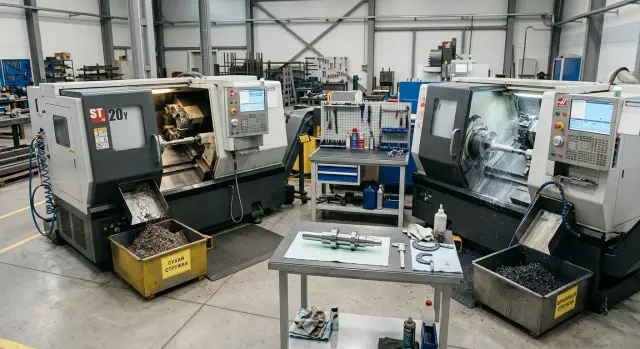
First Production Cell Automation: Which Operation to Start With
The first automation of a production cell starts with choosing a stable operation. Let’s look at the signs of a process that can handle a robot, automatic feeding, or pallets.
first production cell automationwhich operation to automate firstsigns of a stable process
8 min
Dry Machining or Cutting Fluid: Which Is More Cost-Effective on the Shop Floor
Dry machining or cutting fluid: we analyse where each option wins on tool life, cleaning, part cleanliness and machine maintenance costs.
dry machining vs coolanttool lifepart cleanliness
8 min
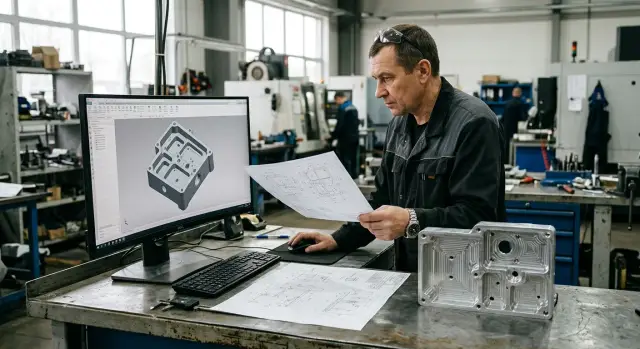
When to Ask the Client for a 3D Model and Not Waste Time
When to ask a client for a 3D model and when a drawing is enough: where the shop loses hours, when the risk of scrap grows, and what to check before launch.
when to request a 3D model from the clientdrawing or 3D modelerrors in machining housing parts
8 min
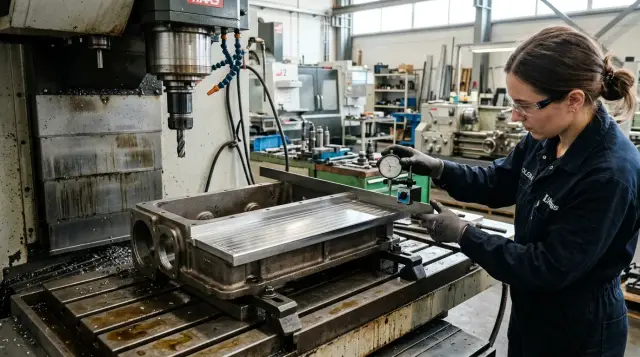
Wedge after milling long seating surfaces
A wedge after milling long seating surfaces usually stems from fixturing, part heating and the milling pass strategy.
wedge after millinglong seating surfacesfixturing housing parts
8 min
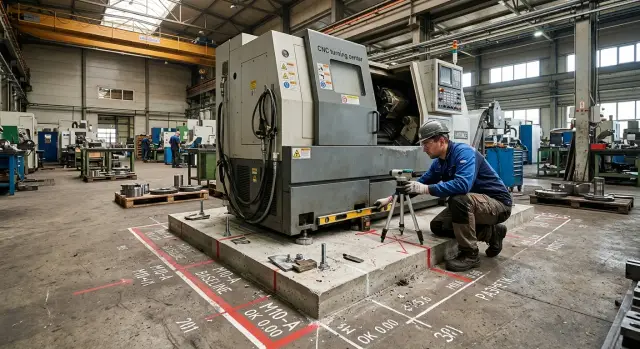
Foundation for a Heavy Machine: When You Need One and When You Don't
A separate foundation for a heavy machine is not always necessary. We explain when a slab and anchors are enough and when the floor needs reinforcement, leveling and control.
foundation for heavy machinerymachine anchoringfloor preparation for machines
8 min
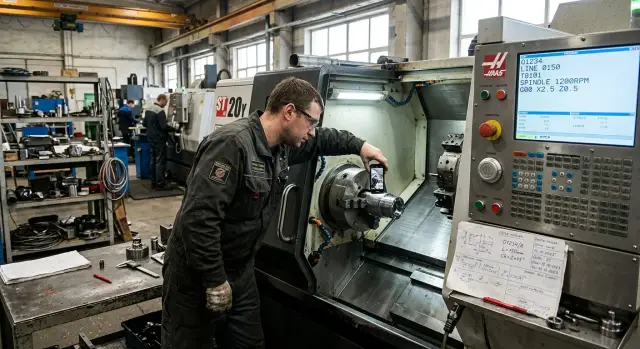
Setup photos and videos: what to shoot and what to write in the card
Setup photos and videos help shifts only where a frame captures disputed moments. Let’s look at what is better to shoot and what should be written in the card right away.
setup photos and videosmachine setup cardCNC shift handover
8 min
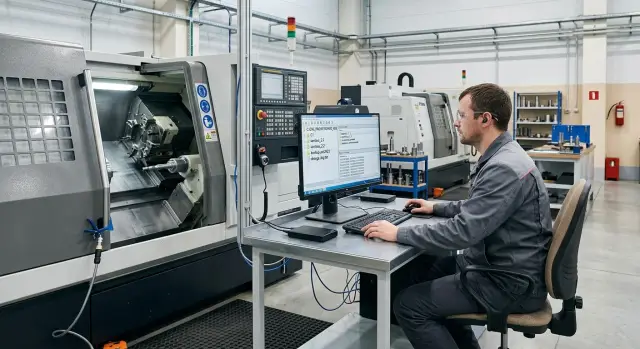
Transferring programs to machines over the network without unnecessary risks
Transferring programs to machines over the network needs simple rules: who gets access, where backups are stored, and how edits are recorded without confusion.
network transfer of programs to machinesaccess to CNC machinesCNC program backups
8 min
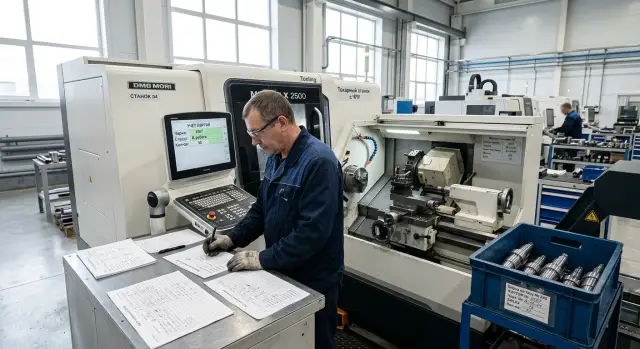
Batch traceability in machining without an expensive MES
You can set up batch traceability in machining without an expensive MES: assign a batch code and link blanks, NC program, tooling and inspection in a simple scheme.
batch traceability in machiningtracking NC programs and toolinginspection at the shop floor
8 min
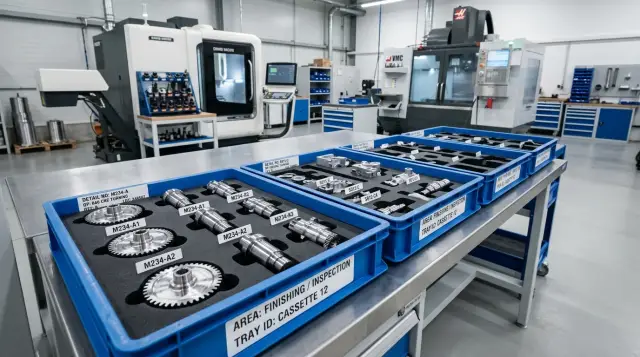
Inter-process Packaging for Precision Parts Without Losing Size
Inter-process packaging for precision parts reduces the risk of dents, shifts, and mix-ups along the route. We break down trays, inserts, and labeling.
inter-process packaging for precision partspart traysmetalworking inserts
8 min
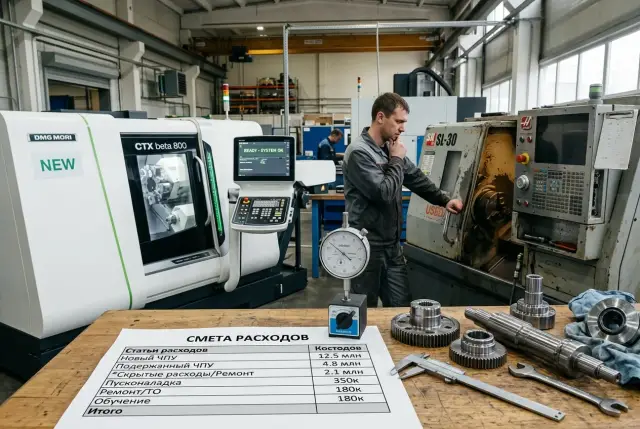
New or used machine: where the savings end
New or used machine: compare repair, geometry, electronics and downtime after startup to calculate the real price.
new or used machinehidden machine costsmachine inspection before purchase
8 min
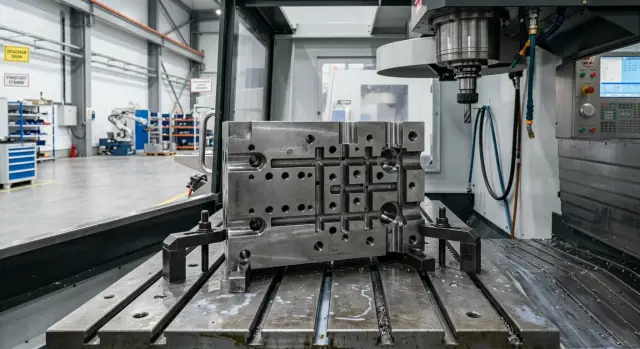
Hydraulic valve body: how to group operations into a single setup
Choosing the right datum and grouping the right operations in one setup keeps channels, holes and sealing planes aligned on a hydraulic valve body. Guide on selecting bases, grouping operations, inspection and practical routing.
hydraulic valve bodyhydroblock routingsingle-setup operations
8 min
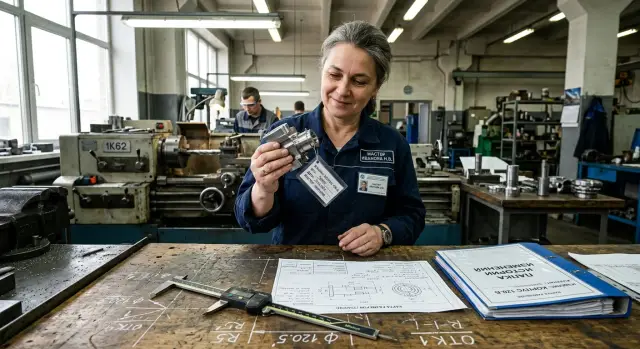
Master Sample for Repeat Parts: When It Saves Time
A master sample for repeat parts helps you launch a batch faster if you record dimensions, tolerances, photos, and a simple change history in advance.
master sample for repeat partsrepeat batch productionpart change history
8 min
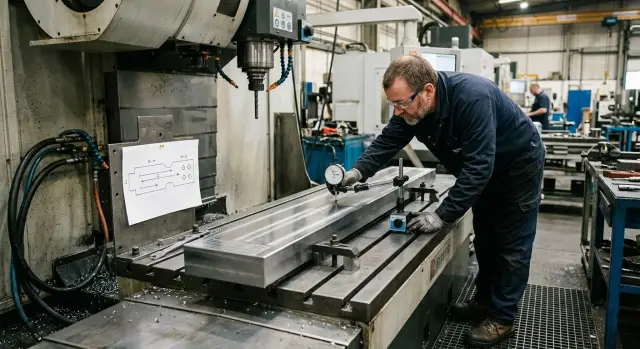
Two-Route Machining for a Long Base Surface
When a long base surface starts pulling a part out of flatness, two-route machining often reduces scrap risk and wasted time.
two-route machininglong base surfacepart flatness
8 min
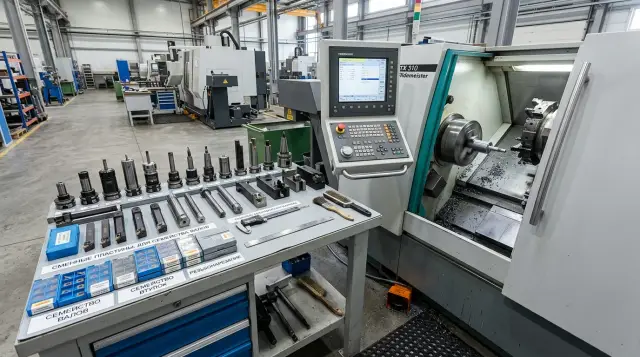
Tool Cassette for a Family of Parts Without Extra Positions
A tool cassette for a family of parts helps reduce inventory, eliminate duplicates, and prepare repeat orders faster without rushing or spending extra.
tool cassette for a family of partstooling for repeat orderstool holders and boring bars
8 min
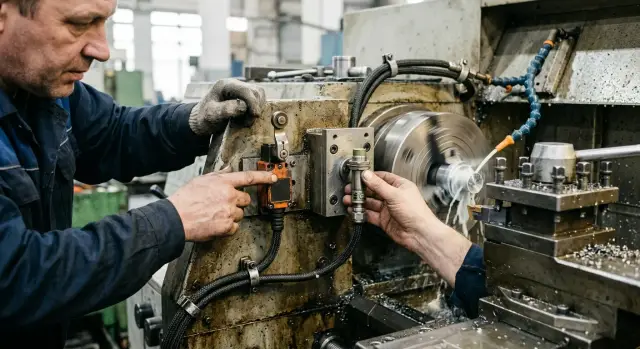
Limit Switch and Sensor Faults: Warning Signs Before Downtime
Limit switch and sensor faults rarely begin with a complete stop. Learn the early symptoms, simple checks, and common shift mistakes.
limit switch and sensor malfunctionsigns of CNC machine downtimechecking sensors on a machine tool
8 min
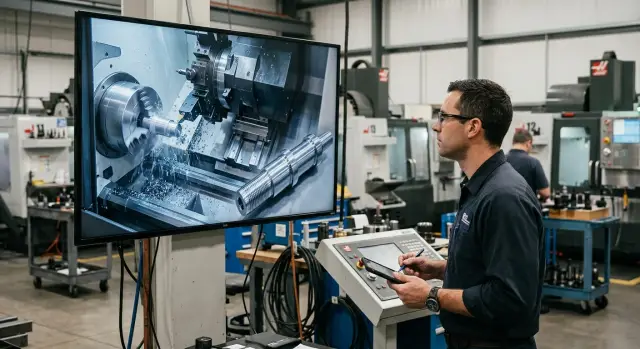
Machine Test Video from the Supplier: What to Watch Besides the Chips
A supplier’s machine test video should be judged not by the chips, but by geometry, tool changes, access to key components, and surface finish.
supplier machine test videomachine geometrytool change time
8 min
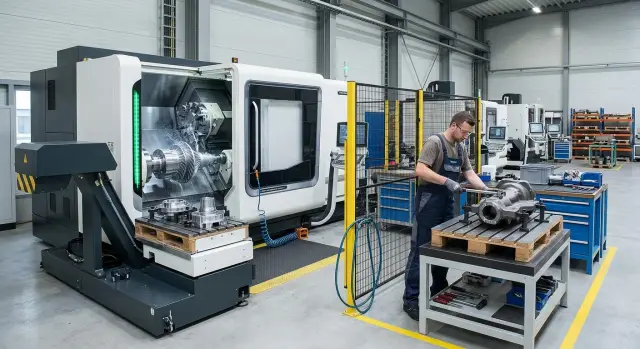
Scheduled Lathe Maintenance: A No-Nonsense Regimen
Scheduled lathe maintenance is easiest when organized into per-shift, weekly and monthly checks. We cover tasks, common mistakes and the inspections you need.
scheduled lathe maintenancemachine maintenance regimenCNC machine maintenance
8 min
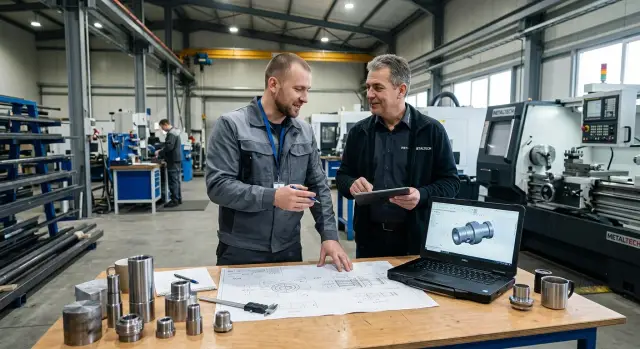
Pallet changer: when it actually makes a difference
A pallet changer helps where the machine often waits for loading. We look at which batches and operations reduce spindle downtime and where the option doesn’t pay off.
pallet changerpallet changer for CNCreducing spindle downtime
8 min
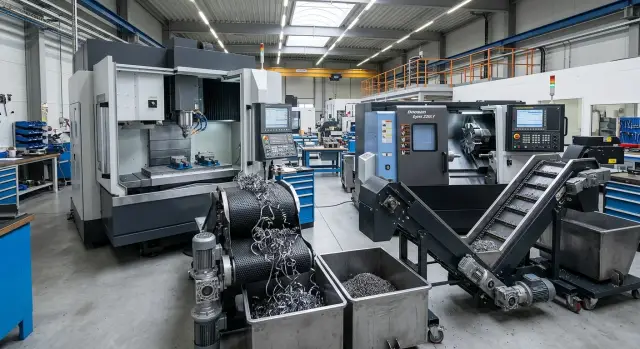
Accurate machine selection: what data to provide to the supplier
Accurate machine selection starts with precise input data. We explain which drawings, material information, production volumes and tolerances to collect before contacting a supplier.
accurate machine selectiondata for machine selectionCNC drawing requirements
8 min
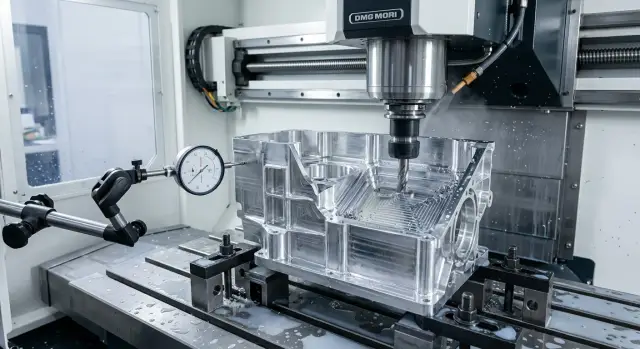
Belt or Scraper Chip Conveyor: Which to Choose
Belt or scraper chip conveyor: compare chip type, cleaning interval, maintenance, and selection for turning and milling operations.
belt or scraper chip conveyorchip conveyor for machine toolchip type in turning
8 min
Thin-Walled Housing Parts: Material Removal Without Warping
Thin-walled housing parts need a precise machining plan: pass order, size check points, allowance, and practical checks without unnecessary theory.
thin-walled housing partsmetal removal without warpingmachining pass order
8 min
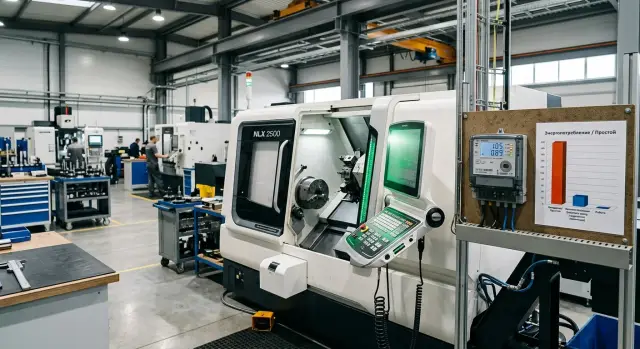
Machine power consumption: where the shop loses money outside of cutting
Machine power consumption often rises not during cutting, but during idle time, waiting, and pump operation. We look at measurements, loss calculations, and quick fixes.
machine power consumptionidle consumptionauxiliary systems
8 min
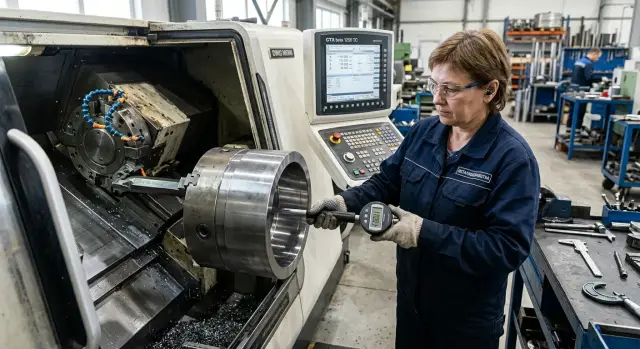
Ovality After Fine Boring: What to Check First
Ovality after fine boring often points to more than one cause. Here’s what to check first: the tool, locating, clamping, and cutting conditions.
ovality after fine boringlocating error in boringclamping fluctuations
8 min
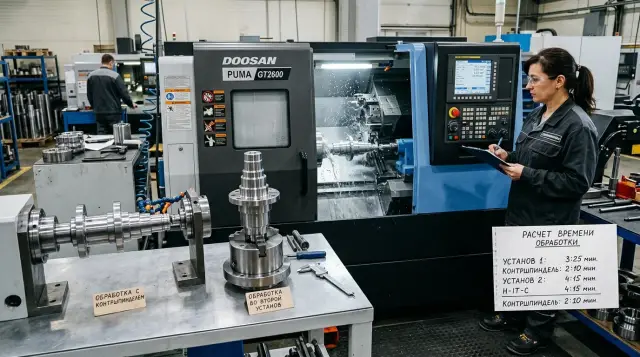
Counter Spindle or Second Setup: How to Know Which Is Faster
Counter spindle or second setup: a simple way to compare cycle time, setup, scrap risk and understand when one cycle actually delivers a real gain.
counter spindle or second setupone-cycle machiningreducing cycle time
8 min
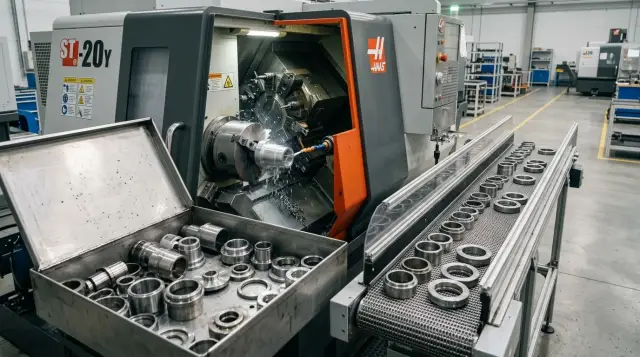
Tray or Conveyor for Bushings and Rings: Which Is Gentler on the Surface
Tray or conveyor for bushings and rings: let’s break down how the removal method affects impacts, end-face marks, out-of-roundness, and stability after cutoff.
tray or conveyor for bushings and ringspart removal after cutoffsurface damage to bushings
8 min
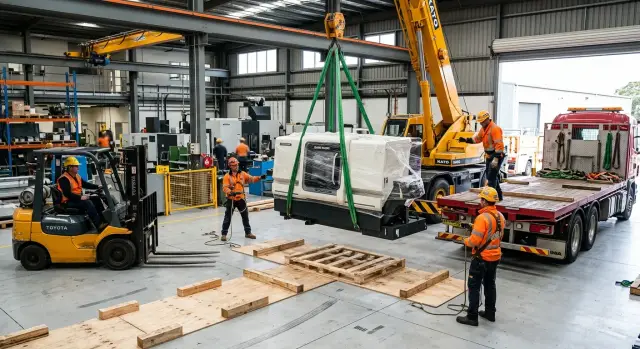
Machine Unloading: Forklift, Crane, and Pre-Start Mistakes
Unloading a machine requires a precise sequence: assess the site, choose between crane or forklift, check rigging and avoid load tilt.
machine unloadingmachine riggingforklift or crane for a machine
8 min
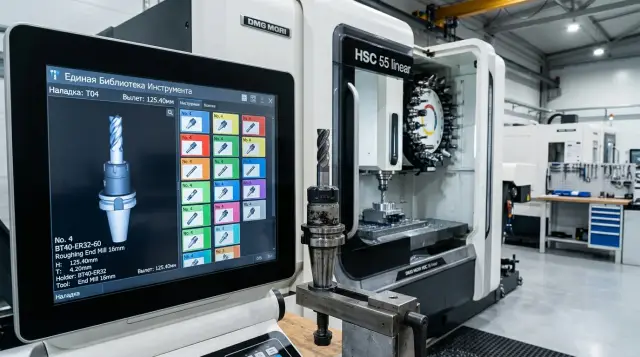
Unified Tool Library to Keep CAM and the Shop Floor in Sync
A unified tool library helps keep tool lengths, holders and offsets consistent between CAM and the shop floor so the program matches the machine.
unified tool libraryCAM and shop flooractual tool overhangs
8 min
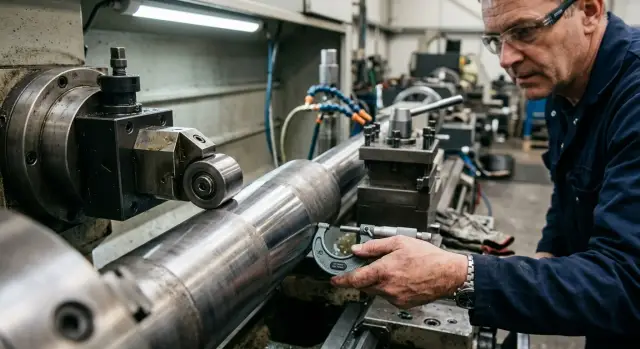
Roller burnishing instead of grinding: where it works
When does roller burnishing instead of grinding give the right size and surface roughness, and when does it only complicate the route and add an unnecessary step?
roller burnishing instead of grindingfinish passsurface roughness
8 min
Urgent Order in Manufacturing: How to Rebuild Loading
An urgent order in manufacturing should not break the whole schedule. Let’s break down the steps: margin, takt, fixture readiness, and quick checks.
urgent order in manufacturingreorganize shop floor loadingorder prioritization by margin
8 min
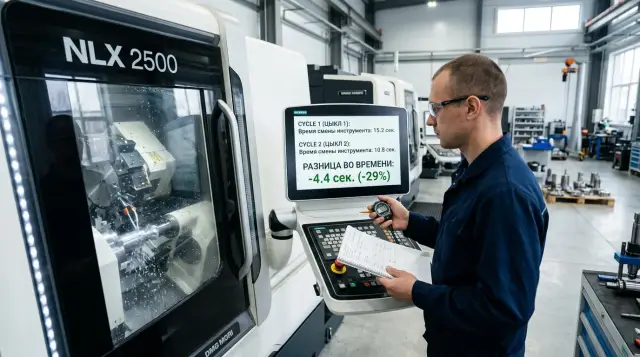
Tool Change Speed: When the Extra Cost Doesn’t Pay Off
Tool change speed does not always affect output. We will look at which cycles benefit and where setup and inspection eat up the gain.
tool change speedCNC cycle timeCNC machine payback
8 min
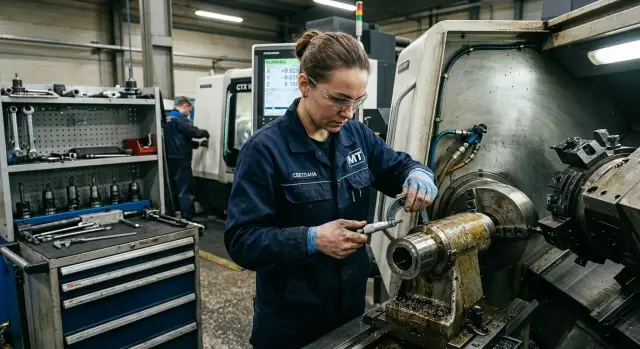
Why the Micrometer Lies: Temperature, Dirt, and Storage
We explain why a micrometer seems to lie at the machine: how hand heat, oil, chips and poor storage add extra microns and skew measurements.
why a micrometer liesmicrometer measurement errorstemperature effects on measurement
8 min
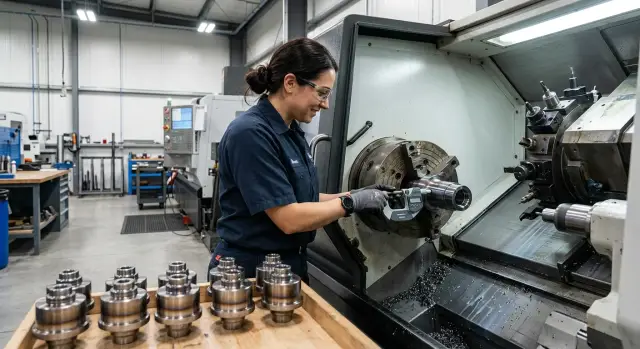
Bearing Seats in Production Runs: What Causes Size Drift
Bearing seats in production runs do not drift only because of insert wear. We’ll look at how clamping, part heating, and the order of turning passes change the size.
bearing seats in production runsworkpiece clamping on a lathepart temperature and size
7 min
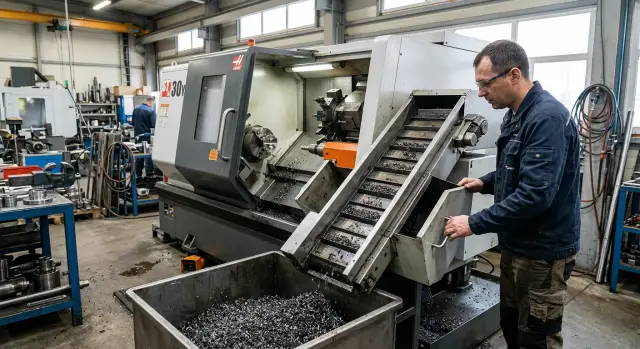
Chip removal system: what to check before signing a contract
The chip removal system affects cleanliness, downtime and ease of maintenance. We explain what to check in the conveyor, collection box and cleaning access.
chip removal systemchip conveyorlong chips
8 min
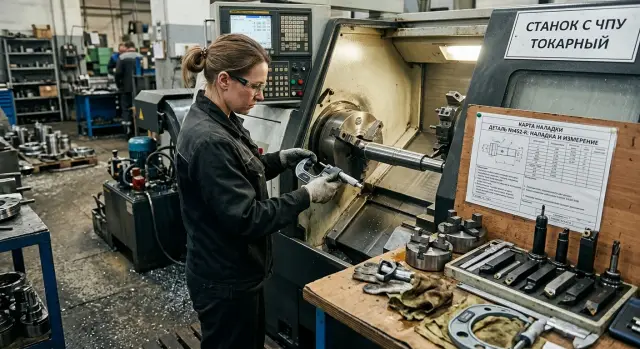
What Determines Tolerance on a CNC Lathe Besides the Machine
We look at what affects tolerance on a CNC lathe: tooling, measurement, cutting parameters and setup procedure matter as much as the machine itself.
what affects tolerance on a CNC lathetooling for precision machiningpart measurement
8 min
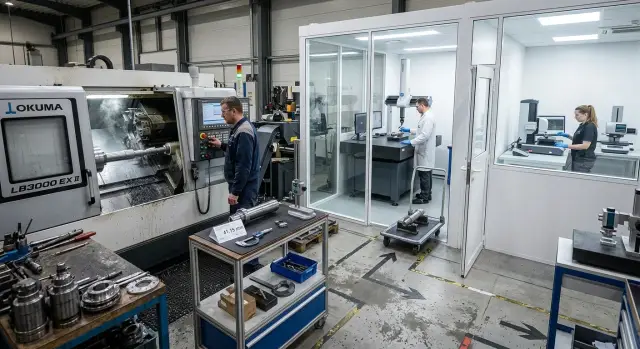
Where to Place a Measurement Station: Three Shop-Floor Layouts
Where to place a measurement station: we compare three shop-floor layouts, looking at feedback speed, dirt risk, and conditions for accurate control.
where to place a measurement stationmeasurement station next to the machineinspection room in the shop
7 min
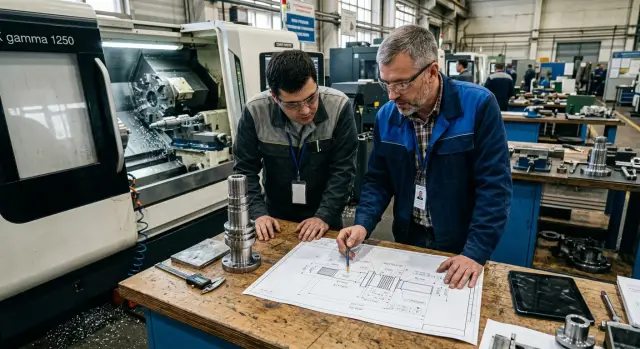
Drawing for cycle time calculation: what to specify right away
A drawing for cycle time calculation should show datums, dimensions, material, stock allowance and surface finish. We explain what to specify for an accurate estimate.
drawing for cycle time calculationpart machining time calculationdatums on part drawing
8 min
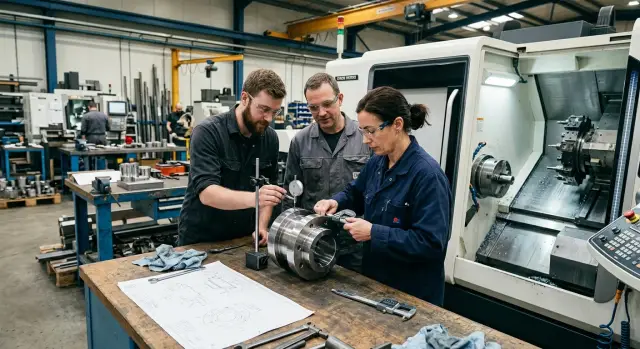
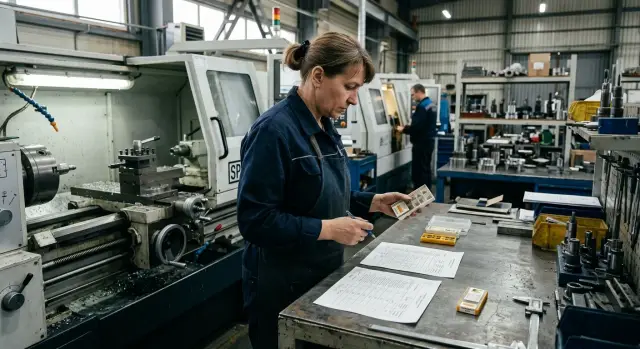
First-piece control in a production run: measurement sequence and roles
First-piece control helps detect setup shifts, setup errors and defects in time. We explain the measurement sequence, releasing the run and the roles of QC, the operator and the setup technician.
first-piece controlpart measurement sequencerelease of the first good part
8 min
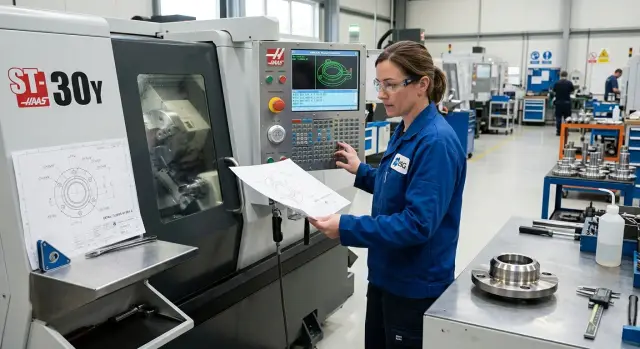
How to Choose a Tool Supplier for Urgent Orders
How to choose a supplier for urgent orders: look at real lead time, a local warehouse, and technical support, not the price per insert.
how to choose a tool supplierurgent metalworking orderslocal tool warehouse
8 min
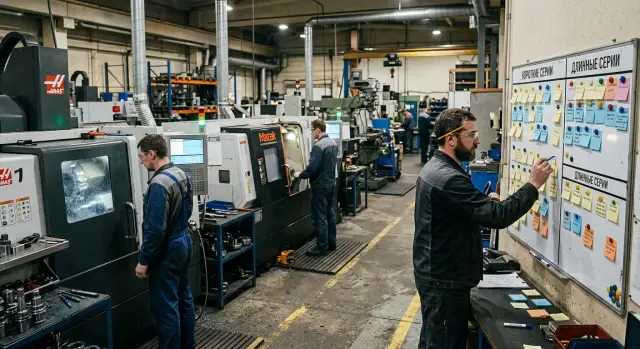
Chamfers and Radii on a Turned Part Without Shop-Floor Edits
Chamfers and radii on a turned part can be set so that insert changes and wear compensation stay in the program, not as manual edits at the machine.
chamfers and radii on a turned partprogramming chamfers on a latheCNC radius programming
8 min
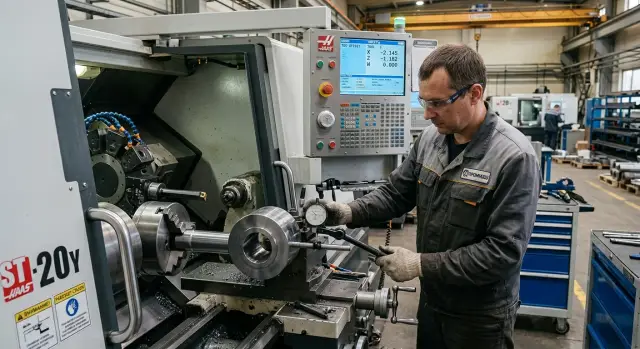
Order Queue on Two Lathes: How to Prioritize
Order queues on two lathes often miss deadlines when urgent and long runs are mixed. We cover simple rules, examples and quick checks to prioritize work.
order queue two lathesmachine loading planningshop order prioritization
8 min
Hole accuracy after a tool change: what causes size drift
Hole accuracy often drops after a tool change due to overhang, runout, tool length and offset errors. We explain causes and quick checks.
hole accuracy after tool changetool runouttool overhang
7 min
Warming a machine in winter: how long to warm the spindle and axes
Machine warm-up in winter: a simple shift-start routine, time guidelines for warming spindle and axes, checks before finish passing and common mistakes.
machine warm-up in winterspindle warm-up timewarming up machine axes
8 min
How to Reduce Ovality in Long Thin-Walled Bushings
We’ll show how to reduce ovality in long thin-walled bushings by comparing roughing in the chuck and finishing on an expanding fixture.
how to reduce ovality in long thin-walled bushingsroughing in the chuckfinishing on expanding mandrel
8 min
Piece-rate Pay on a CNC Shop Floor: Where Quality Suffers
Piece-rate pay on a CNC cell can boost output but often harms inspection, tool life and increases rework. We explain when the scheme works and when it doesn’t.
piece-rate pay on CNC shop floorquality of parts under piece-rateCNC tool wear
8 min
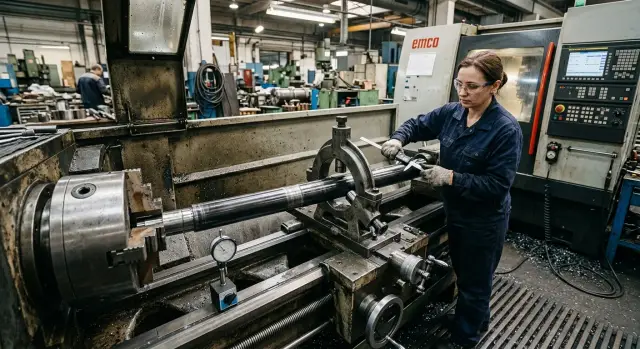
Fixture zero point: avoiding errors between shifts
Fixture zero eliminates extra searching for the datum after a changeover. We’ll cover how to choose a base, how to document referencing and what to check before running.
fixture zero pointreferencing schemepart datuming
7 min
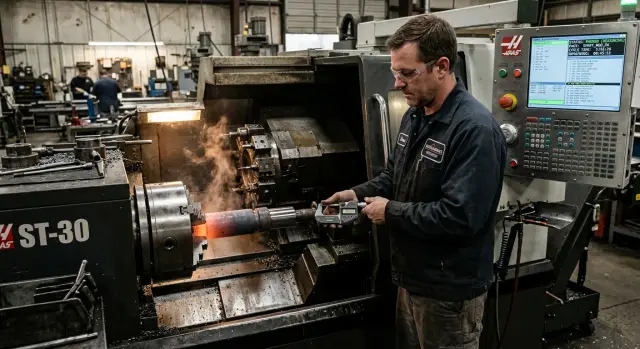
Workpiece deformation after unclamping: how to reduce the risk
Workpiece deformation after unclamping is often linked to pass sequence, clamping and residual stresses. Here's what to check to reduce the risk.
workpiece deformation after unclampingturning pass sequencesupporting long workpieces
8 min
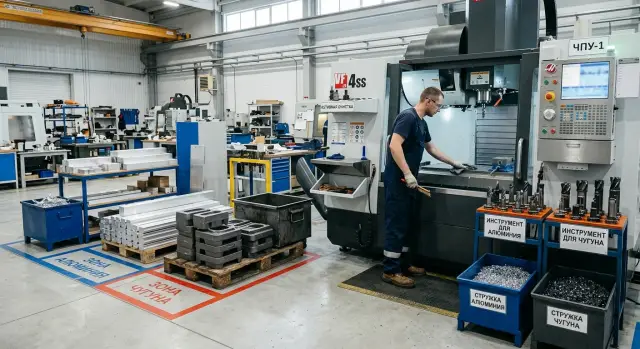
Finish Pass After an Inspection Pause: When to Move It
The finish pass after an inspection pause is not always placed immediately. We explain how part and spindle heat changes size in a long cycle.
finish pass after inspection pausepart temperature during turningspindle heating
8 min
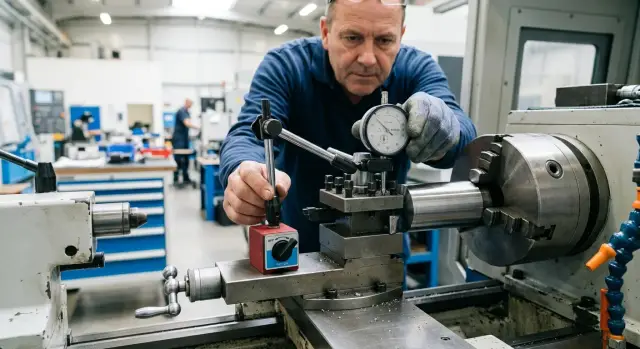
Aluminum and Cast Iron on One Shop Floor: How to Separate the Work
Aluminum and cast iron on the same shop floor need different tools, cleaning and cutting data. A simple step-by-step approach helps avoid scratches, extra wear and rejects.
aluminum and cast iron on one shop floorseparating tooling for aluminum and cast ironcleaning machine after cast iron
8 min
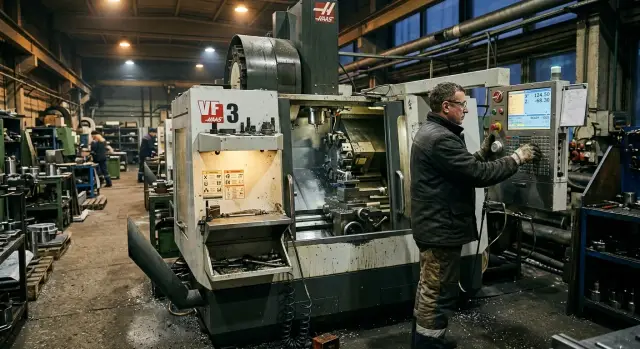
Perpendicularity Check on a Machine Without False Conclusions
Perpendicularity checks on a machine are often reduced to a single setup with an indicator stand. This article explains where that goes wrong, how to spot it, and what to check.
perpendicularity check on a machineindicator standmeasurement errors
8 min
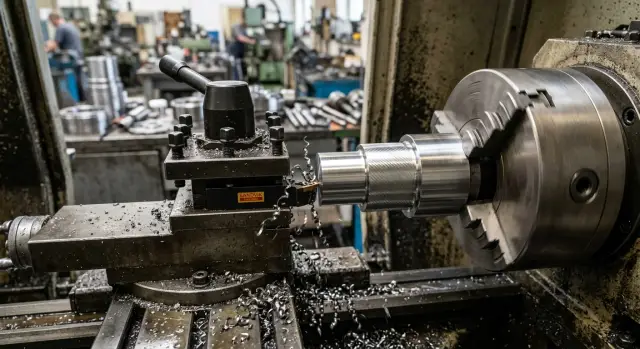
Machine Startup in Winter: How to Warm Up the Shop and Avoid Scrap
Starting a machine in winter requires a clear routine: warm up the shop, power up the machine, run idle cycles, and check the first part without unnecessary scrap or rushing.
winter machine startuphow to warm up a machinemachine idle movements
8 min
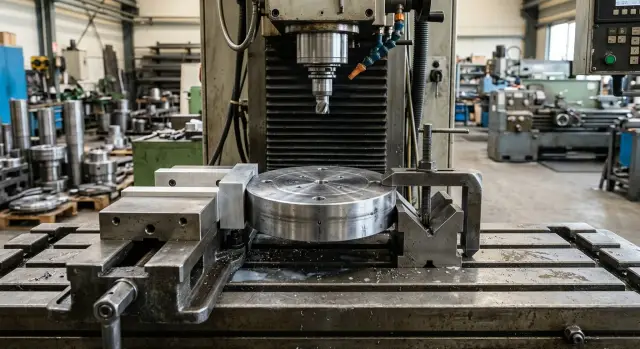
Reverse Turning from the Shoulder to the Chuck Without Vibration
Reverse turning from the shoulder toward the chuck can reduce risk, chip issues, and vibration on difficult transitions. Let's look at when this approach makes sense.
reverse turning from shoulder to chuckcutting direction in turningvibration in turning
5 min
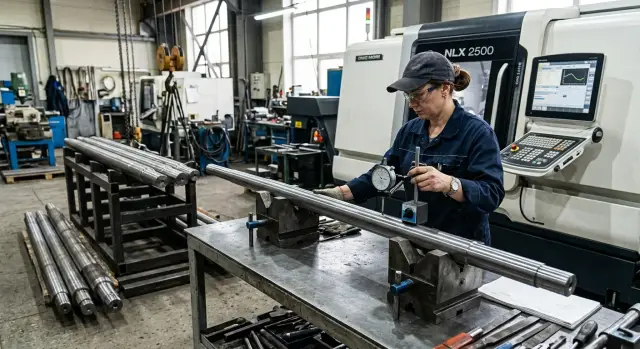
How to Hold a Round Workpiece During Milling: Soft Jaws or a V-Block
We’ll show how to hold a round workpiece during milling: when soft jaws give better access, and when a V-block holds the part better for roughing.
how to hold a round workpiece during millingsoft vise jawsv-block for round parts
7 min
Straightening Shaft Blanks Before Machining: When It's Needed
Straightening shaft blanks removes runout and reduces vibration, but it's not always necessary. We explain the signs, how to check, and common mistakes.
straightening shaft blanksshaft runout before machiningvibration during turning
8 min
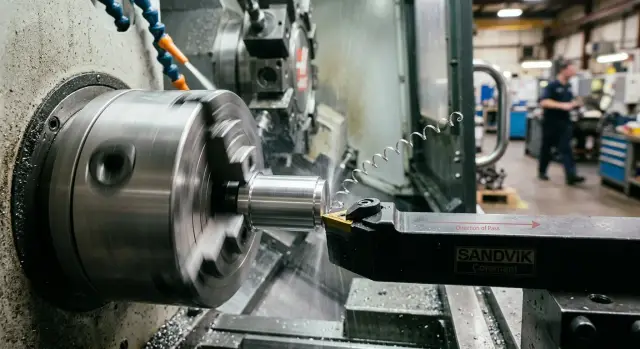
Thin Face Shoulder Without Burrs: How to Choose the Pass
A thin face shoulder without burrs requires the right turning direction, feed, and tool exit so you can eliminate manual finishing and avoid assembly problems.
thin face shoulder without burrsturning feed directionburr on the edge of a part
8 min
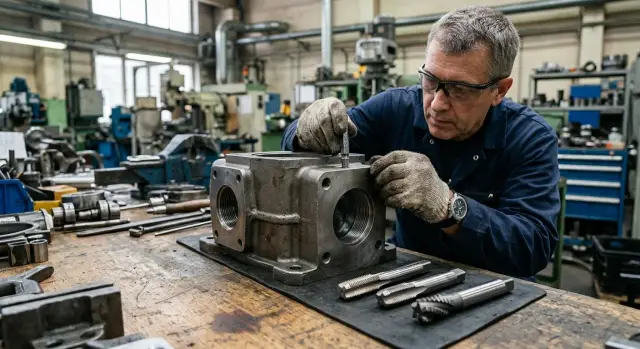
Common mistakes when machining threaded holes in housing parts
We review common mistakes when machining threaded holes in housing parts, compare taps, thread rollers and thread mills, and simplify the choice for the task.
errors when machining threaded holestap or thread rollerthread mills for housing parts

8 min
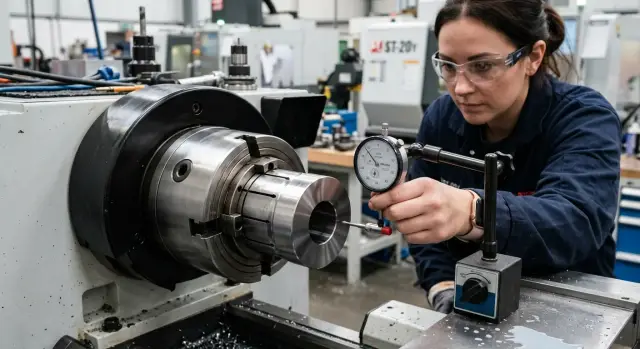
Machine Delivery Across the Border: Contract, Logistics, Commissioning
Delivering a machine across the border requires precise contract terms, clear logistics, insurance, packaging, and a complete document set for commissioning.
machine tool delivery across the bordermachine delivery contractindustrial equipment logistics
8 min
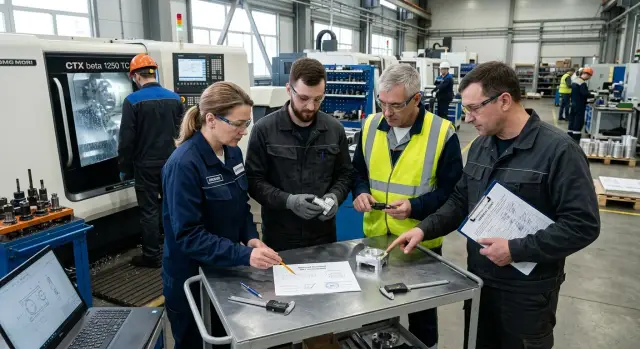
Expanding Collet for the Internal Datum in the Second Operation
Learn when an expanding collet for the internal datum gives a more accurate second operation, how to choose the expansion range, and how to keep rigidity on the finishing pass.
expanding collet for the internal datumsecond operation on a lathecollet expansion range
8 min
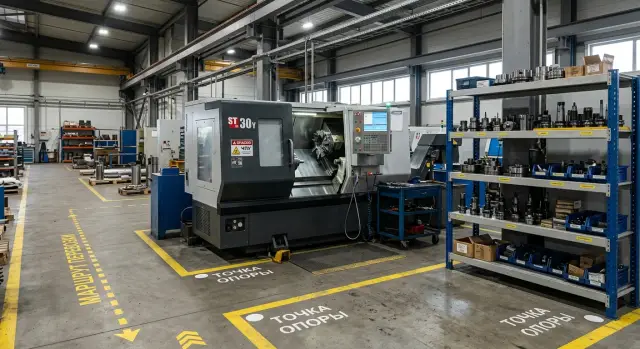
Pre-series part launch: who signs and when
A pre-series launch of a part requires a clear approval workflow: who checks the first part, who signs off, and when the series can begin.
pre-series part launchapproval workflowfirst CNC part
8 min
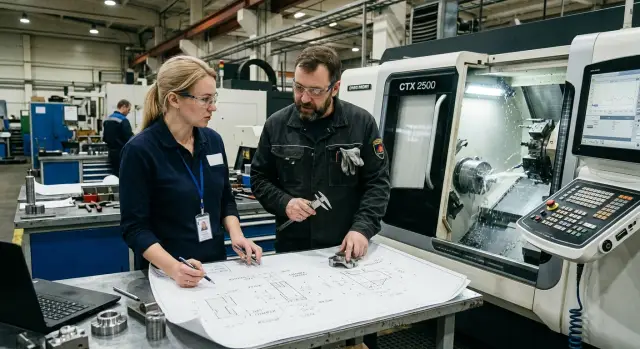
Machine Floor Load: How to Account for Racks and Transport Path
Machine floor load is not just a number from the passport. We break down weight, support points, tooling racks, and the transport route without common mistakes.
machine floor loadmachine support pointstooling racks
7 min
Part machining cost: what on the drawing drives the price
We review which chamfers, grooves, radii and tolerances unnecessarily raise the cost of machining a part, and how to simplify the drawing without harming function.
part machining costdrawing manufacturabilitytolerances on drawings

8 min
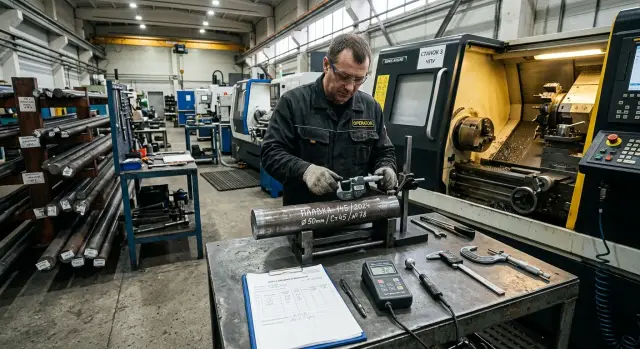
Measuring Thin Walls: How to Measure Without Deformation
Measuring thin walls requires careful control of force. We compare the micrometer, indicator snap gauge, and non-contact measurement for the shop floor.
thin wall measurementmicrometer for thin-walled partsindicator snap gauge
7 min
Incoming Material Inspection: Why Parts from the Same Heat Can Cut Differently
Incoming material inspection helps reveal hardness, structure and blank variation in advance, reducing tool wear and dimensional drift.
incoming material inspectiontool wearpart size variation

8 min
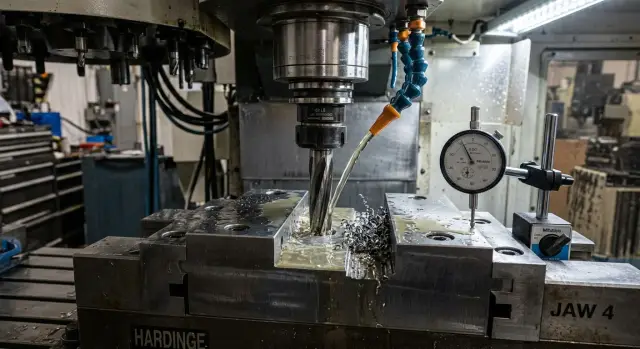
Jaw Spacer: How to Bring Back a Repeat Production Run Faster
A jaw spacer helps you bring back a repeat order faster without a new long jaw grind. We break down the method, storage of dimensions, and the operator’s workflow.
jaw spacersoft jaw grindingrepeat batch on a lathe
8 min
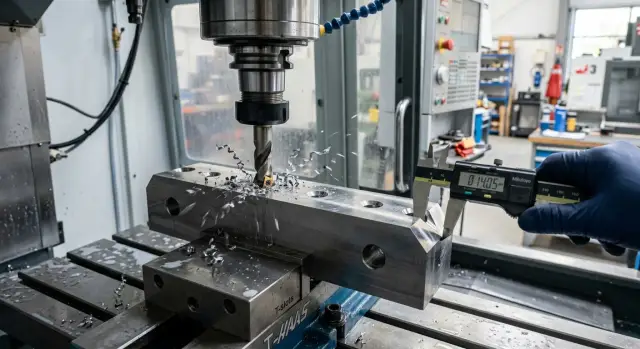
Blind Hole Reaming: How to Keep Accuracy
Reaming blind holes requires precise approach, chip space, and strict depth control, otherwise the size at the bottom will drift already in the first batch.
blind hole reamingaccuracy at the bottom of the holereamer depth control
8 min
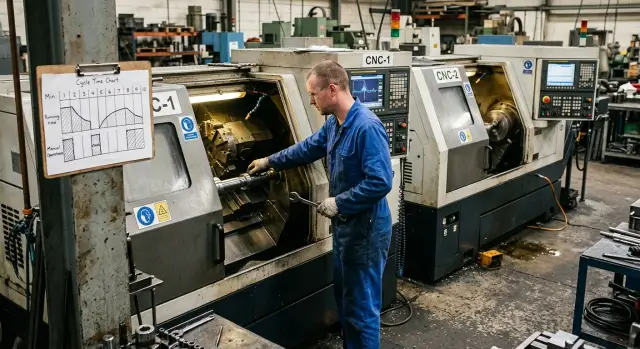
Combined Drilling and Countersinking Tool
We look at where a combined drilling and countersinking tool really speeds up the cycle, and where separate operations deliver better size control and a cleaner chamfer.
combined drilling and countersinking toolcycle time reductiondrilling and countersinking in one pass
8 min
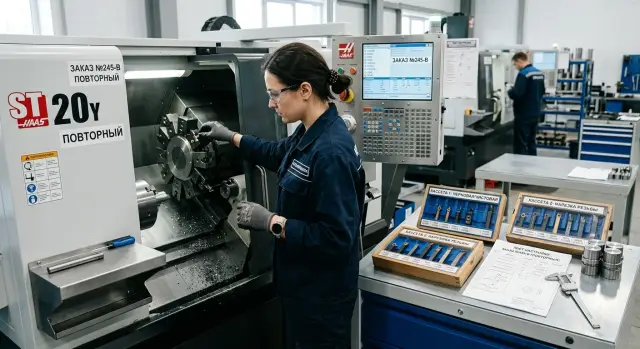
Labor Standardization for Multi‑Machine Servicing: Calculating Operator Load
Labor standardization for multi-machine servicing: how to calculate an operator’s load on 2–3 machines with different cycles without big mistakes.
labor standardization multi-machine servicingoperator load of machinesmulti-machine servicing
7 min
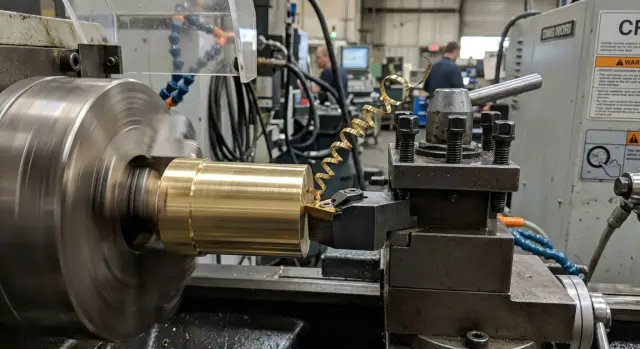
Reduce changeover time on repeat orders
How to cut changeover time on repeat orders: we review tooling, tools, program structure and simple checks that deliver fast results.
reduce changeover timerepeat CNC ordersquick changeover tooling
8 min
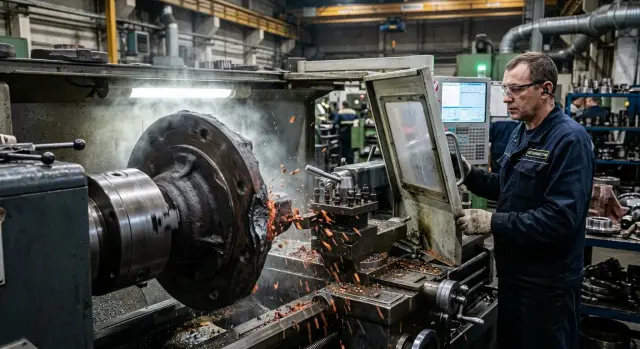
Machining Bronze and Brass: How to Maintain Size Without Burrs
Machining bronze and brass requires a sharp cutter, steady feed and chip control. We review tool geometry, cutting regimes and techniques that keep size.
machining bronze and brasscutting parameters for brassburrs on non‑ferrous alloys
8 min
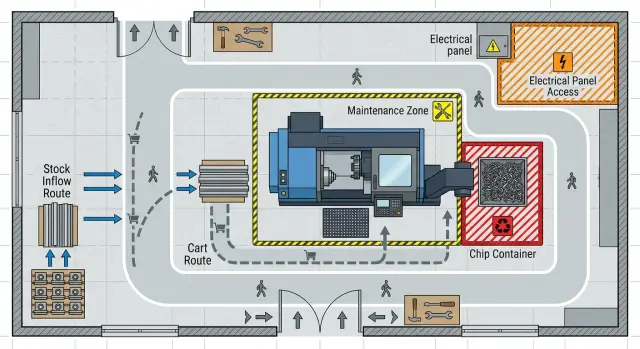
Turning Flanges with Uneven Stock Allowance Without Shock
Turning flanges with uneven stock allowance requires a calm roughing strategy: how to remove casting variation around the circumference without shocking the cutting tool.
turning flanges with uneven stock allowanceroughing passes on a lathecasting allowance around the circumference
8 min
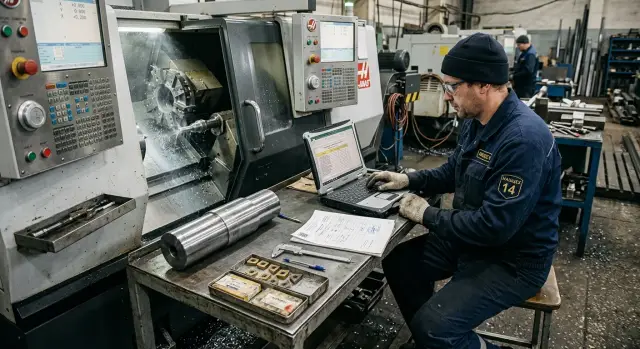
Machine placement on the shop floor: how to choose without later relocations
Choose a machine location by aisles, raw-material delivery, service access and chip removal. A simple layout to avoid unnecessary relocations.
machine placement on shop floorshop floor machine layoutshop aisles
8 min
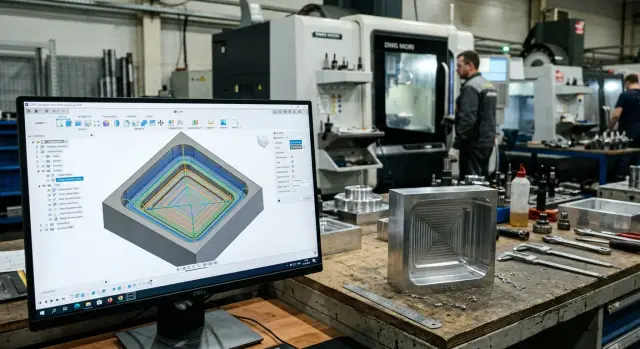
Tool life history: a simple template without software
Tool-life history without complex software: a simple template to track material batch, cutting parameters and reason for tool removal.
tool life historytool tracking templatecutter life tracking
8 min
Toolpath Rounding in Milling: Benefits and Risks
Toolpath rounding in milling helps remove surface marks, but it can sometimes shift dimensions and radii. Let’s look at when to keep it and when to turn it off.
toolpath rounding in millingCAM settings for millingsurface finish in milling
8 min
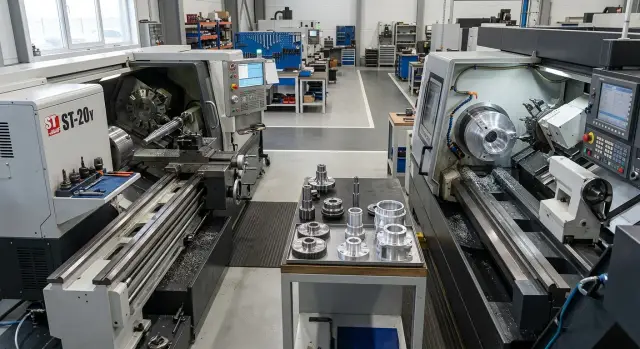
Linear or Box Guides in the Workshop
Linear or box guides: we explain which cutting regimes, loads and materials suit each arrangement in real shop work.
linear or box guidesCNC machine guideschoosing a lathe
5 min
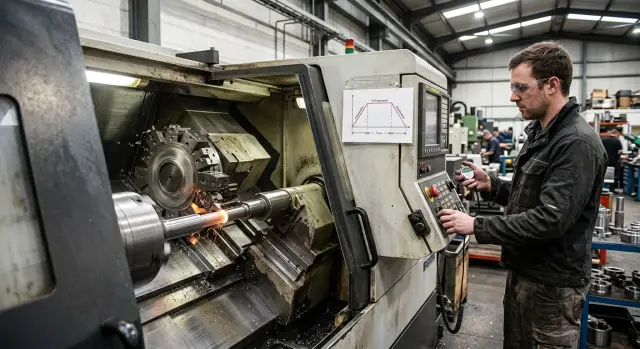
CNC Axis Acceleration: How to Calculate the Cycle Time of Short Operations
Axis acceleration in CNC machines matters more than it seems: for short cycles, calculate acceleration and deceleration time, or fast feeds will not improve output.
CNC axis accelerationacceleration and deceleration timeshort operation cycle time
8 min
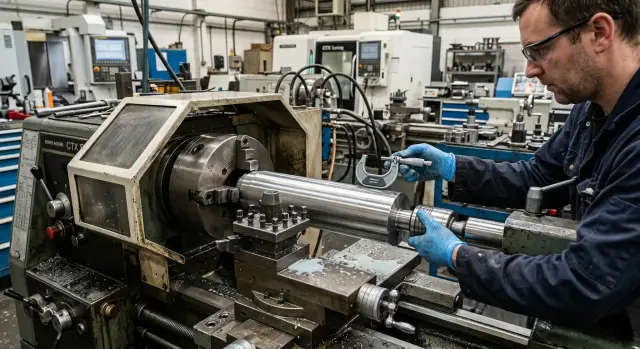
Radial Rigidity of the Tool Holder: Marks on the Part and Size
Radial rigidity of the tool holder affects chatter marks, waviness, and dimensional drift. Let’s look at how to connect marks on the part with the holder, overhang, and cutting mode.
radial rigidity of the tool holdertool overhangtool holder
8 min
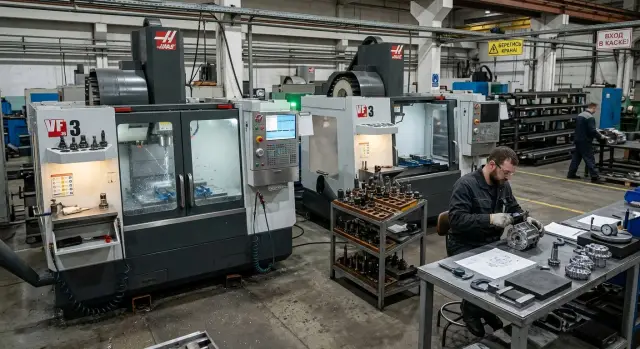
Bottlenecks After Buying a Second Center: What Slows Output
Bottlenecks after buying a second center are often hidden not in the machine itself, but in tooling, inspection, and material feeding. Let’s look at where output is lost.
bottlenecks after buying a second centershop floor output growthmaterial feeding
8 min
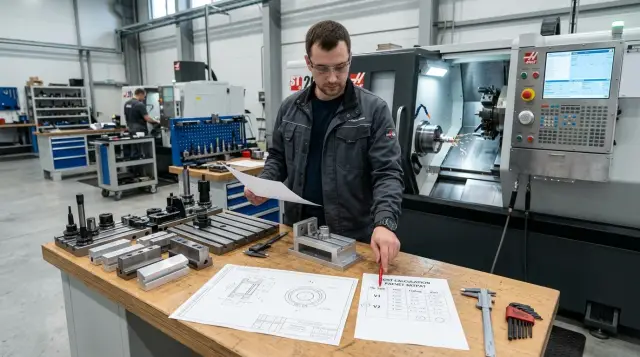
Fixtures for short runs: what pays off faster
Short-run fixtures shouldn’t eat your margin. We compare modular systems, soft jaws and simple jigs to see which pays back faster.
fixtures for short runsmodular fixturessoft jaws
8 min
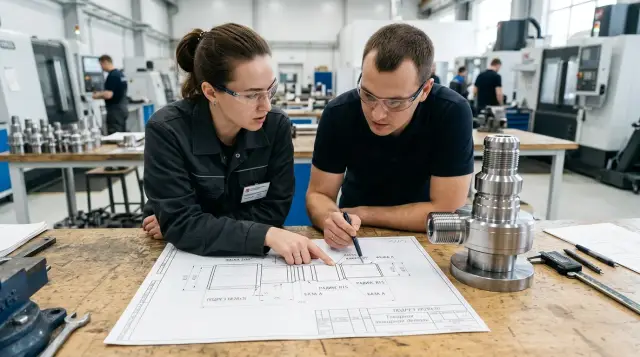
Manufacturability of a Turned Part Before Production
Check manufacturability of a turned part before costing: chamfers, undercuts, datums and tolerances that reduce price and scrap risk.
manufacturability of a turned partchamfers and undercuts on the drawingdatums for turning
8 min
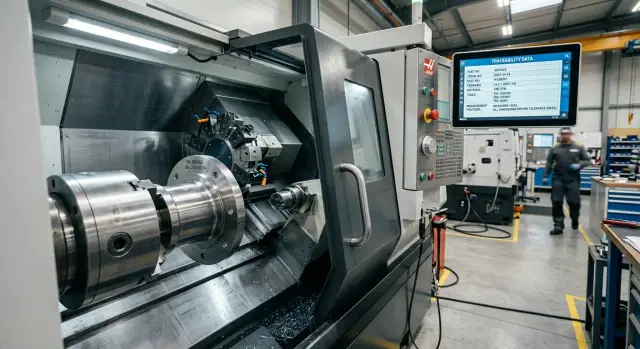
Full Part Traceability in the CNC Process
Full part traceability changes shop-floor recordkeeping: link the melt, program version, tool, and measurement report to the part number.
full part traceabilitypart numbermaterial melt
8 min
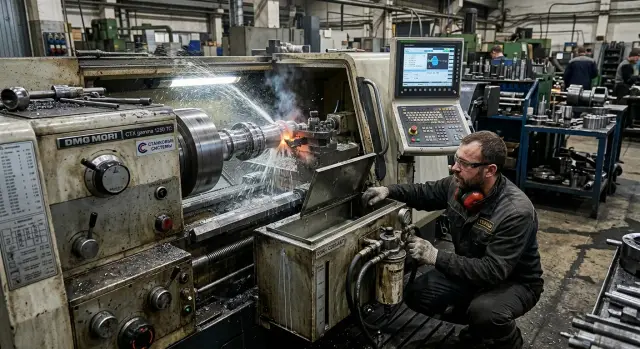
Cutting Fluid for Turning: How to Choose Without Mistakes
Cutting fluid for turning is chosen based on workpiece material, cutting mode and the condition of the supply system. We cover simple checks and common mistakes.
cutting fluid for turningchoosing coolant for lathetool life
8 min
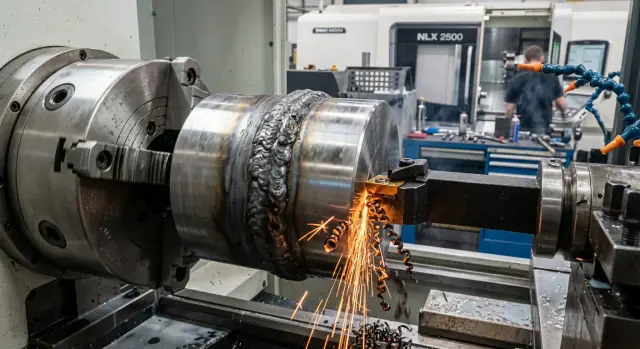
Turning Welded Blanks: How to Handle Hard Weld Seams
Turning welded blanks calls for a separate approach: we explain how to assess the seam, choose the right pass, and reduce impact load on the tool and lathe.
turning welded blanksweld seam on a latheimpact load during machining
7 min
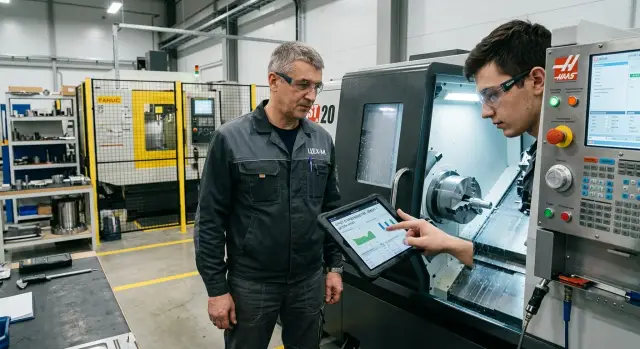
Incident Review Without Blame for the Next Shift
An incident review without blaming helps keep facts from getting lost between shifts. We’ll show a short report that can be read and used quickly on the shop floor.
incident review without blameshort incident reportshift handover on the shop floor
6 min
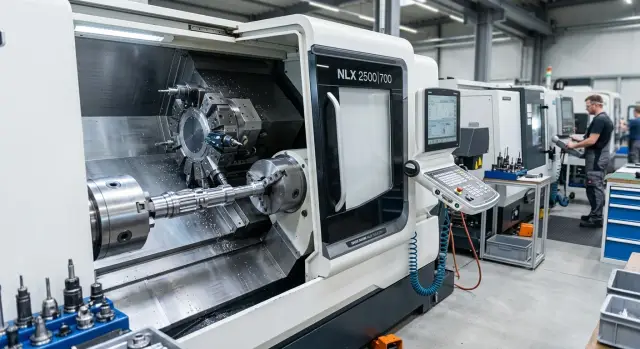
Sub-spindle in series production: when it actually saves time
A sub-spindle in series production doesn’t always save time. We’ll examine where it shortens the cycle and where a second setup on a separate machine is simpler and cheaper.
sub-spindle in productionreducing machining cyclesecond setup of part
8 min
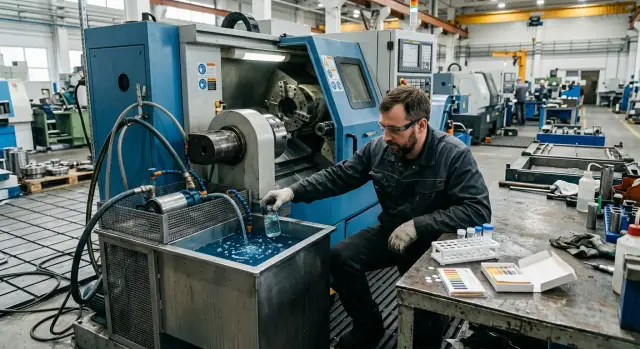
Water for Coolant: How Hardness Affects Smell and Tool Life
We explain how water for coolant affects emulsion smell, tool life, and machine condition, and which tests to do before filling the tank.
coolant waterwater hardnesswater analysis before filling coolant