
Combined Drilling and Countersinking Tool
We look at where a combined drilling and countersinking tool really speeds up the cycle, and where separate operations deliver better size control and a cleaner chamfer.
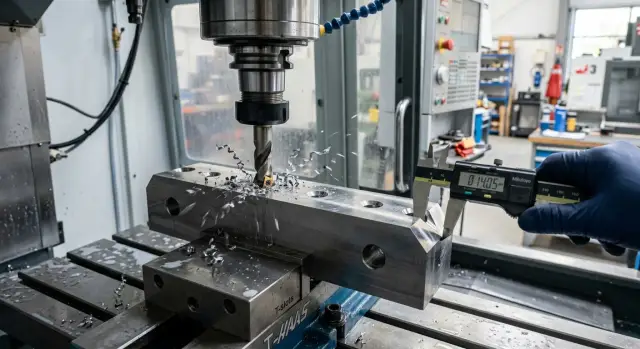
What the choice comes down to
When a hole and a chamfer can be made in one pass, the machine spends less time on tool changes, approach moves, and repeat positioning. On production runs, that creates real savings. If a part has many identical holes, the seconds add up quickly into minutes by the end of a shift.
That is why a combined drilling and countersinking tool often looks like the obvious choice. Instead of two operations, you get one. The program is shorter, there are fewer moves, and the operator has less to watch during the cycle. For a stable batch of parts, that can be a very good move.
But there is a hard link here that is often overlooked: the hole diameter and the chamfer start to depend on each other. If the tool shifts slightly in height, wears unevenly, or the part sits in the fixture a little off, the entire result changes at once. With a separate drill and a separate countersink, those issues are usually easier to fine-tune on the spot.
This is especially noticeable on the chamfer, where even a small offset along the Z axis shows up quickly on the part. Say you need a neat chamfer for a fastener seat. A shift of a fraction of a millimeter can make it narrower or wider than required. The hole itself may still be acceptable, but the appearance and fit are no longer right.
The time savings are not always as big as they seem at first either. Yes, you remove an extra tool change. But if the combined tool produces an unstable chamfer, you may need more measurements, corrections, and trial parts. Sometimes one bad part eats up the entire gain from several dozen cycles.
The choice usually comes down to a simple question: for this part, what costs more — a couple of seconds of machine time or the risk of linked dimensions that are harder to keep within tolerance? If the hole and chamfer are not critical and the batch is long, one pass often makes sense. If the chamfer affects assembly, appearance, or a tight fit, separate operations are usually calmer and more predictable.
In practice, this is easy to see even on good machines: where repeatability matters, process engineers more often keep the option to control the hole separately from the chamfer.
Where the tool really shortens the cycle
The biggest gain shows up not on complex parts, but on simple, repeatable ones. A combined drilling and countersinking tool works well where the hole is short, through, and the same chamfer is needed across the whole batch. The machine makes fewer tool changes, the spindle comes to the part once, and the cycle gets shorter without extra fuss.
On a part 8–12 mm thick, this becomes clear very quickly. The hole passes through the material without long contact, the tool heats up less, and the chamfer is formed right after drilling. If a batch includes 500 identical brackets or flanges, saving even 4–6 seconds per part adds up to a noticeable result by the end of the shift.
When the conditions help
The same chamfer across the whole run makes the job much easier. The process engineer sets the depth once, the operator checks the first parts, and then production runs smoothly. With two separate operations, you need to watch two tools and their relationship to each other. Here there is less to manage, so chamfer accuracy is usually easier to hold.
A rigid clamping setup is just as important as the tool itself. If the part does not move in the fixture, one pass holds size more consistently and avoids random differences between holes. This is especially useful on serial parts made from sheet metal, plates, and simple housings where locating repeats without surprises.
Material also matters a lot. Steels and short-chip alloys behave more calmly: chips leave the cutting zone more easily and are less likely to damage the chamfer edge. On such parts, drilling and countersinking in one pass more often gives a clean, predictable result.
You can see this well on typical parts for automotive production, construction equipment, and similar serial assemblies where holes repeat dozens of times. If the geometry is simple, the combined pass saves time at almost every position.
A large batch pays back the setup time fastest:
- it is worth spending time on trial parts;
- feed and speed are easier to match to one geometry;
- there are fewer stops for changing two separate tools;
- the time savings build up on every part.
A good example is a simple part with one through hole for a fastener and the same chamfer on the front side. If the clamping is rigid, the material cuts smoothly, and the chamfer size does not change from part to part, this tool usually gives a real reduction in machining time.
Where it causes problems more often
Problems start when one move is expected to solve two tasks at once, but the part geometry leaves no room for error. A combined drilling and countersinking tool works well on stable operations. But if the conditions vary, it often loses the very thing it was supposed to provide — a predictable result.
Blind holes are the first common case. When the depth is set with almost no margin, it is hard for the tool to hold the hole bottom and still produce the required chamfer at the entry. If the stick-out changes slightly, the tool wears, or the actual cutting length is different, the operator has to choose what matters more: not going too deep or not losing the chamfer. On paper it is one operation. On the machine, it is already a compromise.
Thin walls also expose weak points quickly. As the tool enters, it creates axial load, and the edge around the hole can compress or distort. As a result, the chamfer looks uneven and the edge loses its clean finish. On a rigid, heavy part, this is almost invisible. On a thin plate or a light housing, the defect shows immediately.
Where material gets in the way most
Ductile alloys add another problem: long chips. They do not always clear the cutting zone properly, they catch on the tool, and they spoil the chamfer surface. Sometimes the hole diameter is still within tolerance, but the chamfer itself is torn or uneven around the circle. After that, you still have to do a separate finishing pass, and the time savings disappear.
Variation in stock allowance between blanks also affects the result a lot. If one part arrives with a slightly larger allowance and another with less, the combined operation starts behaving differently. On one part the chamfer comes out almost perfect; on another it is too shallow or, on the contrary, too wide. This is especially noticeable in batches where the blanks are not very consistent.
A tight chamfer tolerance often says on its own that the operations should be separated. If the chamfer affects fastener fit, assembly, or the look of the part, separate countersinking is usually safer. Yes, the cycle becomes a few seconds longer. But the process engineer does not have to chase a drifting dimension or sort the batch after inspection.
The risk is usually higher in four cases:
- the blind-hole depth has almost no margin
- the entry wall is thin or weak
- the material produces long chips
- the chamfer has a tight tolerance
If at least two of these are true, separate operations often give a calmer start-up and less scrap.
What affects the result most
A combined drilling and countersinking tool works well only when the machine and tooling hold the geometry without surprises. The most common cause of defects is runout. Even a few hundredths can affect both the hole and the chamfer: the diameter shifts, and the chamfer width becomes uneven around the circle.
People often look for the problem in cutting parameters, when the real cause is the holder, the chuck, or the tool seat. If the spindle rotates the tool off axis, separate operations may still tolerate that. A combined tool almost never does.
A weak part clamp also shows up quickly. At entry, the tool gets a shock load, the part shifts slightly, and chatter appears. After that, the chamfer edge comes out ragged, especially on thin-walled parts and small flanges.
Hole depth also changes the picture. On short holes, drilling and countersinking in one pass often run smoothly. If the hole is deep, the tool spends longer acting as a drill, deflects more, and repeatability drops from part to part.
Chips can damage the result just as much as runout. If they do not leave the cutting zone well, they scratch the chamfer, pack into the flutes, and overheat the cutting edge. On ductile materials, this shows up right away: the chamfer loses its clean finish, burrs appear on the edge, and the size starts to drift.
Coolant helps, but it does not solve everything on its own. If the feed is too high or the hole is blind, chips still stay inside. Then the operator sees a hole that looks fine, while the chamfer is already damaged.
Tool wear on a combined tool builds up errors faster than you might expect. First the surface finish drops, then the hole size changes, and after that the chamfer starts to drift too. On a production run, that is especially unpleasant: the first parts still pass, and after 20–30 pieces the process becomes unstable.
In practice, it is useful to watch five things together: runout, clamping rigidity, hole depth, chip evacuation, and cutting-edge condition. If even one of them is weak, the cycle-time reduction quickly gets eaten by setup changes, extra inspection, and scrap.
That is why machine and tooling suppliers, including EAST CNC, usually recommend checking the basic mechanics of the process first, and only then changing parameters. In most cases, the problem starts not in the program, but in how the tool enters the metal and what happens to the chips in the first few seconds of cutting.
How to decide for a specific part
It is better to make the decision based on the part itself, not on the tool catalog. The same combined drilling and countersinking tool can save time on a simple bushing and quickly drift in size and chamfer on a thin cover.
First, look at the hole tolerance and the chamfer requirements. If the hole must hold a tight size and the chamfer must be even in width and angle, the risk is higher. In that case, every small detail shows up right away: runout, edge wear, chip deflection. When the tolerance is wider and the chamfer is only there to break the edge, the combined operation usually behaves more calmly.
Then evaluate the material. Aluminum and short-chip materials often give a clean pass. Ductile steel, stainless steel, or long-chip materials more often cause trouble: chips do not clear, rub the edge, and spoil the chamfer. If the part has already caused problems with a standard drill, you should not expect miracles from a combined tool.
Rigidity matters too. Check not only the machine, but also the setup itself: how the part is clamped, how much stick-out the tool has, and whether there is a thin wall near the hole. On a rigid blank, the difference can be clear. On a weak setup, the cycle-time reduction quickly gets lost in scrap.
The most useful step is a short trial run. Not one part, but at least 10–20 pieces in a row.
The first part often looks fine, and the problems appear later when the tool heats up and starts to wear.
It is convenient to collect the result in a simple table:
- cycle time per part
- hole size after the run
- chamfer appearance and size
- scrap count
- tool life before the first adjustment or replacement
After that, compare not only seconds, but the full outcome. If you saved 8 seconds but got two parts with poor chamfers and changed the tool earlier than expected, there is no real gain. If the run stayed stable, the chips cleared cleanly, and the size did not drift, the combined operation is justified.
In practice, simple parts with a clear material choice and rigid setup usually win. For complex parts, it is better to keep the operations separate and sleep easier.
Two simple examples
The same combined drilling and countersinking tool can bring a good gain on one part and a stressful setup on another. The difference is usually not about tool fashion, but about hole geometry, material, and chamfer tolerance.
Aluminum flange
Imagine an aluminum flange 8 mm thick with through holes for fasteners. There are many holes, and the chamfer only needs to be small and identical, for example 0.5 x 45 degrees. In this kind of job, drilling and countersinking in one pass often works smoothly.
Aluminum cuts easily, chips leave without much resistance, and the through hole does not hold them inside. The tool enters, forms the hole, removes the chamfer right away, and exits. The operator does not need to call up a second tool and re-find the position for each hole.
On a batch, this creates noticeable time savings. If the part has 20–30 holes, even a few seconds at each position quickly become minutes for one blank. On top of that, there are fewer idle moves and less chance of scratching the chamfer with an extra pass.
The logic here is simple:
- the material is soft
- the hole goes through
- the chamfer is small
- the tolerance is usually moderate
- there are many holes
With this set of conditions, one operation often makes more sense than two separate ones.
Steel plate
Now another case: a steel plate 30–40 mm thick with blind holes. The drawing specifies depth, bottom, and a neat chamfer on top. On paper, the combined pass also looks convenient, but in practice this is exactly where the debates begin.
Steel creates higher load on the cutting edge. Chips clear less easily, especially if the hole is blind and deep. A small change in wear or feed immediately affects the chamfer size. In the end, the depth may drift by a couple of tenths, and the chamfer starts to drift with it.
The problem is that you are tying two tasks together. If you need to correct the depth slightly, the top edge changes too. If you need to tighten the chamfer, you can affect the hole size. With a separate drill and a separate countersink, it is easier to set them independently.
This example shows the boundary of the method well. For light through holes, the combined pass often pays back quickly. For blind holes in steel, where both depth and a clean chamfer matter, separate operations usually give a calmer result.
Mistakes that wipe out the entire benefit
The biggest time losses do not come from the operation itself, but from wrong assumptions. A combined drilling and countersinking tool is often set up as a quick universal option, and then people are surprised by scrap, extra stops, and questionable savings.
The first common mistake is using one chamfer angle for every part. That is convenient for storage and setup, but bad for the result. One part needs the chamfer for a fastener, another only to break an edge, and a third needs a clean lead-in for the next operation. The same angle in these cases gives different outcomes. On the drawing it may look minor, but during assembly it shows up right away.
Another trap is looking only at the seconds in the program. Yes, the operation may become 3–5 seconds shorter. But if the operator then deburrs manually, changes tools more often, or keeps chasing chamfer drift, the gain disappears. You need to count the entire cycle, including inspection, tool changes, and rework.
Many people judge after two trial holes. That tells you almost nothing. On the first passes the tool is still very sharp, the chips move easily, and heat has not yet built up. The real picture appears later, when the batch has reached at least several dozen parts.
At that stage, wear often shows up where nobody checked it. The hole diameter may still hold, while the chamfer is already drifting. As a result, the part passes one inspection and fails another. On CNC machines, that is especially unpleasant: the program is the same, the settings are the same, but the result is different.
A separate problem is leaving too little space for chip evacuation. This happens in blind holes, in ductile materials, and wherever there is almost no room for chips to clear after drilling. They get packed in, scratch the chamfer, heat the edge, and quickly shorten tool life.
It is more useful to check not whether it “worked or not,” but four things:
- whether the chamfer angle matches the part’s task
- whether there is real savings in the full cycle
- how the result changes after 30–50 parts
- where the chips go after the tool exits
If even one point raises doubt, separate operations often give a calmer and more predictable result. Sometimes they are a second slower, but without surprises in the middle of the batch.
A quick check before production
A combined drilling and countersinking tool should go into production only after a short check on the part and under real cutting conditions. On paper, the move looks simple. On the machine, tolerance, hole length, setup rigidity, and chip behavior decide everything.
Before the batch, it helps to run through the same checklist:
- The chamfer is simple in shape and the tolerance is not too tight.
- The hole is short, without a complex step or questionable depth.
- The part is clamped rigidly, the tool does not chatter, and there are no vibration marks.
- Chips leave freely and do not wrap around the cutting edge.
- The trial run holds size not just on two parts, but through the whole test batch.
If the chamfer is decorative or secondary and the deviation can be reasonably tolerated, the combined operation often gives a good result. If the chamfer affects fit, sealing, or precise assembly, the risk is higher. In that case, one extra operation is usually cheaper than scrapping several parts.
Depth is straightforward too. Short holes forgive more. Long holes react more strongly to runout, deflection, and wear, and the chamfer at the exit starts to drift. Even if the first parts look fine, the size may shift halfway through the shift.
Setup rigidity is checked not by feeling, but by the mark on the part and the cutting sound. If the part is thin, long, or sticks out of the fixture, the combined pass often starts chattering earlier than two separate operations. This is especially noticeable on flanges and covers with a small support area.
It is better not to argue with chips. If the material produces long strands, they quickly spoil the chamfer and scratch the hole entry. On a trial run, this is visible right away: the first parts are still acceptable, then the edge starts to smear and heat up.
A good test is 10–15 parts in a row at the same feeds and speeds that will be used in production. If the chamfer and hole size hold from the first part to the last, the choice looks workable. If the spread grows by the end of the run, it is better to return to separate operations and not look for savings where there are none.
What to do next
Test the idea on one part with simple geometry. A hole without a complex chamfer, thin walls, or a tight tolerance is a good candidate, where drilling and countersinking in one pass will not create extra risk. On such a part, you will quickly see whether the combined drilling and countersinking tool really shortens machining time.
Compare the options honestly. You need the same batch, the same material, the same machine, and the same setup approach from the operator. Otherwise, the difference in results will come from the conditions, not the tool.
The easiest way to run the test is:
- first machine part of the batch with separate operations
- then run the same portion with the combined tool
- record cycle time per part, chamfer variation, and tool life
- count scrap and the number of corrections separately
Do not look only at the seconds. If the new option saves 5–7 seconds but then creates extra scrap, size drift, or unstable chamfer accuracy, the benefit disappears quickly. That is a common reason good ideas look better in trials than in real production.
It is better to keep separate operations where size matters more than speed. That includes assembly parts, holes with tight tolerances, places where the chamfer affects fastener fit, and batches with noticeable variation in material. In those cases, separate drilling and separate countersinking usually give a calmer process and fewer metalworking errors.
Sometimes the test is limited not by the tool, but by the machine’s capabilities. There may not be enough rigidity, spindle speed, easy tool changes, or stability on a run. If you need a new machine for this kind of work, EAST CNC can help with model selection, commissioning, and service. That is especially useful when you want to test several parts and understand which machining route will work every day, not just on a trial batch.
A good decision looks simple: keep the combined tool where it reliably saves time without increasing scrap, and keep separate operations where the extra seconds are cheaper than one ruined dimension.