
Declaration for a metalworking machine in the EAEU
Learn when a metalworking machine needs a declaration, when certification can replace it, and how to check the form under TR CU 010/2011.
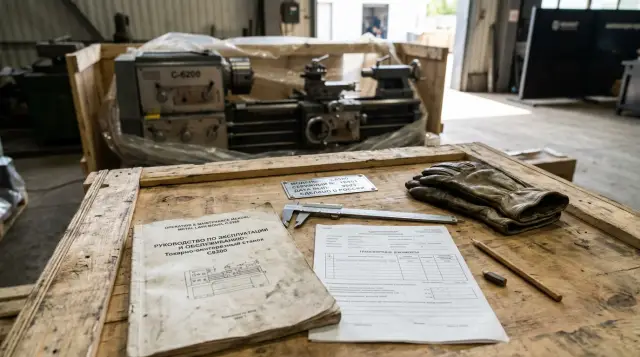
For an ordinary new metalworking machine being imported into the EAEU for sale or operation for the first time, the standard form of conformity assessment under the current version of TR CU 010/2011 is a declaration of conformity. A certificate does not become mandatory merely because the machine is large, expensive, five-axis, or fitted with CNC.
Yet the word "ordinary" carries half of the answer. The form is determined by the identification of the actual machine, not the commercial name in the invoice or a customs code alone: its purpose, processing principle, configuration, scope of the technical regulations, and entry in the applicable list. An applicant may sometimes choose certification instead of declaration, while adjacent equipment in the same catalog may require certification. The document therefore has to be chosen before shipment, while the description can still be corrected, a sample obtained, and missing material requested from the factory.
First determine what is crossing the border
Start with the technical function of the shipment, not the phrase "CNC machine." TR CU 010/2011 covers machinery and equipment placed on the Union market and requires the object to be identified by name, type, make, model, purpose, and main technical parameters. The same control cabinet may be a machine component, a separate product, or part of a production line. Those three shipments can lead to different legal outcomes.
For a turning center, a useful description answers specific questions. What material does the machine process? Does it cut material away or form metal without removing it? How many controlled axes does it have? Does it include a milling spindle, sub-spindle, bar feeder, robot, chip conveyor, hydraulic unit, or fire suppression system? Is everything supplied in one consignment under one contract as a functional assembly? What name has the manufacturer put on the nameplate and in the manual?
The line "CNC machine, model X" in a passport is too weak for an assessment. A proper identification card records the product as a CNC turning center, lists its operations and processed materials, and gives the exact model designation with an explanation of the options. It separately states the configuration, voltage, frequency, installed power, and type of supply: series, batch, or single item.
This card connects the contract, technical description, HS code, test report, and future declaration. If the invoice says "lathe," the manual says "turning center," the nameplate carries a third designation, and the applicant declares a "metalworking machine," customs or the market surveillance authority may reasonably ask whether the document covers the imported product.
Do not confuse a machine with a spare part. A separate chuck, tool holder, cable, or seal kit does not become a metalworking machine because it was made for one. Conversely, a machine dismantled for transport does not turn into a collection of parts when the documents, number of packages, and assembly method show one finished product.
Ask the factory to explain every letter in the model index before classification. For many manufacturers, the last character denotes the market, CNC type, live tooling, or a larger spindle bore. If a report names the base model without the suffix while the nameplate shows an extended version, a technical expert should confirm in writing that the evidence applies. A sales manager's guess in a chat does not link two models.
Record the condition of the shipment as well. A fully assembled center, a center with its conveyor removed for transport, and a set of units intended for later assembly under a project can look similar in a packing list. A general arrangement drawing, cargo list, and installation instructions show whether the shipment constitutes one machine. This check affects the code, the scope of tests, and the wording of the conformity document.
The current rule leads to a declaration
Metalworking machines appear in the list of TR CU 010/2011 objects subject to conformity assessment by declaration. They have their own entry in the current version of Appendix 3. Turning, milling, drilling, grinding, and many combined centers therefore normally require a declaration when identification genuinely leads to this group.
EEC Board Decision No. 6 of 16 January 2018 links these products to HS headings 8456, 8457, 8458, 8459, 8460, 8461, 8462, and 8463. Many codes in the Decision are preceded by "ex." This means that the entry does not automatically cover the entire code: the customs name and technical features must also match the product description. The same table says "declaration of conformity or certificate of conformity" for metalworking machines because the regulation permits certification to replace declaration.
This is not a free choice between two interchangeable sheets of paper after the shipment arrives. Declaration is the standard mandatory form for this entry. Article 8(5) of TR CU 010/2011 allows certification under schemes equivalent to the declaration schemes instead, at the applicant's decision. This route is used when a customer expressly requires a certificate, the available evidence is insufficient for a suitable declaration scheme, or a certification body can organize the assessment of a particular complex shipment more effectively.
The distinction has practical consequences. The applicant adopts the declaration and personally states that the machine meets the requirements. It assembles the evidence, selects an allowed scheme, registers the declaration, and remains responsible for the accuracy of its contents. In certification, an accredited certification body makes the decision through the prescribed procedure, and the body and laboratory participate more extensively. Certification usually takes more work and time, but it does not make a machine safer by itself. A poor technical file weakens either document.
A laboratory or consulting center does not "issue" a declaration. The laboratory tests the product and produces a report, while a service provider may help assemble the data. The applicant adopts and registers the declaration in the prescribed manner. This wording matters in a contract: a promise to "issue a declaration" often conceals who will receive the sample, who will review the manual, and whose electronic signature will be used for registration.
For series production, the declaration period is set with regard to the scheme and planned production, within the limits established by the regulation. For a batch, the boundaries come from the identifying details of that batch, its contract, and quantity. A batch document should not be stretched to cover later orders under another contract, while a series document does not let a manufacturer alter the design without assessment throughout its validity.
The word "certificate" is often used in correspondence as a generic name for an approval document. I have seen requests in which a purchaser asked for an "EAC certificate" while the specification later required a registered declaration. State the form in full. Otherwise, the supplier may send a voluntary certificate, the factory's management system certificate, or a report for another market, while the mandatory document needed for release remains missing.
An HS code does not replace technical identification
The code is required for customs declaration, but it cannot decide the assessment form on its own. Decision No. 6 combines the product description with the code. A match with the digits alone creates false confidence, especially in headings marked "ex" and for multi-purpose machines.
Consider two products with similar descriptions. The first cuts metal with a laser beam and falls within metalworking machinery by purpose. The second uses a similar source for a special process on nonmetallic material. Even with neighboring codes, the regulatory scope and set of requirements must be checked separately. Another example is a press, which may fall under the entry for metalworking machines or forging and pressing machines. Under today's rules this may not change the declaration form, but it changes the precise name in the document, the test standards, and the accreditation scope required from the providers.
Use this working sequence:
- Obtain the technical description, nameplate photographs, manual, configuration diagram, and list of operations from the manufacturer.
- Determine the customs classification from objective features, not a code copied from an old invoice.
- Match both the name and the code against Decision No. 6.
- Find the object in the current Appendix 3 to TR CU 010/2011 and establish the standard form.
- Check exclusions and other technical regulations for the full configuration.
Do not silently delegate step four to the customs representative. A classification specialist understands the HS nomenclature but may not have been asked to analyze the conformity procedure. A testing laboratory, in turn, does not determine the applicant's customs code. The importer must join these two workstreams in one card and resolve discrepancies before lodging the goods declaration.
Keep a short written rationale for the selection. It only needs to state the purpose, model, technical features, proposed code, entry in Decision No. 6, entry in Appendix 3, and conclusion on the form. It does not replace an official document, but six months later it explains why those models were added to the declaration and why a neighboring installation was excluded.
Add the version of the legal acts to that rationale. "Under TR CU 010" without a review date ages quickly, particularly after the adoption of EEC Council Decision No. 36 in 2026. One line with the comparison date, list version, and responsible person is enough. If the code, model, or import schedule changes, reopen the card instead of copying the conclusion from the previous shipment.
Do not try to obtain preliminary certainty from an exterior photograph. Two centers in identical enclosures may perform different operations, use an automatic tool changer, or include an integrated laser. A photograph helps compare the nameplate and guards, but the manufacturer's technical description and manual establish the purpose.
Purpose and configuration can change the answer
The machine is assessed in the version in which it is placed on the market, so options cannot be left in parentheses. An automated line with turning centers, robots, guards, buffers, and conveyors creates different risks from a stand-alone machine. Sometimes the manufacturer places the line on the market as one machine with common controls and one manual. Sometimes the importer receives several independent machines that an integrator will connect at the site. One document for a "line" does not always cover each independent object, while a stack of component declarations does not always demonstrate the safety of the assembled system.
Evidence of a single object appears in the documentation: a common purpose, one operating algorithm, common safeguards, coordinated emergency stops, one system manufacturer, and one model designation. If those signs are missing, do not call the shipment a line merely for convenience. Establish the boundaries of each machine first, then decide which documents each one needs.
Check incorporated and attached equipment separately:
- a lifting device for loading a heavy workpiece;
- an industrial robot or manipulator;
- a laser source and extraction unit;
- hydraulic accumulators or receiver vessels;
- equipment intended for an explosive atmosphere.
The list is short, but each item may be a separate object, trigger another regulation, or carry a special requirement. Electronics, for example, require a check of electromagnetic compatibility. Following the amendments to TR CU 004/2011, low-voltage equipment that falls within TR CU 010/2011 and undergoes conformity assessment under it is largely excluded from TR CU 004/2011, except for cables, wires, and cords. It is therefore wrong to list TR CU 004/2011, 010/2011, and 020/2011 mechanically for every machine. Read the scope and exclusions in the current versions first.
The designation "for the buyer's own production" does not cancel placement on the market when a new machine is imported. If a plant in Kazakhstan buys a center in China for its own workshop, it still places the machine on the Union market within the meaning of the regulation. "Not for resale" does not exempt the shipment from mandatory assessment.
Experimental equipment is more difficult. A research machine may fall under an exclusion only when it meets the regulation's wording and has a genuine special purpose. A "prototype" sticker on a production turning center changes nothing. If there is doubt, describe the specific research task, restrictions on use, and recipient rather than searching for a convenient label.
The applicant and scheme determine the evidence
A foreign factory cannot act as the applicant for an EAEU declaration merely by signing it if it is not registered as a legal entity or sole proprietor in a member state. The applicant is a manufacturer in the Union, a party authorized by the manufacturer, or a seller or importer registered in the EAEU, within the roles permitted by the regulation and selected scheme.
Schemes 1d, 3d, or 6d are generally considered for series production. Schemes 2d or 4d apply to a batch and a single item. The difference is substantive. Under 1d and 2d, the applicant assembles the evidence, including tests, on its own side. Schemes 3d and 4d require sample tests by an accredited testing laboratory included in the Unified Register. Scheme 6d applies to a series, includes laboratory tests, and relies on the manufacturer's certified management system.
Choose series or batch according to the contract and the supply plan. If an importer brings in one center under a specific contract and does not plan further deliveries of that model, a batch or single item often gives honest document boundaries. If several versions will arrive regularly, a series scheme may make more sense, but the technical description must establish the model family and the differences that do not alter demonstrated conformity.
Schemes 1d and 2d do not mean testing can be skipped. They change the source of evidence: the applicant uses its own evidence and accepts responsibility for its sufficiency. If an importer has only a sales brochure and the foreign factory's management system certificate, a self-evidence scheme does not turn them into proof of machine safety. For a complex center, a report from an accredited laboratory often provides clearer traceability even when several schemes are formally available.
The test sample must represent the declared family. If a declaration covers three sizes of turning center, the expert selects the version and characteristics from which the result can reasonably extend to the other models and records that reasoning. The cheapest bench model rarely proves the safety of a heavy center with a different drive, enclosure, and hydraulic system.
Do not expand a declaration with the formula "and spare parts" without analysis. Do not list ten models merely because they share a sales brochure. Models can be grouped when they have the same manufacturer, design type, requirements, and evidence, and when their differences are described. Spindle power, chuck size, or bed length may leave the safety principle unchanged. Adding a laser, robot, second turret, or another control system may require new tests and risk analysis.
Before contracting a laboratory, ask for its accreditation scope and compare it with the product and test methods. An accreditation logo on a quotation proves nothing. The report must consistently identify the applicant, manufacturer, model, sample, applied methods, and characteristics. A typo in the model may look harmless when the invoice is paid, but at registration or inspection it becomes a dispute over what was actually tested.
If the applicant chooses certification in place of declaration, it cannot simply rename the procedure. Under TR CU 010/2011, scheme 1c applies to series production, 3c to a batch, and 9c to a single item in the circumstances provided by the regulation. The certification body must have the relevant accreditation scope, and the documents and samples must still describe the actual shipment.
Prepare the technical file before shipment
A declaration rests on evidence and does not replace it. TR CU 010/2011 lists a safety case, technical specifications where available, operating documents, the list of applied standards, the contract or shipping documents for a batch, test reports, and other supporting materials. The exact set depends on the scheme and design.
Send the factory a minimum working request before the deposit is paid:
- exact product name, make, model, and versions;
- a Russian passport or manual covering installation, commissioning, operation, maintenance, and disposal;
- the safety case and completed risk analysis;
- electrical, hydraulic, and pneumatic diagrams and the list of safeguards;
- factory reports, applied standards, and photographs of the marking and nameplate.
Do not assemble the Russian manual with machine translation after the container arrives. The controls, warnings, residual risks, energy isolation procedure, foundation, guards, tooling, and operator training must match the actual machine. A translator without source terminology can turn "chuck guard interlock" into a vague sentence about a cover, although the tester needs to see the chuck guard and its interlock.
A safety case is not a two-page note either. The regulation defines it as a document containing risk analysis and information about the minimum necessary safety measures across life-cycle stages. For a turning center, this means at least workpiece clamping and ejection, access to the chuck and tools, chips and coolant, electrical and hydraulic hazards, unexpected start-up, maintenance, lifting, installation, and failure of safety functions. If a document fits every machine without changing a paragraph, the analysis is probably formal.
EEC Board Decision No. 28 of 9 March 2021 contains lists of standards whose voluntary application helps meet TR CU 010/2011 and standards that provide test methods. Voluntary use of standards does not make the regulation's requirements optional. A manufacturer may use another technical route, but then it must convincingly demonstrate that the mandatory requirements are met. In practice, an agreed set of relevant standards makes both the design and test report easier to understand.
ISO 12100 provides the general method for risk analysis: establish the limits and hazards of the machine, assess risk, then reduce it through inherently safe design, safeguards, and information for the user. The order matters. A warning in the manual does not replace a guard where the risk can be reduced by design.
Specialists compare turning machines with the relevant safety requirements for lathes and machining centers with the requirements for milling and machining machines. Electrical equipment, safety-related control parts, and interlocks are also checked against suitable standards from the current lists. A standard number cannot be copied automatically from a similar machine's report: the laboratory must connect its scope to the operations, design, and edition being applied.
A factory report is useful when it identifies the sample, methods, results, and performer. The phrase "machine complies with CE" does not replace an EAEU report or demonstrate all requirements of TR CU 010/2011. Evidence prepared for another market may enter the technical file as source material, but the applicant must compare the requirements and close the gaps.
Keep the final file by product version. The folder should contain not merely the declaration PDF but signed contracts, the authorization letter, report, manual, safety case, model-family description, nameplate photographs, and a copy of the marking. If the factory changes the CNC, drive, guard, or emergency-stop circuit, assess the effect before continuing deliveries under the existing document.
Customs release and placement on the market require different checks
The customs list answers which conformity document details accompany the goods declaration. It does not rewrite the scope of a technical regulation or create the assessment form. This distinction is often lost when work begins with a single table of codes.
For a new metalworking machine in entry 35 of Decision No. 6 under ordinary import, customs receives details of a registered declaration or a certificate that lawfully replaced it. The number, date, applicant, manufacturer, product, and validity must be consistent with the goods declaration and commercial documents. Customs release cannot repair a declaration covering another model or manufacturer.
Certain procedures and import situations can change how the document is presented: test samples, temporary admission, spare parts for previously imported products, and individual goods for own needs in the circumstances provided by law. But an exception cannot be inferred from everyday wording. "For own needs" in a contract, for example, does not automatically provide legal grounds for omitting the document. A specific rule, supporting records, and compliance with its conditions are required.
For a used machine, establish the facts: manufacturing date, previous commissioning, serial number, condition, seller, and purpose of import. Do not call a machine used merely because it underwent factory tests, a demonstration, or storage. Do not assume that age alone cancels every requirement. Even where a mandatory document under a particular technical regulation is not needed at customs, classification, operational safety, national occupational safety rules, and requirements for other elements of the shipment remain.
The EAC circulation mark is applied after conformity has been confirmed and before the machine is placed on the market. Marking on the nameplate and accompanying documents must remain legible and contain the details required by the regulation. Do not ask the factory to make EAC plates "just in case" and then search for a declaration to fit a mark already applied.
A useful control chain has four matching descriptions: contract, invoice, and packing list; goods declaration; conformity document; nameplate and manual. The words may vary with language and format, but model, manufacturer, purpose, and composition must not contradict one another.
Perform this comparison before the shipment inspection. Request a photograph of the final nameplate and the CNC screen showing model data, compare the serial number with the packing list, and check the number of packages and options. After packing, a plate error requires the crate to be opened or the discrepancy explained at the border. Before packing, the factory can usually correct it in one production cycle.
Pay attention to the manufacturer's name. The trading company in the contract, the factory on the nameplate, and the production site in the report may be different legal entities. That can work only when each party's role is clear and the conformity document names the manufacturer correctly. A trademark cannot replace the factory's legal name.
The error usually occurs before testing
The most expensive failure begins with a short invoice. The supplier writes "CNC lathe," the buyer approves a code copied from an earlier shipment, the registration provider receives a generic family manual, but the container actually holds a turn-mill center with a robot and bar feeder. At the border, someone discovers that the report model ends with another letter, the robot is absent from the configuration, and the applicant declared series production without factory documentation.
More than one line then needs correction. The laboratory must decide whether the old report applies to the actual version. The applicant rebuilds the technical description. The customs representative corrects the data. Storage and machine downtime are already accumulating. If the sample cannot be identified, testing starts again.
The popular advice "ship it first, certify it later" is poor because it mixes commercial logistics with the assessment procedure. A test sample can indeed be imported when the paperwork and agreement with the body or laboratory are correct. Bringing in the entire commercial batch without a ready assessment route creates a detention risk. The sample and commercial batch must be separated in both documents and purpose.
The second mistake is buying a test report. A report without a real sample, method, and traceability does not become evidence because it has a registry number or an impressive stamp. The applicant signs the declaration and is responsible for its evidence. During an inspection, the question will not be "what did the registration cost?" but "which unit was tested, and why does that result apply to the imported model?"
The third mistake is relying on another importer's old declaration. It can support a shipment only when the legal arrangement, applicant, product, manufacturer, scheme, and contractual relationships actually permit it. A file from a public register can guide the wording, but it is not an authorization for every market participant.
Before paying a provider, ask four questions: which entry in Appendix 3 applies, which scheme will be used, who will test the sample and where, and which models and options the document covers. Ask for written answers. If the response contains only price and timing, the technical work has not begun.
Check the draft declaration against the evidence rather than the invoice. The name must identify the product precisely without going beyond the report. The model family must match an appendix or technical description. Confirm the code with the customs specialist. The contract, series-production statement, and applicant must fit the selected scheme. One unnecessary universal phrase can expand the document beyond what the tests support.
After registration, find the entry in the relevant register and compare it with the signed document. An error in the public entry does not disappear because the local PDF looks correct. Save the entry card or extract with the technical file and assign someone to monitor changes in document status.
The 2026 decision matters, but not before its date
The EEC Council adopted Decision No. 36 of 13 March 2026 with major amendments to TR CU 010/2011. The main part of the Decision enters into force on 1 September 2026, but the new version of Appendix 3, containing the certification and declaration lists, takes effect on 1 April 2028. For each shipment, check both the date and transitional provisions instead of treating a new table found in search results as already effective.
For a shipment arriving before the list changes, the current rules determine the form. A long project that includes line manufacturing, acceptance, and shipment over several years needs a regulatory calendar: contract date, sample production, testing, document registration, product placement on the market, and customs declaration. An amendment may catch the project between these events.
Do not apply a future form to today's declaration, and do not assume an old document will automatically cover every version after the transition. Read the rules governing existing conformity documents and products placed on the market during the transition. Each supply schedule needs this separate check.
There is also a practical lesson for the specification. Require a complete model description, risk analysis, proper manual, diagrams, and traceable reports from the factory now. These materials are needed under either form. A changed list will then alter the procedure without forcing anyone to rediscover the machine's emergency stop or door interlock.
Choose the document before ordering, not at customs
For most new lathes and machining centers today, the working answer is straightforward: identify the machine, confirm that it belongs to the metalworking-machine entry, verify its code against Decision No. 6, and register a declaration under a suitable scheme. A certificate replaces that declaration when the applicant consciously chooses the substitution allowed by the regulation or when the actual identification places the equipment in an entry requiring certification.
Before signing the contract, record five outcomes: the technical name and configuration; the code and its rationale; applicable regulations; assessment form and scheme; and the list of factory documents and samples. This is enough for procurement, the customs broker, the laboratory, and engineering to discuss the same product.
Put those outcomes into the purchase terms. The manufacturer should deliver source documentation by an agreed date, provide a sample or access to the machine, refrain from changing safety-relevant components without notice, and apply the agreed marking only after conformity has been confirmed. A contract appendix works better than a late request to "send everything for certification."
One person on the importer's side should own the file. That person does not need to classify the goods or perform the tests personally, but must see how the specialists' conclusions connect. If the broker holds the code, procurement holds the models, an intermediary holds the report, and service holds the manual, the first external inspector will discover the mismatch.
When selecting and supplying equipment, EAST CNC can collect technical data on the model, configuration, and purpose in advance and connect it with delivery, commissioning, and service stages. The final conformity form must still be established from the current rules and actual shipment, not the machine brand.
Do not order an EAC plate from a previous shipment's artwork or accept a declaration before checking one line: manufacturer, model, purpose, configuration, code, and scheme. That comparison takes less time than unloading a container and prevents most disputes incorrectly called "certification problems."
FAQ
What document does a new CNC lathe normally need?
Under the current TR CU 010/2011, a new lathe identified as a metalworking machine normally needs a declaration of conformity. Check the model, purpose, configuration, and the combination of product name and HS code before registration.
Can a certificate be issued instead of a declaration?
Yes. Article 8(5) of TR CU 010/2011 lets the applicant replace declaration with certification under the prescribed procedure. This is a deliberate substitution, not a fix for incorrectly identified equipment.
Is the HS code enough to choose the assessment form?
No. EEC Board Decision No. 6 requires the product name and code to be considered together, while an "ex" entry covers only part of a heading. The machine's technical features must match the selected list entry.
Who can register a declaration for a machine from China?
The applicant must be registered in an EAEU member state and hold a role allowed by the regulation, such as importer or authorized representative. A Chinese factory with no EAEU registration cannot be the applicant.
Is a declaration needed when the machine is for the buyer's own shop?
Use in the buyer's own shop does not by itself exempt a new machine from conformity assessment. The importer places the machine on the Union market even if it will not be resold.
Can several machine models appear in one declaration?
Yes, if the models form a justified family, share a manufacturer, and are covered by the same requirements and evidence. Differences in drives, safeguards, CNC, robots, and operations must be described and assessed.
What should be requested from the manufacturer before shipment?
Request a precise technical description, Russian manual, safety case, risk analysis, diagrams, safeguard list, marking data, and available reports. A batch also needs its contract and shipping documents.
Does one declaration automatically cover the machine and loading robot?
No. Determine whether the manufacturer places one integrated system with a common purpose and control on the market or supplies independent machines. The object boundaries determine the documents and evidence.
Does a used machine require a conformity document?
The answer depends on proven equipment status, import conditions, and applicable rules. Establish the manufacturing date, previous use, serial number, and purpose first. Age or the word "used" in an invoice does not settle the issue.
When will the TR CU 010/2011 lists change?
The new Appendix 3 under EEC Council Decision No. 36 of 13 March 2026 takes effect on 1 April 2028. Until then, use the current list while accounting for separate amendment dates and transitional provisions.