
Incoming Material Inspection: Why Parts from the Same Heat Can Cut Differently
Incoming material inspection helps reveal hardness, structure and blank variation in advance, reducing tool wear and dimensional drift.
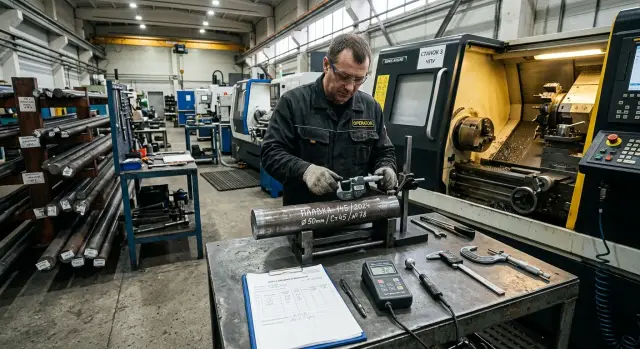
Why parts from the same heat can cut differently
This situation is familiar on the shop floor. The first parts run smoothly: dimensions hold, chips come off evenly, and the tool cuts cleanly. Then, on the same program, one blank starts to heat the tool more, another changes the cutting sound, and after a few dozen parts the size slowly drifts from the set value.
At first you think it’s a setup issue. The operator adjusts compensation, checks the chuck, reviews the modes, and the machine returns to normal. But often this only helps for a while. If the material itself behaves inconsistently, one good setup won’t keep the whole batch under control.
One heat does not mean every blank is identical. Within a delivery the hardness, microstructure, internal stresses and surface condition after cutting or forging can vary slightly. These differences are almost invisible to the eye, but the tool feels them immediately.
The connection is simple. If you get a harder blank or a denser area, the edge load increases. The tool dulls faster, temperature rises, and dimensions start to drift. If a blank cuts softer, the picture changes as well: chips break differently, cutting forces drop, and the actual material removal is not the same as on the first parts.
So the same set of cutting modes can give different results even inside one batch. The machine repeats exactly what you program. But it does not compensate for material differences by itself. Two problems follow: tool wear deviates from plan, and part-to-part size variation grows.
This is especially noticeable in turning. Imagine a batch of shafts starts well, then after mid-shift the insert life falls from 120 parts to 70. The operator has to add compensation more often even though the program hasn’t changed. This is usually the first hint that the issue is in the blanks, not the setup.
That’s why it’s better to check material before the first full run. Such inspection doesn’t remove every risk, but it helps spot where a batch may behave differently and where dimensions will start to drift earlier than usual.
What changes in the metal even within one heat
Even with a single certificate, the metal inside a batch does not always cut the same. On the machine it shows quickly: one blank runs calmly, another gives a different size after a few parts, a different cutting sound and different insert wear.
The first cause is hardness variation. It can occur not only between deliveries but along the length of a bar. Hardness at the end may differ from the middle, and metal at the start of a shipment can behave differently than at the end. The difference seems small, but it’s enough for the tool. Cutting forces increase, heating changes, and dimensions begin to "float".
The second cause is microstructure. After rolling, grain size and fiber direction may differ across the cross-section of a blank. If the material had heat treatment, that adds another source of variation: some areas are more uniform, others remain harder or softer. On paper it’s the same steel grade. In practice it’s not quite the same material everywhere.
The third cause is the surface. Scale acts like an abrasive and wears the edge noticeably faster than clean metal. A decarburized surface layer, on the other hand, cuts easier at first, then the tool enters denser metal and the cutting mode appears to change. Add internal stresses and a blank can slightly distort in size or shape after allowance removal.
Why a certificate is not enough
Chemical composition may be within tolerance, but that doesn’t mean two deliveries will behave identically in machining. In one heat carbon, manganese or sulfur may be near the upper limit, in another near the lower. Formally both batches are acceptable. In cutting, however, the difference is visible: chip form changes, tool life increases or decreases, and surface finish behaves differently.
A certificate shows compliance with requirements. It does not show how each pack inside the delivery will behave on your specific machine, with your specific insert and modes. That’s why incoming inspection is not a formality. It helps catch simple deviations before the run and avoid wasting time later blaming the machine, chuck or operator.
What to check before the first run
The first surprise usually hits not on the hundredth part but on the first trial. So check the material before installing the program, not after a size jump or sudden insert wear.
Start with the basics. Verify the markings on the blanks against the delivery documents. Material grade, supply condition, diameter, heat number and certificate should match. If the tag says one thing and the paperwork another, don’t assume "it’ll do." Small mismatches become different cutting forces and drifting dimensions.
Next, check hardness. Don’t limit yourself to one point on one blank. Take at least 3–5 pieces from different places in the pack and make several measurements in different zones. If one end is noticeably harder and the other softer, the tool will behave differently even with the same setup.
Then measure the blank itself. Look not only at nominal diameter but at ovality, runout and straightness. In turning this quickly affects the result: one part runs true, another needs extra stock removed, a third shifts size after a couple of passes.
Surface condition tells a lot too. Scale, corrosion marks, small cracks, dents from transport — all affect the initial contact between tool and metal. A rough surface can wear an insert faster than expected, and the first dimension may drift before the cut stabilizes.
If differences are obvious, sort the blanks before the run. Don’t mix material with different surface tones, scale marks or noticeably different geometry in one batch. It takes 20–30 minutes and saves long searches for causes in the machine, tool or program later.
How to build incoming inspection step by step
Incoming inspection shouldn’t slow the shop. A normal routine takes 10–15 minutes per delivery and immediately shows where to expect extra tool wear and dimension drift. The simpler the procedure, the more likely it will actually be done.
First, choose sampling points across the batch. One bar from the top tells almost nothing. Take samples from different packs and, in a long delivery, from the beginning, middle and end. For a large batch 3–5 points usually suffice. If the material has surprised you before, do more checks.
Then set the same measurement set for each delivery. Usually hardness, actual diameter, ovality, straightness and a brief surface assessment are enough. For turning this reveals why insert wear is uneven and why a heat doesn’t cut as smoothly as the previous one.
Keep records simple. One form is better than three spreadsheets. Include date, supplier, grade, heat number, sampling points, measurement results, trial cutting mode and operator notes. When the foreman, setup technician and inspector look at the same sheet, there are fewer disputes.
Compare the new delivery not with a catalogue but with your previous batch. If hardness rises by 15–20 HB that’s reason to check insert life and feed. If the bar diameter varies more than usual, the first part’s dimension may drift before you notice it in a series.
Typical decisions are:
- start production immediately if variation fits your usual range;
- set aside part of the material for trial cuts if one or two indicators exceed the normal level;
- stop the run and contact the supplier if variation is large and unclear.
After a few deliveries you’ll build your own database: which material cuts smoothly, where the tool wears faster and at what values dimensions start to drift. This becomes a working shop standard, not theory.
Signals visible on the first parts
The first 5–10 parts often show a problem long before the whole batch is affected. If one blank cuts calmly and the next on the same mode already gives a different size, the cause is often the material, not the program.
The earliest signal is the chip. With uniform material chips look similar part to part: shape repeats, color changes little, evacuation is predictable. If chips suddenly darken, shorten and become brittle or, conversely, stretch into a sticky ribbon, the cutting zone is working differently. At the same time the operator usually hears a different sound and sees spindle load rise on the same pass.
Look at a short series rather than a single part. The first part sometimes hits the dimension simply because the tool is fresh and thermal conditions haven’t changed. It’s fairer to measure 3–5 parts in a row at the same dimension. If the first is mid-tolerance but the third and fourth creep toward the limit, the material is causing variation.
Typical warning signs:
- chips change shape and color on the same allowance;
- the machine shows different load on identical passes;
- size drifts across a short sequence rather than a single part;
- wear compensation must be applied too early.
Many waste time with compensation. An operator adjusts wear by 0.01 mm after the second part, then again after the fifth, and thinks the process is under control. In fact that’s already a signal. If compensation grows too fast, the tool is wearing differently than expected or hardness varies inside the batch.
A simple example: you turn a shaft, the first two parts hold size, the third’s chip darkens, the fourth shows higher load, and on the fifth you have to move compensation again. In such moments it’s wiser to stop and check the material than to sort dozens of parts later.
Shop example: a batch of shafts behaved differently
A delivery of shaft blanks arrived with a single certificate and one heat number. The material was ordinary steel for CNC turning. On paper everything looked fine: one supplier, one bar diameter, one heat.
The first pack ran smoothly. The insert lasted about 110 parts, diameter stayed stable, and minimal adjustments were needed. When the operator took the second pack from the same delivery, the situation changed: after 35–40 parts insert wear increased noticeably and size drifted by 0.03–0.05 mm.
At first they suspected the program or setup. But the mode, tool, chuck and operator didn’t change. Then they checked the material.
They found the cause not by a single sign but by combined evidence. They measured hardness on several blanks from each pack, compared spindle load on the first passes, inspected the bar surface and tracked insert wear by pack rather than in one pile.
The check showed a simple fact. The first pack stayed in a narrow hardness range, around 190–195 HB. In the second pack parts ran up to 205–210 HB, and in places the cut hit a harder surface layer. The certificate didn’t show this because it described the heat as a whole, not every pack inside the delivery.
After that they stopped mixing packs. Blanks were sorted by hardness into two groups, packs labeled and processed separately. For the harder group they reduced insert life expectations and checked the first parts more often. Dimensions became predictable again and insert wear stopped surprising them mid-shift.
That is the point of incoming inspection. It doesn’t replace the certificate; it checks how the metal behaves in real cutting.
Mistakes that cause repeated surprises
What costs most is not sporadic scrap but repeated surprises. Today a batch runs fine, tomorrow the same drawing gives different wear and size drifts from the first parts. Often the reason is a few simple errors at the incoming stage.
The first error is judging a whole delivery by one blank. One bar can cut softer, another harder, even if both come from the same heat. Checking only one sample gives a false sense of security.
The second error is trusting only the certificate. Documents are necessary but don’t replace actual measurements. A certificate won’t show a harder surface layer, ovality or significant diameter spread between packs.
A very common third mistake is placing leftovers from the old supply next to the new and starting everything together. Later the operator hears different cutting sounds, sees different chips and varying dimension drift but can’t tell which blank is which. If packs get mixed up you lose traceability and start guessing.
Another frequent story is blaming the machine or operator for everything. Of course machine, tool and modes affect results. But if dimensions jump and inserts wear earlier than usual, check the material immediately. Otherwise the shift spends time on adjustments when the fault lies in the blanks.
The last mistake is changing modes without recording it. One setup person raises speed, another lowers feed, a third fits an insert with a different grade. After a day no one can say what actually helped and what only masked the problem.
It’s enough to record three things:
- heat or batch number;
- actual hardness and diameter of several blanks;
- any changes in speed, feed, tool or coolant.
When the shop keeps these records, size variation stops looking random. You can see where the material differs, which mode was too aggressive and why inserts started wearing earlier than normal.
Quick checklist before starting a batch
Spend 10–15 minutes on checks before starting and you’ll avoid extra tool wear and size spread across the shift.
Verify that heat markings are present on the whole delivery, not just one top tag. If some blanks lack markings, don’t mix them with confirmed material.
Take hardness readings at several sample points. If readings vary significantly, stop and investigate rather than tuning the machine for every tenth part.
Inspect blank geometry before the machine. Ovality, curvature, straightening marks and obvious diameter spread often cause problems before the operator can correct the mode.
Pull up data from the previous batch: feed, speed, depth of cut, the tool used and when wear started to rise. Shift memory fails; a short note stays.
Set aside suspicious blanks immediately. Don’t leave them in the common bin thinking “we’ll sort later.” Usually they are the ones that enter the machine at the worst moment.
If hardness in one sample differs by 2–3 HRC, be alert. On roughing the difference might pass unnoticed; on finishing it often shows up in dimension and edge condition.
A good habit is simple: operator, inspector and foreman look at the same short check card before start. No complex system is needed.
What to do next so dimensions stop drifting
If dimensions drift from batch to batch, don’t immediately change the machine, tool or setup. First build a simple control card. At start it’s enough to record a few items: heat number, hardness of several blanks, first-part dimension, compensation after 5–10 parts and insert condition at a fixed interval.
This card quickly shows what’s driving the process. Sometimes dimensions drift not because the metal is “bad” but because a harder blank changes heating and the insert wears faster. If an insert normally lasts 80 parts but on the new batch only 60, that’s a fact, not a guess.
Collect your data in one table. Record the whole chain: "heat – modes – tool – dimension – wear." After 2–3 deliveries you’ll see which blanks cut calmly and which need different feed, speed or more frequent compensation.
Don’t use one mode for all blanks with the same steel grade. On paper the material is the same, but in practice it can vary. Split blanks into at least two groups: those that run normally and those that cause accelerated wear. For the second group a slight reduction in cutting speed, lower feed or earlier insert change often removes dimension spread.
When the problem repeats, discuss it with data. Show hardness history, compensation and wear. Then the conversation becomes concrete: check fixture rigidity, choose a different insert geometry or recalculate modes for that specific delivery.
For shops buying CNC lathes or revising setups, this approach is especially useful. EAST CNC supplies CNC lathes for metalworking and provides commissioning and service. That is helpful when you need to analyze the whole chain "machine – tool – mode" and not only the material.
The sooner you start collecting material data, the less often dimensions will drift for no clear reason — and the less time you’ll spend on unnecessary adjustments during a series.
FAQ
Why do blanks from the same heat cut differently?
Because blanks inside one batch still differ slightly. Hardness, microstructure, surface layer, ovality and internal stresses can vary, and the cutting tool senses these differences immediately. As a result, on the same program temperature and load rise, the chip changes shape, and dimensions start drifting earlier than expected.
What signs are visible on the first parts?
Start by watching the chips, cutting sound and spindle load. If chips on the same allowance suddenly darken, become sticky or break differently, the material is already behaving differently. Then measure not just one but 3–5 parts in a row. If you need to apply wear compensation too early, the issue is often with the blanks, not the program.
Why measure hardness at several points?
A single hardness reading can give a false picture. One end of a bar can be softer and the other harder, and the tool will wear differently. Take several blanks from different places in the pack and measure several points on each. That way you'll quickly see whether to expect surprises in dimension and insert life.
Why is a certificate not enough?
A certificate confirms the batch meets material requirements. It does not show how specific blanks will behave on your machine with your insert and cutting modes. It won’t reveal scale, ovality, a harder surface layer, or noticeable variation between packs. Treat the paperwork as a first step, not a complete inspection.
What to check before the first run?
Start simple: check markings, heat number, diameter and documents. Then measure hardness, blank geometry and surface condition. If you see scale, corrosion, bends or a noticeably different diameter, sort it out before the first cut. Those small issues quickly turn into extra tool wear and drifting dimensions.
When should you stop a batch instead of tweaking compensation?
If you find yourself adjusting compensation on the second, third or fifth part, don’t keep turning the knob. First compare chips, spindle load and dimensions over a short run. When dimensions drift in sequence rather than randomly, stop the run and check the material. You’ll save more time than you lose on a pause.
How not to mix old and new supplies?
Don’t place leftover bars from the previous supply next to the new ones without labels. Tag packs, keep them separate and don’t remove labels until processing is finished. If suspicious blanks appear, put them in a separate container right away. Otherwise, after a few hours no one will know which pack caused the spike in wear and dimension drift.
What to record for a batch so you don't have to guess later?
A short control sheet is enough: heat or batch number, hardness of several blanks, actual diameter, surface notes, trial cutting mode and when compensation started. Also record how many parts an insert lasted on each batch. After several runs you’ll see which material cuts calmly and which requires a different approach.
What to do if some blanks are noticeably harder than others?
Do not mix such blanks with the general stock. Sort them, mark them and run them separately. For that group, a gentler cutting mode and more frequent checks of the first parts usually help. Often it’s enough to change the insert earlier to prevent dimension drift in the series.
How long does incoming inspection take and is it worth it?
Usually yes. A simple check takes 10–15 minutes if the shop keeps a clear sampling and measurement routine. Those minutes often save the shift from extra adjustments, sorting parts and premature tool changes. It’s especially noticeable on long runs, where one surprise can affect dozens of parts.