
Linear or Box Guides in the Workshop
Linear or box guides: we explain which cutting regimes, loads and materials suit each arrangement in real shop work.
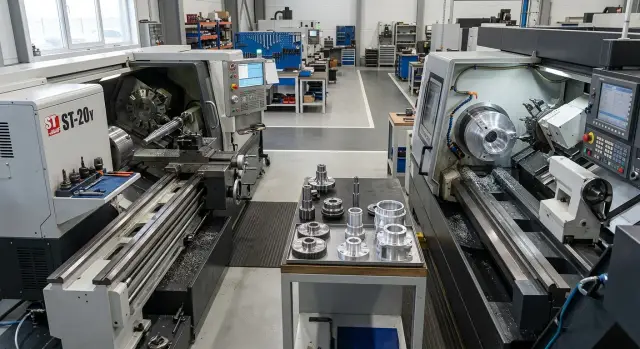
Why the choice of guides affects the workshop
Buyers often first look at power, the spindle and chuck size. That’s understandable. But the guides largely determine how the machine behaves under load, how it absorbs shocks and how long it keeps accuracy.
The difference is most noticeable not on a spec sheet, but during a real shift. The same machine can quickly and cleanly machine aluminum but start to chatter on heavy roughing of steel. It can also be the opposite: a machine confidently removes a large allowance but loses time on light series because of transitions and fast moves.
Roughing and finishing require different axis behavior. During rough cutting the machine is subject to impact loads. You need stiffness and calm operation under force. In finishing, smoothness, repeatability and precise response to small moves matter.
The usual mistake is simple. A machine is chosen by one number: power, mass or maximum turning diameter. In the shop that’s not enough. What works there are not table numbers but specific parts, material, allowance and cutting mode.
So the question “linear or box guides” is best answered for your tasks. If the shop turns steel shafts every day with heavy material removal, requirements will be one thing. If you mostly run aluminum housings, short series and frequent changeovers, the picture is different.
If you miss the mark on guide type, consequences appear quickly. On some regimes vibration shows up, tools wear out sooner, and scrap from size or surface roughness grows. Then the shop almost always does the same: reduces feed and depth of cut so the machine runs quieter. Cycle time increases, and losses increase with it.
How linear guides behave
Linear guides give quick, light axis motion. The carriage rolls on a rail with low friction, so the drive spends less effort on acceleration and braking. In practice this is obvious: the carriage reaches position faster, idle moves are shorter, and frequent transitions feel snappier.
This layout is especially convenient where the program constantly moves axes between points. If a part has many short moves, trim cuts, bores and tool changes, the machine doesn’t lose tempo on each transition. That’s why linear guides are often chosen for serial work with repetitive cycles.
They perform best on light and medium cuts. Stable feed, smooth surface and short piece time usually come first. This is noticeable on aluminum, on small and medium steel parts, on housings and bushings where speed and neat finishing matter.
A linear scheme is particularly suitable when you have:
- many short operations in one cycle;
- frequent tool changes and fast approaches;
- medium batches of identical parts;
- emphasis on speed rather than heavy single-pass metal removal.
But this construction has a requirement: cleanliness. Chips, abrasive dust and dirty lubricant damage rolling elements faster than many expect. If cutting debris accumulates and rail protection is weak, carriage wear comes sooner than planned.
So you can’t evaluate linear guides by the catalog alone. They need decent covers, clean lubrication and a habit of removing chips promptly. If the shop follows this, the machine keeps accurate motion and high tempo for a long time.
A simple example: a lathe makes a series of small steel bushings and aluminum housings. Axes move constantly and cuts are often medium, with many transitions. In such work, a few seconds saved per cycle quickly add up to a noticeable gain over a shift.
How box guides behave
Box guides are often chosen where the machine works daily with large metal removal. They have a larger contact area, so the assembly sits more solidly on the base and handles loads more calmly. The operator notices this not in a datasheet but by the sound and by the cut itself: the machine vibrates less when the regime gets heavy.
This layout is chosen where stiffness matters more than record idle move speed. If the part is massive, the chuck is large and the tool takes a deep cut, a box base usually feels more confident. For roughing steel, cast iron and forgings this is a common advantage.
Box guides cope better with impact loads. This is especially evident in intermittent cutting, a rough skin after casting or an unstable blank where the tool occasionally receives shocks. In those conditions the machine less often goes into vibration, and size holds steadier.
Another plus is calm behavior under stiff regimes. When a shop turns a large steel shaft with a considerable allowance, this layout gives a support that makes it easier to hold feed and depth of cut without constant concessions. For heavy turning operations this is often preferable to chasing rapid dynamics.
The downside is clear. Rapid traverse speed on a box scheme is often lower than on a linear one. On a series of small parts this is felt: the machine spends more time on approaches and transitions, and the cycle is not the fastest.
Box guides are usually chosen for tasks with large parts, deep passes, hard or ductile materials, and regimes with impacts and vibration.
Even this design dislikes poor maintenance. If oil supply is inadequate, the assembly loses its strengths faster. A box scheme is good where the machine is genuinely loaded and properly serviced.
Which cutting regimes suit each layout
Guide type is best considered together with cutting regime. Some machines keep a high tempo on finishing passes more easily; others handle deep roughing more calmly.
Linear guides often fit where axis speed, short cycles and a smooth surface after light or medium removal matter. This is convenient for finishing, repetitive parts and batches where the machine constantly accelerates, brakes and quickly moves from one operation to another. On aluminum and on small steel parts this scheme often provides a livelier working rhythm.
Box guides feel better on deep rough cuts. When an operator takes a large allowance, mounts a heavy blank or works with intermittent cutting, stiffness and damping come first. In those conditions the machine behaves more calmly, which immediately affects size and tool life.
If simplified, the picture is:
- for finishing passes, small depth of cut and high tempo, linear guides are usually more convenient;
- for large metal removal, low speeds under load and heavy blanks, box guides are more common;
- if the part produces impact loads (keyways, casting skin or uneven allowance), box guides give more reserve.
In mixed workloads the difference is clear. Small series of housings with short finishing passes are usually faster on linear guides. But if the same shift moves to massive steel blanks and roughing, box guides often prove calmer and more predictable.
Problems start when buyers look only at rated rapid speed. That’s not enough to choose a lathe. First honestly describe your regimes: depth of cut, allowance, impact loads, how many hours the machine runs without stop. After that the difference between the two layouts becomes much clearer.
How workpiece material changes the choice
Material affects not only tool life but the whole machine’s behavior. Some blanks cut easily and favor speed. Others load the machine more, generate heat and cause vibration sooner. So choose guides together with the types of parts your shop runs daily.
With aluminum and non-ferrous alloys the picture is usually simple. These materials suit linear guides well when the shop needs high axis speed, short cycles and a clean surface. This is common for serial light parts with many quick approaches, frequent tool changes and neat finishing.
With steel it depends not only on grade but on the regime. If the shop turns ordinary structural steel with moderate cut depth and normal feed, a linear scheme often handles it fine. But with heavy roughing, large depth of cut and a heavy blank the load rises sharply. There box guides usually work calmer and withstand impacts better.
Stainless and ductile alloys are more demanding. Tools cut these materials harder, chips stretch and cutting is heavier on the machine. In such work a reserve of stiffness often matters more than a few seconds on idle moves. So box guides frequently fit better, especially when removing a lot of metal per pass.
For cast iron and large castings the choice also often shifts toward box guides. The reason is simple: large masses, intermittent cutting and noticeable load on the bed. For massive housings this is generally a calmer option than trying to gain time only by axis speed.
Brief logic:
- aluminum, brass and non-ferrous alloys tend to favor linear guides;
- ordinary steel requires looking at depth of cut, feed and part mass;
- stainless, heat-resistant and ductile alloys often require more stiffness;
- cast iron and large castings usually lean toward box guides.
If your shop runs aluminum bushings today and heavy steel shafts tomorrow, there’s no one-size-fits-all answer. Start by asking which material and what roughing load occur more often. That most quickly shows which layout gives a normal result without extra compromises.
How to choose step by step
Choosing between linear and box guides is better done by actual machine loading, not by generalities. The same lathe can work great on finishing a batch of bushings and noticeably worse on heavy roughing of shafts.
First collect not a wish-list from the catalog but a list of parts the shop turns most often. Ten to fifteen items are usually enough. Look not at rare orders but at those that run every month and bring the main revenue.
For each part, note four things: blank material, its mass and allowance, where roughing and where finishing are required, and what matters more for you — short cycle or reserve stiffness.
After that the picture quickly clarifies. If the shop mostly removes a lot of metal from steel, works with heavy blanks and regularly faces vibration, box guides usually give calmer operation. If the flow contains many repetitive parts, short cycles, finishing passes, aluminum or medium-sized steel parts, linear guides often win.
It helps to split orders into two groups. The first brings volume-driven money where productivity matters. The second brings complex money where stable size and surface finish matter. For machine choice this is often more important than arguing about the guide design itself.
For mixed production don’t look for a “best for everything” option. See which regime occupies more shifts per month and buy for that. That makes the conversation concrete: not abstract pros and cons but your parts, your removal and your tempo.
A discussion with a supplier who can go from selection to commissioning is useful. For example, EAST CNC supplies CNC lathes for metalworking and usually discusses not only the model but material, regimes, commissioning and ongoing service. That approach is more useful than comparing two lines in a catalog.
Shop example: shafts and housings
The same area can do long shafts in the morning and heavy housings after lunch. On paper this is a mixed load. In practice the difference between guide types becomes obvious.
If orders mostly include shafts, the picture is usually: a long part, several finishing passes, small depth of cut, many fast moves. In that work linear guides often deliver a better result. The machine moves between operations faster, responds livelier to feed and helps keep a steady rhythm on a batch of identical parts.
This is clear when the operator turns a batch of shafts with bearing fits or journals. The allowance is small but size must be kept, and the surface shouldn’t need lengthy rework. Linear guides are often justified in such tasks.
With housings the story differs. If the blank is heavy, allowance large and cutting under significant load, box guides often behave calmer. They handle roughing, sharp forces and intermittent cutting better. When you need to remove metal confidently, not save seconds on idle moves, this scheme often wins.
A good example is a steel housing with an untreated cast surface. The first pass is hard, the tool sometimes enters unevenly and load varies. In those conditions box guides usually give more predictable machine behavior.
If the shop does both shafts and housings, don’t base the choice on the rarest part or a single lucky order. Look at what takes most of your shifts. If 70% of time is finishing shafts, one heavy housing a week shouldn’t dictate the choice. And vice versa.
Common mistakes when choosing
Mistakes are less about the catalog and more about selection logic. Linear and box guides are compared by one striking number while skipping what will affect daily production.
The first trap is looking only at rapid-traverse speed. Yes, high speed looks good in specs. But if the machine cuts heavy steel rather than runs an empty carriage, that number alone means little. The shop needs predictable performance in the real cycle, not the fastest acceleration on paper.
The second error concerns mass. Buyers often consider only the part and forget the chuck, fixture, tool cluster and tooling. As a result the real load on guides differs from what was assumed at purchase. For a light aluminum part this may go unnoticed. For a large steel blank the problem quickly shows as vibration, surface marks and extra wear.
Another common story is buying a machine for a rare order. A complex part comes once a month and they want to choose the whole machine for it. But then the machine spends 80% of time on other work. If the main shop load is serial shafts, bushings or typical housings, choose for them.
People also confuse rated accuracy with accuracy in real cutting. Datasheet numbers come from controlled conditions. The shop is different: heating occurs, tool overhang changes, the operator mounts a heavy blank, and regimes vary part to part. So look not only at the dry number but at how the machine holds size and surface under working load.
Before buying ask direct questions: which parts do you run almost every day, what total weight do chuck, tooling and blank carry, on which regimes will the machine work most of a shift, and what costs you more now — long cycles or chatter during cutting?
Quick check before deciding
Five minutes with a notepad often gives more than a long debate about what’s better in general. Compare guides by your usual load.
First see which material runs almost every day. If the shop mainly turns aluminum, small steel parts and frequently switches batches, linear guides usually give livelier work. If you more often run steel, cast iron, dense alloys and heavy roughing, box guides usually behave calmer.
Next estimate how much metal you remove per pass. Small and medium allowances, frequent fast moves and a focus on cycle time tend to favor linear guides. Deep cuts and forceful cutting more often point to box guides.
Then recall how much time is spent on transitions, not cutting. When batches are large and transitions many, axis speed differences start to save noticeable time per shift.
Also check for heavy blanks and intermittent cutting. Forgings, parts with keyways, cast housings and work that hits the tool impose heavier loads. In those conditions box guides usually give more reserve.
One simple test: do you need stable size all shift without constant tweaks? If the operator can’t be adjusting hundredths every two hours, you can’t choose based on speed alone. Here stiffness, thermal behavior and machine response under load matter.
What to do before buying a machine
Start the purchase not from a catalog but from your parts. Take 10–15 typical items your shop runs most often or plans to produce. For each part note material, dimensions or diameter, allowance, depth of cut, feed, required surface finish and tolerance.
This quickly makes clear what you need in practice. Short passes on aluminum with frequent tool changes are one thing. Heavy steel turning where the machine holds load for a long time is another. On these examples it becomes clear which guide type fits better.
Compare machines only on the same task. If one machine is shown on a light part and another on heavy steel, that comparison is meaningless. You need the same material, similar blank, comparable tool and a clear cutting regime. Otherwise the choice becomes an argument about advertising, not about real shop work.
Also clarify what happens after delivery. Who does commissioning, how long is setup, is there service and how quickly can you get help with tuning and maintenance. If this stage isn’t planned, even a good machine may stand idle.
If you need machine selection for specific parts and regimes, it’s useful to talk with a supplier who covers the whole cycle. EAST CNC works in this format: consultation, selection, delivery, commissioning and service. When choosing between linear and box guides such an approach is as useful as the machine specification itself.
FAQ
What is better for heavy roughing of steel?
For heavy roughing of steel, box guides are usually chosen. They hold up better under deep cuts, absorb shocks more calmly, and less often push the machine into vibration during heavy material removal.
When do linear guides provide a real advantage?
Linear guides typically win where there are many short moves, frequent tool changes and repetitive cycles. On batches of bushings, housings and other parts with light or medium cuts they often reduce cycle time per piece.
Are linear guides suitable for aluminum?
Yes — for aluminum a linear arrangement is often more convenient. It gives fast moves, a steady rhythm and good finishing without unnecessary delays, provided the shop keeps the cutting area clean and maintains lubrication.
What to choose for stainless steel and ductile alloys?
Often yes, especially if you remove a large allowance and cuts are heavy. Stainless steel and ductile alloys load the machine more, so box guides usually handle those regimes more confidently.
How do I know my shop needs box guides?
Look not at a rare order but at what occupies most shifts. If you regularly work with heavy blanks, deep cuts and intermittent machining, a box arrangement is likely closer to your needs.
Is it true that linear guides wear out faster?
Linear guides aren't bad by themselves, but they depend more on cleanliness. Chips, abrasives and dirty lubricant wear rolling elements faster, so good rail protection and maintenance are mandatory.
Can one machine cover both shafts and heavy housings?
Yes, if one group of parts clearly predominates. For mixed loads you choose the machine for the regime that occupies most shifts, not for the most complex part once a month.
Why can't you choose only by rapid-traverse speed?
Because a high rapid-traverse speed doesn't show how a machine behaves under cutting. If the part is heavy, the allowance large and impacts occur, stiffness, damping and dimensional stability matter more than a single number on a spec sheet.
What should I check before buying a machine?
Take 10–15 typical parts and note material, blank weight, allowance, cut depth, feed and finish requirement. After that it becomes clear whether you need fast axes or extra stiffness.
How important are commissioning and service after purchase?
Yes. Commissioning affects the result at least as much as the model. A supplier who helps with selection, commissioning and service gets the machine into productive operation faster.