
Washing Parts After Machining: When It Affects Assembly
Washing parts after machining is not just about appearance. Learn how chips and coolant residues can cause false rejects, assembly issues and rework, and how to prevent them.
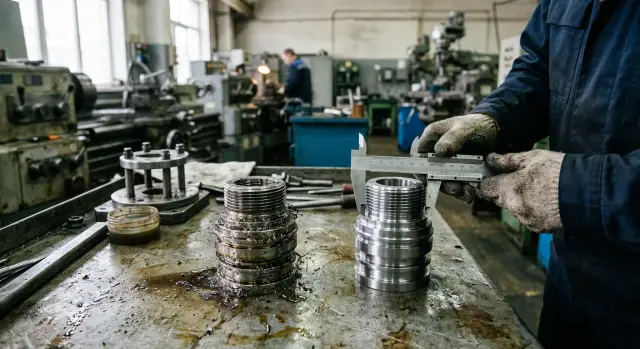
Why the problem shows up later
Right after cutting a part often looks fine: dimensions are within tolerance, the surface seems even, and there are no obvious defects. That’s why residues from machining are easy to miss.
There are almost always fine chips, traces of coolant and fine dust on the part. They hide in grooves, holes, threads and on edges. While the part sits in a tray or in the chuck, this is barely visible.
The problem appears at the next step. The part is handled, placed in a fixture, sent to assembly or inspection, and the machining residues begin to affect fit, datuming and the measurement itself. That creates the most frustrating situation: the dimension is correct, but the part still fails to pass.
What remains on a part after machining
After machining a part seldom comes out truly clean. The metal may look dry and smooth, but in small areas there is almost always something left. This is especially noticeable after turning and milling when parts have internal cavities, threads and narrow grooves.
The first issue is fine chips. Operators usually remove large swarf immediately, but short thin chips hide where they’re hard to see. They pack into grooves under retaining rings, lodge in threads, and catch on the edges of blind holes. Where channels intersect, chips often get stuck and remain even after blowing.
The second problem is an oily film. It sits on datums, faces, seating areas and mating planes. The layer is thin and easy to mistake for a natural shine. Yet this film attracts dust, holds tiny particles and prevents seeing the actual surface condition.
Also remember coolant residues. They collect in internal cavities, pockets and process channels. While the part lies on the table the liquid may not run out. Turn it, move it or warm it slightly and coolant can flow onto an otherwise clean surface. In one orientation the part seems clean, and ten minutes later it is not.
Even after deburring contamination doesn’t disappear by itself. Brushes, grinding wheels and hand tools leave fine particles. They settle on chamfers, sharp transitions and hole edges. In high-volume areas this dust quickly mixes with oil and turns into a gray film that’s hard to notice at first glance.
Worst is when residues sit in several places at once. One flange can have a film on the face, chips in the thread and coolant inside a hole. That’s why washing parts after machining is not about appearance. It removes what the operator doesn’t see at once but what later interferes with assembly and inspection.
Where dirt interferes with assembly
On assembly contamination shows up quickly. Even one chip under a flange changes how parts seat. The part rests not on the full surface but on random points. The assembler tightens fasteners trying to fit the assembly and ends up with a skew. Then they look for a dimensional error, while the cause is simpler — a dirty mating surface.
Threads are no better. If a film remains on the threads, the torque feel during tightening changes. The bolt may run more smoothly or the torque curve behaves differently, giving a false impression that the joint is tightened correctly. In reality the assembly can be under- or over-tightened. Both lead to play, deformation or accelerated wear.
Most often contamination interferes on flange and cover mating planes, in threaded holes, in fits for bushings, pins or bearings, and in blind holes where liquid remains.
Contamination in fits is especially unpleasant. If a chip or dried coolant sits in a hole, a bushing or pin goes in tight and uneven. From the outside it looks like the diameter is out of tolerance or the hole was damaged in a previous operation. Sometimes the part is sent for re-inspection when a proper wash and blow would have sufficed.
Liquid residues are dangerous for another reason: they enter the assembly and mix with lubricant. The lubricant then changes properties — in some places it becomes thinner, in others it picks up abrasive dust, and in some areas it doesn’t adhere properly. Externally the assembly seems normal, but the unit begins to perform worse within hours.
If a part won’t fit the first time, don’t immediately blame the dimension or the machine. First check a simple thing: are the mating faces, threads and holes clean? Often that saves time and avoids unnecessary teardown.
How dirt creates false rejects at inspection
Inspection often catches dirt, not a machining error. A thin film on a datum is enough for a part to sit slightly higher in a fixture. The eye barely notices it, but the instrument reads a shift of hundredths. The operator sees an out-of-tolerance result and concludes the machine has shifted the geometry.
This happens most with datum faces, ends and seating areas. If an abutment has coolant, fine chips or sticky dust, the part sits slightly differently each time. One measurement shows OK, the next does not. A dirty face behaves the same: each probe or dial touch gives varying results even though the part may be acceptable.
Holes cause even more false rejects. A single short chip at the edge or bottom prevents a gauge from reaching full depth. The inspector searches for broken tooling or a burr, but the cause is simple. After blowing and a proper wash the gauge passes easily.
With droplets of coolant there’s another issue. The probe touches not clean metal but a liquid film. Trigger points shift, repeatability drops, and the whole batch looks unstable: one part in tolerance, the next supposedly out, then the size returns. People adjust offsets while the machine is not at fault.
As a result, a good part gets rejected and the whole batch is delayed. The inspector rechecks sizes, the supervisor stops output, and the setup person looks for tool problems. The shop wastes time arguing with measurements instead of producing.
False rejects typically show by several signs:
- the result changes after simply wiping the datum;
- the gauge won’t enter but after cleaning it does;
- the probe gives different numbers at the same point;
- the same dimension jumps on several consecutive parts.
If a dimension behaves oddly, first remove chips from holes, dry faces and wipe the datum. Only then consider whether the machine is to blame. A simple habit often saves an entire batch from unnecessary rejects.
A simple shop-floor example
On one cell they turn a small housing, then send it for drilling, inspection and assembly. The part looks simple but one small issue disrupts the flow: a long chip remains in a blind hole and coolant clings to the walls.
After drilling the operator stacks the batch in a box and passes it on without proper washing and blowing. On the inspection table everything looks like a dimensional reject: the gauge enters with difficulty and in some parts stops before the required depth.
The inspector doesn’t see the internal chip immediately. He flags suspect positions, the batch is held, and some parts have already gone to assembly. There the problem is worse: the housing sits unevenly, fasteners are tightened harder than usual, and the foreman starts looking for an error in size or tooling.
An hour later the cell is sorting parts by hand, rerunning inspection, removing one part from assembly for teardown and checking drilling tool and parameters — though they are fine.
Then someone probes the blind hole with a hook or magnetic probe and pulls out a long chip. After washing, blowing and re-inspection the gauge passes as it should, depth is confirmed, and the reject is cleared.
These cases seem small, but they show why washing parts after machining matters. The problem wasn’t dimensional — it was dirt causing a false reject at inspection. If the batch had been washed and blown immediately, the cell wouldn’t have lost an hour on arguments between operator, inspector and assembly.
And it rarely stays a single local error. Chips hide in holes, pockets and threads, and coolant residues hold them through the next operation. People then search for a defect where none exists and waste time on repeat checks instead of normal work.
How to set up washing step-by-step
A cleaning scheme works only when tied to the next operation. If the part goes to assembly, focus on fits, threads, grooves, blind holes and mating planes. If it goes to inspection, pay special attention to areas where a droplet or a short chip changes the measured contact area or probe reading.
First map the part to mark zones where dirt truly interferes. Not the whole surface, but the problem areas. After turning these are often threads and grooves. After drilling and milling — pockets, channel intersections and inner hole walls.
Then choose a cleaning method suited to the part shape. Simple external surfaces are often fine with spray washing. Cavities and blind areas are better for immersion. If the part is small with thin channels, ultrasonic helps. Blowing is a complement, not a replacement for washing.
Set the process parameters for the material and type of contamination. Aluminum, steel and stainless behave differently. Too aggressive a solution will leave stains; too weak won’t remove the oily film. Choose temperature and time based on real contamination, not by guess.
Check that the wash removes both chips and coolant film. A part can look clean while a thin film remains, which later collects dust, interferes with inspection and leaves marks on the assembler’s hands.
Drying is as important as washing. Droplets in holes and cavities silently move the part into the next operation. In inspection they distort results, and in assembly they transfer onto mating surfaces.
Finally, define a simple route: machine — wash — dry — inspect — next operation. The fewer returns to the bench, temporary bins and waits in open trays, the lower the chance of re-soiling a cleaned part.
If the cell handles different parts, don’t use one regime for everything. A housing with pockets and a simple bushing have different contamination risks. Usually two or three standard wash schemes cover most cases and are easier to follow on the shift and verify.
Common shop-floor mistakes
Washing fails mostly due to haste. The operator quickly rinses the external surface, sees clean metal and passes the part on. Meanwhile, a groove, thread, blind hole or internal channel still holds fine chips.
Those residues later interfere with assembly. A seal won’t seat, a bushing goes in tight, or a threaded plug binds on the first turns. From the outside it looks like a machining error when the part was simply not fully washed.
Often teams check only visible areas. That’s the most common mistake. With complex shapes dirt hides where you can’t see without a light, probe or blowing.
Another frequent problem occurs when parts are passed on while still wet. Coolant residues leave stains, attract dust and chips, and sometimes change measurement results. The datum surface, V-block or probe touches not only metal but a thin liquid film — enough for a false reject.
Rarely changing the wash solution also creates extra work. At first the bath removes contamination, then it begins to spread it. Early in a batch this is barely noticeable, but mid-run a gray film, sticky residue or fine particles appear on parts that should have been drained away.
Skipping blow-down is another error. Liquid leaves open faces quickly but not channels and pockets. Parts placed on the inspection table or in a tray are later flipped and fluid comes out with chips, causing scratches, datum skew and false rejects.
Mixing clean and dirty parts spoils even a well-washed batch. If clean and dirty parts sit together, oil and chips transfer quickly. After an hour it’s hard to tell which part was washed and which just came from the machine.
Better follow simple rules: wash more than what’s visible, dry parts before transfer, change solution on schedule, blow out channels and store clean parts separately. These steps seem small but they most often stop disputes between the shop, assembly and inspection.
Quick check before the next operation
Even a good wash won’t help if no one does a short check before passing the part on. It takes under a minute and noticeably reduces arguments between the shop, inspection and assembly.
Inspect not the whole part but areas where dirt most quickly causes trouble: datums, faces, threads, seats and blind holes. Those are where chips and coolant most often cause misalignment, false size or tight fits.
Bright light helps more than you expect. Under a lamp you can see a thin coolant film, fine chips on an edge and droplets in recesses. If the surface is matte, rub it with a white wipe: on a clean part the wipe hardly changes color. If it picks up a gray streak, an oily line or tiny shiny specks, don’t send the part on.
Before inspection and assembly five actions usually suffice:
- inspect datums, faces and seating surfaces under bright light;
- wipe measurement and mating areas with a white wipe;
- blow blind holes and grooves with air;
- check there are no droplets before measuring;
- immediately separate clean parts from those that need rewash.
People often err with blind holes. A part looks clean outside while chips or thick coolant remain inside. If in doubt, one blow may not be enough. Probe the hole with a rod, thin probe or at least a clean plastic stick. That way you can tell what remains on the bottom.
A droplet on a part before measuring often causes a false reject. A micrometer or CMM probe reads the film, not the metal, shifting size by hundredths and sending a good part to rework for no reason.
A simple rule helps: clean parts go into a separate tray and are labeled immediately. Parts awaiting rewash must not return to the same bin. Otherwise one dirty part soils the whole batch and later the defect is sought in the wrong place.
What to do next
If the cell regularly argues over rejects, start not with tighter tolerances but with a map of problem operations. Mark where parts most often fail due to dirt: before inspection, during assembly, before seal installation or after interoperation storage. Within a week you’ll usually see that some defects are due not to dimension but to chips or coolant on the surface.
Next create a short cleaning standard for each group of parts. One general sheet for the whole shop is usually useless. Housings, shafts and small turned elements get contaminated differently and cleaning them the same way makes no sense. In a standard indicate how to wash after the operation, how long to wash and blow, which zones to check separately and who confirms handover.
Then measure not only reject rates but time losses. Sorting a batch, repeat inspection and assembly downtime often cost more than proper cleaning. If the inspector measures one part twice and the fitter removes a chip on assembly, the cell loses hours. Over a series that becomes a noticeable cost.
It’s easiest to test the approach on one SKU. For example, run 50 parts through the usual route and another 50 through the standard wash and a quick cleanliness check before inspection. Then compare how many parts went back for re-measurement, how much time went to sorting and how many assembly complaints occurred. Such a test settles disputes better than any debate.
If you’re selecting a new machine or production line, discuss washing, blowing and inspection up front, not after the cell starts. EAST CNC supplies CNC lathes, machining centers and automated lines, and helps with selection, commissioning and service. That way these process details can be addressed during the project rather than fixed urgently after launch.
FAQ
Why wash a part if it looks clean?
Because fine chips, dust and a film of coolant often hide in threads, grooves and blind holes. From the outside the part looks fine, but during inspection or assembly these residues change fit, datums and measurements.
What usually remains on a part after machining?
Most often you find fine chips, an oily film, coolant residues and dust left after deburring. Threads, fits, faces, grooves and internal cavities cause the most trouble.
Where does contamination most often interfere with assembly?
Assembly suffers when contamination gets on mating faces, into threaded holes or into fits for bushings, pins or bearings. Even a single chip under a flange can create a misalignment, and coolant in a thread changes the feel during tightening.
Can dirt cause a false reject at inspection?
Yes — often. A film on a datum or a droplet in a hole shifts measurements by hundredths, and a short chip can prevent a gauge from seating fully even though the part size is correct.
Is a single blow-off with air enough?
No — blowing alone is usually not enough. Air removes what sits on top, but chips and coolant often remain at channel intersections, at the bottom of blind holes and within sticky films.
How to quickly check cleanliness before inspection or assembly?
First inspect datums, faces, fits, threads and blind holes under bright light. Then wipe measurement areas with a white wipe and make sure there are no droplets or chips in holes and grooves.
When is ultrasonic cleaning useful?
Ultrasonic cleaning helps when parts have thin channels, pockets and areas hard to reach with a spray or brush. It’s not necessary for simple external surfaces, but for small complex parts it often saves rework time.
What mistakes are most common on the shop floor?
The most common mistakes are cleaning only visible areas, passing parts on while still wet, rarely changing the cleaning solution, and storing clean parts next to dirty ones. As a result, chips and film return to already cleaned surfaces.
How to organize the part flow after the machine?
Keep a simple route without returns: machine — wash — dry — inspect — next operation. Put clean parts into a separate tray immediately, otherwise one dirty part will soil the whole batch.
Where to start if the shop keeps arguing over rejects?
Start with one problematic part and mark where contamination most often breaks inspection or assembly. Then set a short standard: how to wash, how long to dry, which zones to check and who confirms the handover.