
Tool breakage sensor: why you need it at night
A tool breakage sensor stops the machine in time, reduces the risk of scrap at night and preserves a run of parts without constant monitoring.
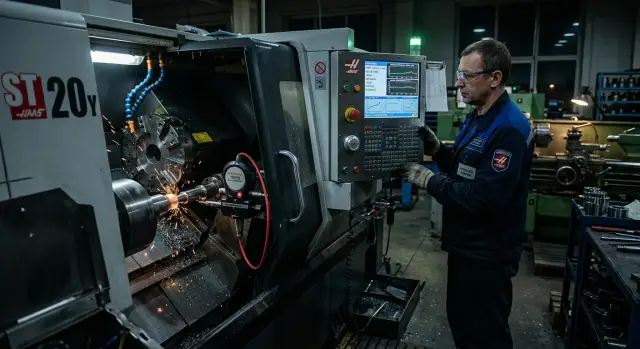
Why scrap increases when no one checks the tool
Scrap from a tool rarely starts with a big crash. More often it happens quietly: the edge chips slightly, the insert cuts worse, dimensions drift, a burr or ripples appear on the surface. At first it seems minor. After a few cycles you get a run of parts that are out of tolerance.
On a CNC machine this is especially unpleasant in a series. If an operator is nearby, they usually notice early signs: the sound changes, load rises, chips look different, or marks appear on the part. When no one is at the machine, the program keeps running and accumulates scrap part by part.
At night the risk is higher for a simple reason: there are fewer checks. During the day the operator often inspects the first part after changing a tool, measures it and notices deviations faster. At night a series usually runs longer without pauses, and too much time passes between walks. That's enough for a small chip to turn into dozens of ruined blanks.
A typical situation in serial metalworking looks like this: an insert chips on the 12th part, but the cycle doesn’t stop. The next 30–40 parts are machined out of tolerance. In the morning the batch seems ready, but after inspection some parts are scrapped and some fall into a borderline zone that needs re-measurement.
Losses are not limited to one blank. The shop loses material, machining time and people’s time. The operator must restart the series, quality must check the whole batch instead of a sample, and delivery deadlines shift.
If the break isn’t noticed in time, the problem often goes beyond scrap. The machine can hit fixtures, damage a neighboring tool or spoil a surface so badly that reworking won’t save the part. Sometimes everything looks fine until final inspection, and then it turns out the dimension drifted a few hundredths.
Even simple checks greatly reduce such chains. And if the machine has a tool breakage sensor, the system catches a fault before the series goes too far. For the night shift this is not a pleasant extra but routine insurance against waking up to a tray of scrap.
How the sensor notices the problem in time
A tool breakage sensor checks the condition of the tool itself after a operation or before the next pass, not the part quality. The idea is simple: the cutting edge is where it should be, or it isn’t.
On the machine this works without complex logic. The tool approaches the control point, touches the sensor or passes through a measuring zone, and the system compares the actual position to the expected one. If the deviation is outside tolerance, the machine does not continue the program.
Alarms usually appear at one of two moments: immediately after machining a part, or before the next cycle. For the night shift that is particularly useful. The machine won’t make another 20 blanks with a broken insert.
What the sensor actually detects
Complete breakage and heavy wear are different things. With a complete break the sensor typically registers a sudden change in tool length or lack of contact at the expected point. Then the system stops the cycle and raises an alarm.
Wear is trickier. The edge may still cut, but the dimension drifts, the surface degrades and load increases. With properly set control the system can give a warning before the series produces noticeable scrap.
In practice the scheme often looks like this: after a set number of parts the machine performs a check measurement. On minor deviation the system issues a warning. On a large deviation it stops machining. Then the operator or fitter decides whether to change the tool or adjust the cycle.
A good sensor does not replace a fitter. It doesn’t choose cutting parameters, find the wear cause or think for the person. Its task is simpler and very useful: stop the process in time when nobody is nearby.
Imagine a night run on a lathe: the insert chips on the eighth part, and without monitoring the machine runs until morning. In the morning there’s a container full of scrap and lost time. With a sensor the machine stops almost immediately after the failure, and the problem stays one bad part rather than the whole batch.
That is why this control is usually installed where runs are long, tolerances are tight and continuous observation is absent.
Where the sensor gives the most noticeable effect
The biggest benefit appears where a machine runs long without constant operator attention. If a cycle lasts 8, 12 or 20 minutes, the operator has time to do other work. In that time a cutting edge failure can go unnoticed.
This is most visible on repetitive runs. When a shop makes the same part dozens or hundreds of times, one problem quickly becomes a chain of identical scrap. If a tool breaks on the third part and it’s noticed only an hour later, losses are counted not per part but for the whole batch.
On a CNC lathe the risk exists on both roughing and finishing operations, but consequences differ. In roughing a broken tool can shift the dimension, leave excess stock or spoil the surface beyond saving. In finishing it’s harsher: sometimes only the tip of the insert breaks and the process looks normal, while the dimension drifts by fractions of a millimeter. Such scrap can survive until final inspection.
Sensors usually show their value in five cases:
- long cycle where the operator doesn’t check the machine every minute;
- runs of identical parts without frequent changeover;
- operations where a roughing pass is immediately followed by finishing;
- night shifts with fewer people in the shop;
- weekend or long unattended runs.
Night shifts and weekend runs are the most common scenarios where tool monitoring quickly pays off. During the day an operator may still hear a strange sound, notice odd chips or stop the cycle on suspicion. At night you can’t rely on that. One failure early in the shift can last until morning.
A simple example: a series of identical bushings with an 11-minute cycle. On the sixth part the drill chips, but the program continues. Without a sensor the machine ruins several more blanks. With a sensor it stops immediately after the check, and losses are limited to one part and a tool change.
That’s why sensors are installed not for convenience but to keep long runs calm when a person physically can’t watch every cut.
Example from a shift: how one break spoils a whole run
Imagine a normal night series: a lathe turns 80 bushings from one blank. The cycle per part takes about 3 minutes. The operator set the first batch, checked the size and left the machine to work, visiting it occasionally.
On part 27 the finishing insert chips mid-cycle. This rarely looks like a loud crash. Often the machine simply completes the pass, removes the part and takes the next blank. The program continues while dimensions have already shifted.
Bushing #27 almost certainly goes to scrap immediately. Worse, the machine then makes the next parts with the same damaged tool. Diameter starts to drift, ripples appear on the surface, edges become rougher. If the operator comes only after 30–40 minutes, they may find 10–12 ruined parts in a row.
For a small run that’s a serious loss. Suppose out of 80 bushings 11 are obvious scrap and 2 go for rework. You lose not only metal. Machine time is wasted, inserts wear out, people spend time sorting and restarting. In the morning the shift doesn’t get a finished batch but a pile of questionable parts and the question of where the dimension went wrong.
With a sensor the picture is different. After a pass or at a control point the machine checks whether the tool is in place and holds the correct position. If the insert has broken or its length changed significantly, the machine signals and stops the program.
The difference usually looks like this:
- without a sensor one break becomes 10–12 scrapped parts;
- with a sensor you most often lose one part, rarely two, after which the tool is replaced immediately;
- downtime is smaller because in the morning you don’t spend long searching for the cause.
On the night shift the sensor typically pays back fastest. When continuous supervision is absent, even a small chip easily ruins a whole run. In serial machining such quiet failures often cost more than the sensor itself.
How to implement a sensor without unnecessary stops
Start not with buying but with a risk map. Look where a broken insert or drill causes the most expensive scrap. Usually that’s a finishing pass, deep drilling, machining an expensive blank, or a long night run without constant supervision.
If a part is cheap and the operator checks the machine every few minutes, the benefit will be modest. If one unnoticed break ruins 20–50 parts, put a sensor there first.
Where to start
Next, check compatibility. It’s not only the machine that matters but the machining cycle: where the program can perform a check without an unnecessary pause. On some operations it’s convenient to check the tool after every part, on others after several cycles or before finishing. If the control point is chosen badly, the machine will start losing time without real benefit.
A normal scheme is simple: the sensor checks the tool where the time loss is minimal and the scrap risk is already noticeable. For example, after roughing and before the final pass. This way you don’t waste extra seconds on every move but catch the problem before size or surface is ruined.
If you select tooling for a specific machine, it’s useful to discuss not only the sensor itself but also its logic in the cycle. At EAST CNC such questions are usually combined with equipment selection, commissioning and service. That helps understand where control is truly needed and where just adjusting setup and check order is enough.
Pre-start checks
After installation don’t set thresholds by eye. First make several trial parts with a good tool. Then check how the system behaves with slight wear and with an obvious break. The threshold should catch a real problem, not every random noise.
Before a night run check four things:
- does the sensor see a good tool without false alarms;
- does the machine stop the cycle when triggered;
- does the system write a clear message for the operator;
- does the machine move to a safe position instead of staying in the middle of machining.
If you skip this test, the automation may detect a break but the line can still continue. Then the sensor exists only formally and scrap reduction doesn’t happen. It’s simpler to spend an hour during the day than sort a ruined run in the morning.
Mistakes often made when setting up
Most weak results are not because of the sensor itself but how it was integrated into the cycle. Even a good sensor gives little benefit if the check is in the wrong place, runs too rarely, or doesn’t cause a clear program reaction.
The first common mistake is placing the sensor too far from the required stable check point. On paper it looks fine: the tool reached, touched, signal present. In practice a long travel to the control point adds time and increases chance of dirt, chips and position scatter. When the check noticeably slows the cycle, people quickly start skipping it.
On long runs many choose rare checks to avoid losing seconds. The logic is understandable, but at night it often backfires. If the machine checks the tool every 30 or 50 parts, one break can ruin a noticeable part of the batch. For rough operations that interval can be acceptable. For finishing and expensive blanks it usually isn’t.
Where people get confused
Another mistake is expecting from the sensor what it cannot do. Breakage and wear are not the same. If the edge slowly dulls, the sensor may still consider the tool intact while part size already drifts. Wear needs other measures: size limits, life-based offsets and in-cycle part checks.
False alarms without a clear scenario cause trouble too. The signal comes and then what? If the program only stops with a general message, the night shift loses time and the cause remains unclear. It’s much better to define an immediate action: retract the tool, stop the cycle, call a spare tool or provide a clear alarm code.
In practice check four questions:
- how long one check takes;
- after which operations the sensor triggers;
- what the program does on alarm;
- how the shop separates breakage from normal wear.
And one more common mistake: drawing conclusions after the first week. A few shifts show only gross setup errors. The real picture appears after at least a month: how many parts went to scrap, how often the machine stopped in time and how many tools were changed unscheduled. Only then does the benefit of control become clear.
Short pre-run checklist for the night shift
Night runs don’t forgive small things. If the sensor is set correctly it stops the machine before scrap spreads through the batch. But the sensor alone won’t save you if no one did the usual checks before start.
The pre-run list usually takes 10–15 minutes. That’s far less than morning sorting and restarting.
- Remove chips, coolant drops and dirt from the sensor contact area. Even a thin layer near the sensor gives a false reading.
- Check where in the program the tool control is placed. It should trigger after high-risk operations, not at the very end of the cycle.
- If the operator changed the tool or insert, re-check the reference value. The old reference after a change often gives false alarms or, worse, misses a real break.
- See how the system logs alarms. At night this saves time: you can immediately tell if it was a break, a shift, a measurement error or a macro skip.
- Run several parts in the same mode that will run at night. It’s easier to spot drifting size and false triggers this way.
One more often-missed point: check not only the sensor but the machine’s stop logic. Sometimes the signal exists but the program moves to the next frame instead of stopping. Then the protection seems to work but parts still get ruined.
On long night cycles this is especially visible. On a lathe one unnoticed break can spoil not two parts but an entire cassette of blanks.
If you have several machines, make this checklist part of the shift routine. A short check before the night run gives more benefit than an extra hour of morning troubleshooting.
When the sensor pays off in practice
Payback is measured not by the sensor price but by the cost of one night error. If a machine runs without a constant operator, one broken insert can ruin not one part but a whole chunk of a run. In the morning the shop gets not just scrap but lost blanks, lost machine time and a new start.
A simple way is to count the cost of one ruined part including the blank and processing. If a blank costs 9,000 tenge and by the time of the break another 4,000 tenge of machine time and tooling is invested, one scrap costs 13,000 tenge. If the night run ruined 12 pieces, direct losses reach 156,000 tenge.
It doesn’t end there. In the morning the foreman stops the machine, finds the cause, sorts the batch, measures parts, changes the tool and brings the process back into tolerance. Even if this takes 2–3 hours, the shop loses part of a shift. In a series such downtime often hits harder than the price of several blanks.
Four items are usually included in the calculation:
- scrap cost for parts and blanks;
- machine downtime until the issue is discovered in the morning;
- re-running the batch;
- setup and first-part checks.
Then the comparison is fair. Suppose one night break caused 156,000 tenge of direct scrap, 40,000 tenge of downtime and another 25,000 tenge for restart and setup. Total loss is 221,000 tenge. If such cases happen a few times a year, the sensor pays back much faster than it seems at purchase.
This is most visible on long runs without constant supervision. The more expensive the blank and the longer the cycle, the quicker tool monitoring pays off. On simple batches the effect can be modest. On a night run of expensive parts the sensor often pays for itself after one or two serious incidents.
For shops running long serial jobs on CNC lathes the choice is simple: either you pay for monitoring or you pay later for scrap, downtime and frantic morning recovery.
What to do next
If you want to test a sensor’s benefit without big expense, don’t equip the whole area at once. Start with one operation where scrap is most costly: a night run, an expensive blank or a part that’s hard to rework. The effect appears quickly in such spots.
In many shops reducing night scrap starts not with a new machine but with proper control of one risky operation. If a tool rarely breaks but one failure ruins dozens of parts, delaying the solution is odd.
Gather numbers for at least a month. Record how often tools broke, how many minutes the machine stood, who noticed the problem and how many parts were scrapped or rechecked. That accounting quickly shows the truth: one night break can cost more than the entire sensor question.
Then discuss the task with those responsible for the machine, setup and service. The more specific the conversation, the better the result. You need data on the part: material, run length, cutting time, night mode, tolerances and the points where a break causes the costliest scrap.
If you work in Kazakhstan or other CIS countries and choose a solution for a specific machine model, you can discuss this with EAST CNC, the official representative of Taizhou Eastern CNC Technology Co., Ltd. The company supplies CNC lathes, helps with selection, commissioning and service, so it’s useful to consider the sensor together with the real machining cycle rather than separately from production.
The working order is simple: pick one problematic operation, collect break and stop data for 30 days, determine the tool check point in the cycle and run a test on one series. After that the decision usually becomes obvious from the numbers, not from impressions.
FAQ
What does a tool breakage sensor do?
The sensor checks whether the tool is intact and still in the expected position after a pass or before the next cycle. If the insert or drill has broken, the machine signals immediately and stops the run.
Why is the sensor especially needed on the night shift?
At night the operator visits the machine less often, so a small chip can easily become a pile of scrap by morning. The sensor catches the fault when nobody is nearby and limits losses to one or two parts.
Does the sensor see wear or only breaks?
Most sensors reliably detect a break or a large change in tool length. Gradual wear is harder: it’s better managed alongside part measurements, tool life tracking and size corrections.
Where does the sensor have the biggest effect?
Start with operations where a single mistake creates the costliest scrap. Usually that’s a finishing pass, deep drilling, a long night run or machining an expensive blank.
Does it slow the machine down a lot?
It adds a little time, but with proper setup cycle loss is small. Tens of ruined parts, sorting a batch and restarting in the morning are usually far more expensive.
How often should the tool be checked?
Checks are usually placed after a risky operation, before finishing, or after each part on long runs. If checks are too rare, the machine can spoil part of the batch before stopping.
What to check before a night run?
First, remove chips and coolant from the sensor area. Then verify the reference value after any tool change. Finally, ensure the program actually stops and moves the machine to a safe position on alarm.
What should happen after the sensor triggers?
A good scenario: the machine retracts the tool, stops the cycle and records a clear alarm message. If the system only gives a general alarm without a clear action, the shift wastes time looking for the cause.
When does the sensor pay off in practice?
Compare the sensor cost to the cost of a single night error. If one break ruins 10–12 parts, adds downtime and needs a restart, the sensor often pays back after one or two such incidents.
Should the sensor be installed across the whole shop at once?
Start with one problematic operation and collect data for a month: breaks, machine downtime, who noticed the issue, and how many parts were scrapped or rechecked. If numbers show benefit, expand to other machines.