
Service Contract After Warranty: What to Check in Advance
A post-warranty service contract should be discussed before buying a machine: response times, remote help, consumables, and technician travel to another city.
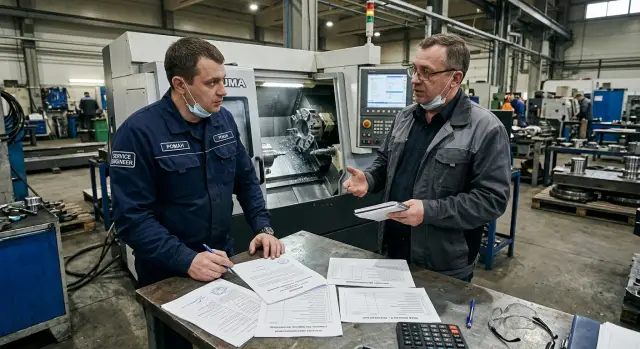
Why discuss service before the warranty ends
When the machine is new, people often think about service last. That is a mistake. Most disputed issues do not appear during the warranty period, but right after it ends, when any help is already handled under separate rules and invoices.
Even a few hours of downtime hits the budget fast. The shop loses a shift, shifts shipping dates, keeps people idle, and sometimes pays for urgent parts delivery later. If the machine is used every day, one 4–6 hour stop can cost more than a month of calm service support.
Verbal promises almost always sound good. The manager says: "the engineer will respond quickly," "we usually have the needed parts," "we can connect remotely." But after the warranty, words do not matter as much as the contract. It should state exact service response times, contact hours, the process for remote machine support, the travel cost, and what is not included in the package.
The four things that are most often not discussed in advance are:
- how many hours the supplier allows for the first response
- who connects remotely and when
- which CNC consumables and common spare parts are best to keep on hand
- how engineer travel to another city is calculated
This is especially important for Kazakhstan. If the equipment is not where the service team is located, travel takes time, and sometimes a full day. So the phrase "we’ll come if needed" does not solve anything. You need clear terms: where the engineer is traveling from, who pays for travel and accommodation, and how soon they will depart.
A post-warranty service contract is best discussed before signing the deal, or at least before the warranty ends. Then the buyer has a stronger position: they are still choosing the supplier, not asking for help after the breakdown. If a company like EAST CNC handles the project from selection to service, it makes sense to lock in the post-warranty rules right away. That lowers the risk of disputes at the moment when the machine should be working, not waiting for approvals.
What to include in the contract in simple terms
After the warranty, a machine may run smoothly and then stop because of a small but expensive service delay. At that moment, the contract either helps or gets in the way. That is why a post-warranty service contract is better written in simple language, without phrases like "if possible" or "within a reasonable time."
First, separate the time to first response from the time to repair. These are not the same thing. The supplier may reply within 15 minutes but start work only the next day. The contract should state both deadlines: when service gets in touch and when diagnostics or repair begin.
Next, spell out how you contact service and when the team works. If requests are accepted by phone and email, write that down. If a messenger app is only for urgent cases, that should also be stated separately. Working hours are not a formality; they prevent arguments on Friday evening about whether the request counts as accepted.
Separate remote machine support from on-site visits by a service engineer. Remote help can quickly check errors, parameters, and some settings. But if a unit needs inspection or a part replacement, travel is unavoidable. The contract should describe both scenarios instead of blending them into one general clause.
It helps when the text contains short, clear lines like these:
- "First response to an emergency request: no later than 30 minutes during working hours."
- "Remote diagnostics start no later than 2 hours after the request is confirmed."
- "If the issue is not resolved remotely, the supplier agrees on an engineer visit the same day."
- "Travel and accommodation for the engineer are paid by the customer" or "these costs are included in the service package."
- "After each visit, service sends a report with the cause of the failure, list of work performed, and replaced parts."
Do not leave travel costs for "later." If the machine is in a different city from the service team, decide in advance who pays for tickets, the hotel, and daily allowances. Otherwise, the argument starts at the very moment production has already stopped.
The post-visit report is also not just for the archive. It makes it easier to understand why the fault repeated, which CNC consumables have already been replaced, and what should be kept in your own warehouse.
How to check response times
Look at numbers, not broad promises. The phrase "we respond quickly" in a contract does not help when the machine is down and production is waiting. A post-warranty service contract should include two separate deadlines right away: when the supplier must reply to the request and when they must start working on it.
These are not the same thing. A request response is confirmation that the inquiry has been received, a specialist assigned, and the issue is being reviewed. Work start means a concrete action: remote diagnostics, a call from the engineer, a connection to the machine, or an on-site visit.
Also check how time is calculated. If a request comes in on Friday at 5:40 p.m. and the reply arrives Monday morning, the supplier may say they met the deadline if weekends are excluded from the calculation. So the contract should clearly state whether Saturday, Sunday, and holidays are counted, which time zone is used, and when the clock starts: from the email, the call, or the request registration in the system.
A separate deadline is needed for emergency stops. If the spindle will not start, the controller shows an error, or the line is fully down, waiting under the general rule takes too long. A normal practice is a separate, shorter deadline for critical cases.
It is useful to ask the supplier for a real example, not just a promise. Ask to see one actual service request with timing:
- when the customer contacted service
- when service confirmed receipt
- when the engineer started diagnostics
- when the issue was fixed or escalated to a visit
That quickly shows how the contract works in real life, not just on paper.
Another point is often forgotten: what the supplier does if they miss the deadline. You need a clear action, not a vague phrase. For example, escalation to a senior engineer, priority travel, free hours of remote support, or a discount on labor.
If the supplier works across Kazakhstan, this point is especially useful. Delays happen more often in some cities than in Almaty or Astana, and it is better to discuss that in advance while the machine is still running normally.
How to agree on remote support
Remote support saves not just hours, but sometimes an entire shift. For a workshop in another city, that is especially noticeable: while the engineer is traveling, the machine is stopped, people are waiting, and the order deadline moves.
A post-warranty service contract should include a simple contact process right away. Who takes the first call: dispatcher, service engineer, or manager? During which hours does the team answer, and what should you do in the evening, on a day off, or on a holiday? If that is not in the contract, extra calls and arguments start when a real breakdown happens.
Also agree on the communication channel. For some, phone and messenger are enough; others need a video call from the shop floor. For CNC machines, this is not a minor detail: via video, the engineer often understands faster what is happening on the panel, in the tool area, or inside the control cabinet. If the supplier gives remote access to the system, clarify who enables it, how consent is documented, and what security rules apply.
What to send during a failure
So the engineer does not spend the first 20 minutes asking follow-up questions, fix the data set for the first request:
- machine model and serial number
- error text or fault code
- a photo of the screen and a short video of the failure
- what the operator was doing before the stop
- what steps were already tried in the shop
Another useful point is a list of problems the supplier usually solves without a visit. For example, resetting some errors, checking settings, helping with parameters, initial diagnostics by photo and video, or checking sensors according to instructions. If the supplier works across Kazakhstan and other CIS countries, such a list greatly reduces downtime in remote cities.
On your side, appoint one responsible person. It can be a shift supervisor, adjuster, or maintenance technician. They receive instructions, send materials, and confirm each step taken. When three people call with different versions, remote machine support becomes slower.
A good arrangement is simple: one contact from the shop side, clear contact hours, a fixed data set, and a list of tasks the engineer handles without a visit. Then, from the first call, it is clear whether the machine can be started quickly or whether it is time to arrange a service engineer visit.
Which consumables and spare parts to request in advance
When the warranty ends, downtime caused by a small part often costs more than the part itself. That is why, for a post-warranty service contract, ask not for a general price list, but for a list of what will actually be needed over the next 6–12 months of operation.
Immediately divide the items into three groups. The first is consumables replaced on schedule. The second is fast-wearing parts that fail more often than others. The third is expensive units that break rarely but can stop the machine for a long time. If everything is mixed into one list, it becomes hard later to know what should be kept on site and what can be ordered.
A good list should include more than just the part name. Ask for the item number, lead time, price or at least a price range, and the minimum stock level. Also ask separately what is in stock with the supplier in Kazakhstan and what is shipped from the factory. The difference in lead time may be not days, but weeks.
Usually it makes sense to keep on site the items without which the machine often stops and that cost a reasonable amount. For example:
- filters and other scheduled consumables
- sensors and limit elements that are replaced quickly
- belts, seals, and similar wear parts
- one set of items for the first emergency repair
The approach to expensive units is different. Not every shop will keep a spindle, servo motor, or control board on hand. But for such items, you need to know the exact part number, lead time, and reservation procedure in advance. Otherwise, you will start the selection from scratch at the moment of failure.
Another common dispute is part compatibility. Ask in advance who confirms that the spare part fits your exact machine configuration: the service engineer, the supplier’s spare parts department, or the factory. It is better if the supplier confirms this in writing using the machine serial number. A phrase like "we’ll match it from a photo" sounds convenient, but later it protects neither you nor service.
If you have one machine and a tight schedule, keep a larger запас. If you have several machines of the same model, you can build a shared shop stock. One sheet with item numbers, lead times, and minimum stock is usually more useful than a discount on a rare engineer visit.
How to arrange travel to another city
If the machine is not where the service team is located, the argument usually starts not with the repair, but with the trip. One side thinks the engineer will come by default; the other sends a bill for tickets, hotel, and taxi only after the visit.
A post-warranty service contract should include a separate section on travel right away. It saves time when a failure happens and the shop needs a clear plan, not an exchange of emails.
First, define the engineer’s departure point. This is not a minor detail. If the machine is operating in Shymkent and the engineer leaves from Almaty, that is one response time. If the specialist travels from Astana, the timeline and costs are different.
It helps to state clearly who approves the trip and how. Without that, the request may stall on a simple question: buy the ticket immediately or wait for written confirmation. Usually, four short rules help:
- the supplier says which city the engineer is departing from
- both sides agree on tickets and accommodation within a specific time, for example 2 hours after the travel is confirmed
- one side buys the tickets themselves, or the supplier buys them and attaches the documents to the invoice
- transfer to the plant, between the station or airport and the hotel, is also specified separately
- emergency weekend travel is billed at a separate rate, if one exists
Also spell out the money. It must be clear before the first failure who pays for travel, accommodation, and local transport. Otherwise, even an ordinary repair can turn into a dispute: the supplier charges only for the engineer’s work, while the customer assumes the visit is already included in the package.
Site access rules also need to be in the contract, not just in emails. Specify who issues the pass, who meets the engineer, when they may enter the shop, whether a safety briefing is required, and which documents the engineer must bring.
If your shop is not ready for the visit, that should also be set out in advance. For example, no responsible employee, the machine is blocked by workpieces, power is not connected, or access to the control cabinet is closed. In that case, the contract should answer two questions: how long the engineer waits on site and who pays for a wasted trip.
A good clause is simple: if the site is not ready, the customer pays for travel and the time actually spent, and the sides agree on a new date. It is a strict rule, but it is fairer than arguing after the invoice arrives.
For companies in Kazakhstan, this is especially important. Logistics between cities vary a lot, and one unclear clause can easily add a full day of downtime.
Example: a machine stop in Shymkent
On Friday at 6:40 p.m., a CNC lathe stops in the middle of a batch. An alarm code appears on the screen, the axis does not home, and the shift is already getting ready to leave. If the post-warranty service contract was written properly, there is less panic: the operator immediately knows what to send, whom to call, and when to expect a reply.
First, the operator gathers facts instead of describing the problem in words. That saves time and often removes unnecessary calls.
What the operator sends
- a photo of the screen with the error code
- a short video of what the machine does during restart
- a photo of the cabinet, sensor area, or unit where the problem is visible
- the machine number, model, serial number, and operating hours
- what happened before the stop: tool change, impact, power outage, or workpiece replacement
If the code is clear and there are no mechanical signs of damage, remote machine support often solves the issue that same evening. The engineer asks to check a sensor, power supply, limit switch, cable condition, or parameters the operator can view without disassembly. Sometimes 20–30 minutes are enough to get the machine back to work.
But do not rely on remote support if there is unusual noise, a burning smell, signs of impact, oil leakage, or the axis is binding. In that case, a service engineer visit is needed. Then the contract either helps or creates a new dispute. If it already states the service response times, the process for traveling to Shymkent, who pays for travel, accommodation, and urgent part delivery, the decision is made quickly. If not, the evening is lost to approvals.
A good contract also removes a second common question: where to get the part. For such cases, the supplier should have a pre-agreed list of what they keep in stock or reserve for the customer: sensors, belts, limit switches, pumps, filters, and standard boards. At EAST CNC, these things are better discussed before the warranty ends, not after the first stop.
After the repair, the engineer leaves a short report. It should include the error code, the cause of the failure, what was checked, which part was replaced, how long the downtime lasted, and what to do next. Usually, the action list is simple: check the stock of CNC consumables, update the contacts of responsible people, train the shift with photos and videos for service, and lock in the next visit deadlines in the contract. That report later saves just as well as the part replacement itself.
Mistakes when agreeing on service
The most common mistake is believing the phrase "we’ll resolve it quickly" and not asking for numbers. For a post-warranty service contract, that is too vague. The contract should immediately state how many hours are allowed for the first response, how many for remote diagnostics, and when the supplier must name the travel date.
Another mistake is setting one deadline for all cases. A settings issue, a drive error, and a spindle failure are not solved equally fast. If service response times are not split by fault type, a dispute is almost inevitable: the customer expects the engineer today, while the supplier believes they can arrive "soon."
A good setup is simple. They separately define:
- an emergency machine stop
- partial loss of functions
- issues that can be closed remotely
- cases that require a service engineer visit
A backup contact is often forgotten. This looks minor only on paper. In practice, the chief engineer may be on vacation, the service manager off duty, and the machine still stopped. That is why the contract needs at least two contacts from the supplier side: primary and backup, plus a clear communication mode in the evening, on weekends, and on holidays.
Another mistake is delaying the list of consumables until the first breakdown. By then, it is too late to argue about what should be on the customer’s shelf and what the supplier keeps in stock. If you have CNC machines in another city, request in advance a list of the most common wear items: sensors, belts, filters, seals, fuses, and other CNC consumables that are actually needed in operation.
Remote machine support is also often described too broadly. You need to agree on who connects, through which software, during which hours, and who is responsible for access to the equipment on the customer’s side. Otherwise, support exists in theory, but in practice no one can connect.
Another risk is signing off on travel without a clear estimate. For Kazakhstan, this is especially important if the site is not in Almaty or Astana, but in another city. The document should separate labor cost, travel, accommodation, per diem, and the price of urgent travel. Then the bill after the visit will not come as an unpleasant surprise.
If the supplier calmly records these details from the start, service usually causes fewer problems. If they fall back on broad promises, it is better to stop and rewrite the terms before signing.
Short final checklist
Before signing the contract, ask the supplier for numbers and procedures, not general promises. For CNC equipment, this is a normal check: one exact answer in the contract saves more time than ten verbal assurances after the machine stops.
- How many hours the service has for the first response after a request. The wording "promptly" is not enough. You need an hour-based deadline for weekdays, weekends, and holidays.
- How soon the engineer can realistically arrive in your city. If production is not in Almaty or Astana, ask for a separate deadline for your region.
- Which channels you use to contact them: phone, email, messenger, service chat. Immediately check who accepts requests in the evening and on non-working days.
- Which consumables and common spare parts are needed for your model, with item numbers. Otherwise, it is easy to buy the wrong filter, belt, or sensor later.
- Which services are already included in the contract price. Diagnostics, remote machine support, travel, setup after unit replacement — all of this is better listed point by point.
After that, check the money and documents. This is where extra costs most often appear.
- Who pays for travel, hotel, and per diem if a service engineer visit is needed in another city.
- Whether travel time counts as working time and is included in the invoice.
- Which documents you will receive after the work: report, list of replaced parts, and recommendations for the next service.
If the supplier services machines across Kazakhstan, like EAST CNC, do not hesitate to ask for a standard travel procedure and a sample calculation. A good partner shows this calmly. If, instead of service response times, you hear "we’ll sort it out on site," the post-warranty service contract is not ready to be signed yet.
What to do next
Do not wait for the warranty to end. A post-warranty service contract is better discussed when you are still choosing the machine and the supplier. Then you have room to negotiate and less risk of getting vague promises instead of clear terms.
First, put your own input into one short file. The supplier does not need broad words, but a working picture: which city the machine is in, how many shifts the shop runs, what parts you make most often, whether you have your own technician, and how many hours of downtime are already critical for you. If production runs in the evening or on weekends, that should be written down right away.
Then send the same list of questions to all suppliers. That makes answers easier to compare without confusion. It is useful to check at least these points:
- first response time by phone and messenger
- whether remote machine support is available and during which hours
- who pays for a service engineer visit to another city
- which CNC consumables and common spare parts the supplier recommends keeping in stock
- when you will receive the draft contract and who approves the disputed clauses
After that, compare not only the machine price, but the service itself. Two similar equipment offers can differ a lot in post-startup costs. One supplier responds the same day and keeps common parts in stock; another first approves the trip and then takes weeks to deliver the needed part.
Ask for the contract draft before commissioning, not after. If service terms appear at the last minute, you are already dependent on startup deadlines and it becomes harder to argue. Standard practice is to read the contract in advance, mark disputed points, and ask for revisions right away.
If you are choosing a CNC machine supplier in Kazakhstan, look at the entire cycle of work. Who advises, helps with selection, organizes delivery, handles commissioning, and then provides service. EAST CNC presents this as one full cycle, and that is exactly the point worth comparing with other suppliers through documents, not sales promises.
A good purchasing outcome is simple: you have one list of requirements, responses from two or three suppliers in the same format, and a contract draft that can be calmly reviewed before payment and startup.