
Dedicated fixture for a series of parts: when it pays off
We explain when a dedicated fixture for a series reduces downtime, yields steadier dimensions and brings measurable savings on a batch of automotive parts.
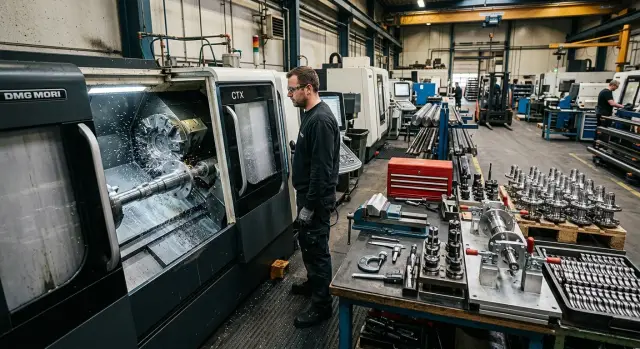
Where the problem starts
The problem usually doesn’t start with a machine breakdown or obvious scrap. At first the shop simply spends too much time setting each new blank. For a batch of 20–30 pieces this is still acceptable: the standard fixture is on hand, there are no extra costs, and a few extra minutes per part don’t look like a big loss.
But the run grows, and setup time doesn’t get any faster. If the operator still spends 3–5 minutes finding the position, clamping and checking the datum, those minutes turn into hours across hundreds of parts. The machine isn’t cutting metal during that time — it’s waiting.
Standard fixtures for automotive parts often work well for a trial batch or a small order. They’re flexible and easy to reconfigure for another part. That’s convenient. But flexibility has a price: more manual actions. And manual work doesn’t sit well with long runs.
Each time the operator redetermines the datum. They look at the stop, check for tilt, tighten the clamp, and take a control measurement. Even an experienced person won’t repeat this exactly the same way a hundred times in a row. One clamp is a bit tighter, another a bit looser. The blank seats slightly differently than before.
At first the scatter is barely noticeable. One part passes perfectly, the second too, but by the tenth the dimension drifts from what used to be stable. Another sign appears: the setup engineer adjusts offsets more often and the operator measures between cycles more frequently. This is no longer random; it signals that repeatability varies from one part to the next.
This is especially clear on parts with multiple datums, thin walls, or tight concentricity and flatness tolerances. You often find that in automotive components. The standard fixture loses not because it’s bad, but because the run requires the same part position without constant manual tweaking.
At that point a dedicated fixture stops looking like an unnecessary purchase. It removes repeated manual tasks, shortens setup time, and gives more consistent results across the lot.
Signals visible in production
The first signal is seen not at the spindle but with the people. The machine cuts a part quickly, but before each start the operator spends a long time setting the blank, checking the datum and chasing repeatability. If setup, clamping and the initial check take nearly as long as the cycle itself, the standard fixture is already slowing the run.
On a small batch this is tolerable. On a series of automotive parts this scheme quickly eats up the shift. The program is ready, the tool is fine, cutting modes raise no questions, yet output still lags plan. The reason is simple: each new part starts almost like the first.
Another clear sign is the setup engineer correcting offsets more often after the first parts of the run. That doesn’t always mean a machine or cutting problem. Often the blank simply sits slightly differently: it doesn’t bear on the datum the same way, it’s clamped unevenly, it has a small tilt. On one piece that’s barely visible; on a series these small issues become constant adjustments.
A bad sign is when scrap comes from setup rather than the tool. For example, a hole shifts not because the drill is worn but because the blank seats differently from cycle to cycle. This is critical for automotive fixtures: tolerances are often tight and the part geometry won’t forgive extra tenths.
There’s a quieter signal too. In-process checks become too frequent. The operator measures the first part, then the second, then several more in a row because they don’t trust repeatability. Formally this is caution. In practice the series slows down and people compensate where the fixture should be giving a stable datum.
If many small stoppages accumulate over a shift, the standard fixture ceases to be “universal” and becomes expensive. Minutes are spent on clamping, extra adjustments appear, parts are pulled for inspection more often, and scrap arises from seating rather than cutting. After that point money is lost not on the fixture purchase but on every next cycle.
What to calculate before ordering
Before ordering a fixture it’s better to count the cost of each wasted minute rather than the price of the metal. A dedicated fixture for a production run pays off not when it’s simply “more convenient,” but when the run already loses time at each setup and begins to produce extra scrap.
Start with the real output. Not the Excel plan but the fact: how many parts does the machine make per shift and how many such shifts per month. If the batch is small and repeats quarterly, there’s no rush. If the part runs almost daily, the picture changes fast.
Then time the setup with a stopwatch. People argue about complex geometry, while the loss often sits in the simple fact that the operator takes longer to datum the part, carefully brings the tool in, and checks the first piece. If a new fixture saves even 1–2 minutes per setup, that becomes noticeable over a run.
Usually four numbers are enough for the calculation:
- how many minutes a single setup takes now;
- how many setups happen per month;
- what a minute of machine time plus operator labor costs;
- how many parts go to recheck, rework or scrap.
The rest is straightforward. If you save 1.5 minutes per part and process 1,200 parts per month, that’s 1,800 minutes or 30 hours of machine time. Add repeated checks, rework and stoppages from unstable seating. Even if scrap falls by only a few parts per month, the total savings often exceed expectations.
There’s another often-missed point: how frequently the part itself or the size range changes. If the design fluctuates and the customer likes revisions, a too-rigid fixture may become obsolete before it pays back. In that case you must count not only savings but also the cost of readjustment or interchangeable elements.
The volume threshold is calculated the same way — by minutes and losses, not by feeling. Take several real cycles, measure actual setup time, estimate the difference between the current scheme and a new fixture, then multiply by monthly volume. Even 40–60 seconds per part quickly becomes hours per month. If extra inspections, contested parts and a small but steady scrap rate are added, the decision usually becomes obvious.
A practical rule of thumb: if the run is stable, setup consumes a noticeable portion of the cycle, and the operator regularly spends time rechecking, ordering is near. If volume jumps, sizes change, and the gain is measured in seconds, the standard fixture may still be the reasonable choice.
Example with an automotive parts run
Take a simple case. The shop makes 1,200 sensor housings per month. The part isn’t very complex but runs steadily without long pauses between batches.
When volumes were lower the standard fixture was enough. The operator spent almost 3 minutes placing the blank, checking the stop, clamp and runout, then started the cycle. That’s fine for one-offs and small batches. For series CNC machining that pace already gets in the way.
With a dedicated fixture setup time typically drops to 40–50 seconds. The blank seats the same way every time, the clamp acts consistently, and the operator doesn’t waste extra motions on each part.
The monthly difference is noticeable:
- with a universal fixture, 1,200 setups at 3 minutes equal about 60 hours;
- with a dedicated fixture, 1,200 setups at 45 seconds equal about 15 hours;
- the shop regains roughly 45 hours of machine and labor time per month.
And that’s only setup time. With a standard fixture issues often accumulate elsewhere: the part shifted a bit, a datum changed, the operator tightened the clamp harder, the dimension drifted. In automotive parts such small things quickly turn into extra checks, program tweaks and reprocessing.
A dedicated fixture makes the picture steadier. Dimensions vary less from part to part, the first part of the shift requires less fiddling, and scrap falls not by chance but thanks to consistent seating.
If that part runs in series for a whole quarter, the investment typically pays back fast. The shop gains not only free hours but a calmer production without constant small failures. For production where similar housings appear every month, this becomes not a convenience but normal working logic.
How to design the fixture
For an automotive series the fixture should remove unnecessary operator actions. If the part must be set almost manually each time, the run quickly loses time and produces dimensional scatter. A simple scheme with a clear datum that seats the part correctly on the first try usually works best.
A rigid datum is more important than a complex construction. In practice a massive base, a short force path and a minimum of intermediate parts between the machine and the blank prove more reliable. The fewer redundant elements in the scheme, the calmer the cutting and the less likely dimensions drift after the tenth or fiftieth part.
Standard fixtures value universality. But a dedicated fixture for a series is built for a single repeatable scenario. The operator should quickly place the blank, clamp it with one clear motion and start the cycle immediately, without lengthy adjustment of stops and clamps.
A good design delivers four simple things:
- the part seats on the datum without searching for position;
- the tool reaches the required zones without striking clamps;
- dimensions can be checked without removing the part;
- chips don’t accumulate in seating areas.
The last point is often underestimated. If chips pack under a support, the part no longer sits as intended. In a series this quickly becomes a drifting dimension and repeated inspections. Therefore include open pockets, chamfers or blow-through so chips don’t remain on the datum after each setup.
Make the clamp quick and predictable. If the operator spends ten seconds turning a screw and each time gauges the right force, the series tempo drops. For repeatable runs choose mechanisms with a fixed stroke: a cam, lever, wedge or another option where clamping force is nearly identical part-to-part.
Wear is another practical point. Supports, pins, stops and clamp faces will show marks over time, especially if the material is hard and the batch is large. Make these elements replaceable so you don’t have to disassemble the entire fixture because of a small worn pad.
If the part can be measured in the required points after clamping, and chips, clamps or extra setup don’t hinder the operator, the design fits the task. For series CNC machining this usually matters more than any “universality.”
Common mistakes
Problems often start at the concept stage. Shops design fixtures that are too complex for a batch that only needs the part held for one operation. The result is extra clamps, expensive machining of the fixture itself, and long setup. If you only need stable location and fast clamping, a simple scheme almost always wins.
This happens often with automotive parts where the run grows but the part geometry still doesn’t look complex. An engineer wants to “cover all cases” at once. In practice that adds mass, worsens tool access and makes maintenance awkward. The fixture should remove unnecessary motions, not add them.
A second mistake is forgetting chip, dust and oil buildup. The first ten parts look fine. Then chips clog support points, the part lifts a bit, and dimensions begin to wander. Scrap seems random at first, but the cause is simple: the fixture was designed as a neat drawing, not as a tool for a long shift.
Another frequent oversight is focusing only on clamp rigidity and forgetting operator speed. If loading and unloading add 20–30 extra seconds, a long run will lose hours. Worse, the part may be hard to place with one hand, the operator turns it, searches for position and gets tired by mid-shift. Then not only cycle time but error risk rises.
Often the fixture is made precisely for one revision of the part. For a pilot batch that’s tolerable; for a series it’s weak. A small change to a chamfer, hole or datum can make the fixture unusable without rework. Better to check up front which dimensions must never change and where a little adjustment range is acceptable.
Another mistake is judging by the first five parts. A short test won’t reveal heating, contact wear, clamp loosening, dirt buildup or real repeatability after a hundred cycles. So the test should be longer. It’s useful to run at least 30–50 parts in a row, separately measure load and unload times, look where chips accumulate, and check repeatability with and without cleaning.
Quick check before launch
If the operator takes more than a minute to set the part, the run already loses time for no reason. On a batch of 200–300 pieces an extra 40–60 seconds per setup easily becomes several machine hours that don’t produce more volume or better quality.
Another obvious sign at the machine: the operator slightly moves the part, clamps, checks the datum and adjusts again on almost every blank. That manual fine-tuning seems trivial but it produces different results cycle to cycle.
Quality control usually spots this first. After removal and re-fixturing a dimension starts to wander, a hole position shifts or runout changes. If the scatter appears repeatedly rather than once, the issue isn’t operator attention but the clamping scheme.
For a quick assessment this short checklist is enough:
- one setup takes more than a minute;
- the operator often adjusts position manually;
- after re-fixturing inspection finds variation;
- the batch appears every month or more often;
- the part yields margin but consumes too much machine time.
If at least three items match, the standard fixture is already at its limit. In that case a dedicated fixture for the series usually pays back faster than expected. It removes extra motions, enforces the same part position and reduces dependence on a specific operator’s experience.
This is especially visible in automotive work. Suppose a small flange part repeats monthly. The cutting cycle is 4 minutes while setup and alignment take another 1.5 minutes. If a fixture reduces setup to 20–30 seconds the machine frees hours, and quality control sees a steadier dimension picture.
What to do next
If the discussion about a fixture is based on feelings it’s often postponed. It’s easier to take the last 3–5 batches and summarize three numbers in a table: setup time, scrap percentage and output. That’s enough to see where the standard fixture holds the shop back.
Mark parts where the operator spends more time setting the blank than the cutting itself. For automotive parts this is common: the machine cycle takes 2–3 minutes while setup, verification and re-fixturing take almost as long. Those positions often pay back a dedicated fixture fastest.
Next answer a few direct questions: how many minutes does a single setup take, how many parts per batch require re-tuning, how often dimensions drift after a shift change or restart, does the clamping method block tool access, and how many stops occur due to scrap or long reconfiguration.
If numbers are bad on at least two points, don’t consider the fixture in isolation. Review the whole chain: machine, datuming, clamping, tooling and series cutting mode. Sometimes the problem isn’t the part itself but that the current clamping scheme doesn’t match the needed tempo and repeatability.
A simple example shows this well. Suppose a flange is machined in universal jaws with two re-setups. If a special fixture removes one re-setup and saves 25 seconds per part, a 2,000-piece run already returns almost 14 hours of clean time. If scrap also falls by 1–2%, the math becomes even clearer.
When you need an evaluation for a specific nomenclature, discuss not only the machine but the whole series workflow. EAST CNC does this: helps with equipment selection, delivery, commissioning and service, and on the east-cnc.kz blog covers practical metalworking topics. Such a conversation helps decide whether a modification of the current fixture is enough or a separate solution is due.
Start with the one part that slows production most. Count monthly losses and compare them with the fixture cost. After that calculation the answer usually becomes obvious.
FAQ
When does a standard fixture stop being suitable for a series?
Watch setup time and part-to-part variation. If the operator spends a long time finding the datum before each cycle, frequently measures and adjusts position, the standard fixture is already slowing production.
From what volume should you consider a dedicated fixture?
Focus not on the absolute number of parts but on minutes lost. If the series repeats every month and setup eats a noticeable part of the cycle, a dedicated fixture often pays back quickly even at moderate volumes.
What signals are visible directly on the shop floor?
Usually the first sign is increased time before the cycle starts. The operator takes longer to set the blank, the setup engineer adjusts offsets more often, and quality control requests more checks because repeatability no longer allows calm work.
What should be calculated before ordering a fixture?
A simple calculation is enough: time per setup, number of setups per month, cost per minute of machine plus operator, and losses from rechecks, rework or scrap. From that you’ll see whether you lose money on each part.
How much can setup time realistically be reduced?
Yes — and the difference is often significant. In the article example setup dropped from 3 minutes to 40–50 seconds, which on 1,200 parts returns tens of hours per month.
Does a dedicated fixture help reduce rejects?
Yes, if the scrap comes from how the part is located rather than from the tool or cutting modes. When the blank sits the same way every time and the clamp applies consistent force, dimensions fluctuate less and quality control finds fewer questionable parts.
When is it better to keep the standard fixture?
Don’t rush if the lot is small, arrives rarely, or the customer often changes geometry. A rigid fixture can become obsolete before it pays back in such cases.
What should a good fixture for automotive parts look like?
The simpler the better for series. The part should drop onto the datum reliably, clamps must not block tool access, chips must not pack under supports, and wear items are best made replaceable.
Where are mistakes most often made when developing a fixture?
People often overcomplicate the design without benefit. Another common mistake is ignoring chip evacuation, inconvenient loading, and small part changes that later force a redesign of the fixture.
How to quickly check if the idea will pay off in practice?
Run 30–50 parts in a row and measure not only dimensions but also load/unload and reposition times. If setup takes more than a minute, the operator often adjusts the part manually, and control finds variation after re-fixturing, a dedicated solution is close.