
Separate chip collection: where the shop loses money every day
Separate chip collection reduces losses on waste disposal, helps keep the shop clean, and simplifies accounting for steel, aluminum and alloys.
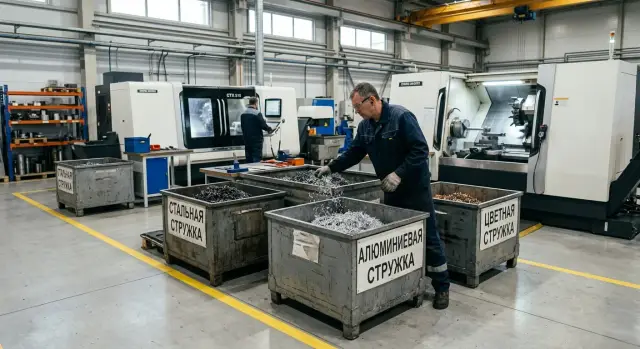
Why mixed chips are expensive
When steel, aluminum and non‑ferrous alloys end up in the same container, the workshop almost always gets paid the price of the cheapest and most problematic material in the mix. A buyer won’t sort someone else’s mixture at their own expense. They simply lower the price or accept the lot with a large discount.
This is most noticeable when steel and aluminum chips are mixed. Separately, these materials are easy to evaluate, weigh and forward. In a mix they lose clear quality — and with it the workshop’s money.
Losses occur in several ways at once. The buyer lowers the price per kilogram. Wet and dirty chips are harder to store and transport. Workers spend time sorting by hand. Accounting stops showing which area produces which volume of waste.
A separate problem is dirt and moisture. If a container contains lots of cutting fluid, dust, scale, rags or packaging, the mass may look larger than it actually is, but it doesn’t become more valuable. The carrier gets an awkward load, the buyer sees unstable material, and the shop ends up disputing weight, contamination and acceptance terms.
Removal costs also rise. Extra movements appear, loading takes longer, containers need replacing more often, and spills must be cleaned almost every shift. If a container leaks or fills too quickly, the whole area has to deal with it.
Manual sorting seems like an easy solution, but it almost always costs more than expected. Two employees can spend half an hour sorting chips after a shift, and that labor rarely shows up in reports. Losses creep in quietly: through downtime, extra hours and mistakes when part of a mixed batch is sent to the wrong place.
Because of this, metal chip accounting breaks down. When all metalworking waste is thrown together, the foreman can’t see the real picture: which machine produces more waste, where material consumption is growing, or why aluminum output suddenly drops. Norms look roughly correct, and decisions are made almost blindly.
Separate chip collection usually pays off not through one big action but through many small fixes that stop leaking money every day. When each material has its own place, it’s easier to count waste, keep the area clean and sell chips without unnecessary losses.
What to separate first
If the shop doesn’t yet have a convenient collection system, don’t try to separate everything into dozens of categories at once. Start by isolating the materials that most often reduce the price of a lot and disrupt accounting. For most areas this already gives a quick effect.
The first pair to separate is ordinary steel and stainless steel. Visually the swarf can look similar, especially after a tool change or in dirty containers. For buyers and internal accounting they are different wastes. When mixed, the price is set by the worst option, and later paperwork gets complicated.
A second common mistake is putting aluminum in the same container with brass or bronze. Non‑ferrous alloys have different values, and mixing them is simply uneconomical. Aluminum chips are light, scatter quickly around the area and easily end up in the wrong place, especially if an open container is nearby. Sometimes one careless unload is enough to turn a clean lot into a disputed mix.
Minimal scheme to start with
If space is limited, start with four streams: steel, stainless steel, aluminum and copper alloys. For a typical shop this is enough for separate chip collection to stop being a formality and start saving money.
Keep not only large spiral chips separate but also sludge. Fine fractions from machining, grinding or processes with cutting fluid quickly collect dirt, oil and particles of other metals. If you dump them into a general container, two lots are ruined at once. Such mixtures then take longer to sort, are accepted less favorably and are harder to weigh without disputes.
The same applies to fine dust and small metal debris near machines, guards and cleaning zones. Don’t send this to the bin for clean chips. For that fraction it’s better to place a separate small container.
Why labeling matters more than complex rules
Even good rules don’t work if containers aren’t labeled. A container should show not only the material but also the area or machine. A sign like "Steel, Area 2" is more useful than just "metal." The foreman notices mistakes faster and the storekeeper doesn’t have to guess where a disputed mix came from.
A simple example: in the lathe area they are machining steel shafts in the morning and aluminum housings nearby. If both machines have identical gray bins without labels, confusion is almost inevitable. If one bin reads "Steel, LAT‑1" and the other "Aluminum, LAT‑2," the chance of error drops sharply.
Start with order in containers. Complex rules can be added later.
Where materials get mixed most often
Confusion usually starts not at the waste storage but right at the machine. The operator works at a tight pace: watching part dimensions, changing blanks and controlling modes. If a single common container stands nearby, steel, aluminum and brass chips quickly end up in one pile.
This most often happens where the material changes during a shift. In the morning there is a steel batch, after lunch aluminum, and the same container remains. A few shovelfuls in a hurry and a clean waste stream is lost. In workshops with CNC lathes and machining centers this is a common story if each machine doesn’t have its own labeled bin.
A second problem point is shared containers for several areas. At first that seems convenient: fewer containers, wider aisles, simpler removal. But such savings quickly hit accounting. One area throws in dry steel, another adds wet aluminum, and a third adds sweepings. Later no one can say how much of each material the shop actually delivered.
At the wash station and during cleaning
At the wash station the problem is even clearer. Wet chips clump together; lumps keep oil, fine dust and pieces of other metals. If different batches lie nearby, a worker often takes everything at once and puts it in one container. After that it’s almost impossible to separate wastes without extra manual work.
Trolleys and pallets near the wash station make things worse. They are used alternately but not always cleaned. A layer of old chips remains on the bottom, and the new batch mixes with residues in minutes.
Losses usually rise at the end of the shift. The cleaner or the operator sweeps everything from the floor into a dustpan and empties it into the nearest container. That brings not only chips of different materials, but also abrasives, dust, torn gloves and packaging. For chip removal this is a bad scenario: weight goes up, cleanliness falls and the price for delivery drops.
Problem areas usually show the same signs:
- containers lack clear labels;
- a container stands between two or three machines;
- clumped, wet chips lie near the wash station;
- after evening cleaning there’s floor sweepings in the container.
Separate chip collection fails not because of complex technology but because of small everyday habits.
How to set up separate collection step by step
Start simple: determine which material each machine actually produces in normal work, not just in the equipment passport. A shared container at machines almost always turns clean chips into a mix that sells cheaper and takes longer to sort.
Assign material to each machine
Walk the area and make a short table. For each machine write the model, current jobs, blank material and approximate chip volume per shift. Mark machines where the material changes often. That’s where mixing starts fastest.
Then place a container next to the workstation. If an operator has to walk five or six meters to the correct bin, they will almost always choose the nearest one. Convenience here trumps any order. Separate containers for steel, aluminum and non‑ferrous alloys are needed even if volumes are small.
Labels should be simple and clear. It’s better to write full names without abbreviations or internal codes:
- "Steel";
- "Aluminum";
- "Brass and bronze";
- "Mixed chips / rejects".
So a new employee and an experienced operator read the same thing without guessing.
Assign a responsible person and a route
Assign one person responsible for each shift. Usually this is the area foreman or shift lead. They ensure containers are in place, not overfilled and follow a single route: from machine to temporary storage, then to weighing and removal.
Fix the route on paper and don’t change it without reason. When containers are rolled around randomly, some chips are lost on the way and some end up in the wrong place. That seems minor in the shop but adds up to extra hours and inventory confusion each month.
The last step is to compare container weight with job records. If a machine ran aluminum all day and the aluminum bin is nearly empty, chips went elsewhere. If a steel bin is suddenly heavier than usual, check whether materials were mixed during cleaning or a job change. This makes accounting less guesswork.
In a lathe area with CNC equipment this routine becomes a habit quickly. Often a few days are enough if the foreman checks three things at the end of the shift: bin labels, machine cleanliness and recorded weights.
Example from a typical shift
In the lathe area the morning run is steel. A large series produces long, heavy chips. After lunch the area switches to aluminum parts. At the end of the shift the operator dumps everything into one box because it’s faster and the box is nearby.
Losses are not obvious at first glance. The box is full, cleaning is done, the aisle is clear. But when delivered, that mix is no longer counted as normal steel chips and certainly not as clean aluminum. The buyer charges less because they see mixed scrap, not a clear material.
The problem continues. The storekeeper gets one weight for the box and can’t properly distribute waste by material. The area machined steel in the morning and aluminum in the afternoon, but the records show only a single combined number. After a week the foreman looks at the report and can’t tell where waste rose: on the steel batch, the aluminum batch, or simply in the records.
Suppose the area collected 180 kg of steel chips and 35 kg of aluminum in a shift. If kept separate, the shop sees two clear items. If mixed, 35 kg of aluminum drags down the price for the whole box and the meaning of accounting is lost. Arguments then circle: the operator says there was little aluminum, the storekeeper can’t verify, and the foreman can’t see the order‑level picture.
After a simple separation of boxes the situation changes the same day. One box is placed for steel, another for aluminum, and each gets a tag with the shift and material. The operator doesn’t have to think long about where to dump chips. The storekeeper gets two weights instead of one. The foreman already sees in the evening that aluminum waste spiked after the changeover while steel remained normal.
This is how separate chip collection starts bringing money without complex schemes. The shop doesn’t lose value at delivery, doesn’t mix records and can quickly find the area where metal consumption increased.
Mistakes that repeat daily
A workshop usually loses money not because of one big problem but because of habits everyone is used to. They seem harmless until the buyer lowers the price for chips and the storekeeper tries to understand how much of each metal became waste from a single number.
A common error is one shovel and one trolley for the whole area. In the morning they clean steel with them, an hour later aluminum, then brass or sweepings. Even if materials are put into different bins, traces remain. As a result, separate chip collection exists only on paper.
Overfilled containers cause another consistent loss. When a box or container is full to the brim, chips are spilled on the floor, tamped down with a foot or scooped back into the same container. After such cleaning, dust, abrasive, packaging and rags end up in the metal. No one pays full price for such contaminated chips.
Many don’t separate dry chips, chips with coolant and sludge from cleaning. These are three different quality streams. Dry material is easier to account for and sell. Wet chips are heavier, but some of that weight is fluid, not metal. Sludge is worse: it soils adjacent material and complicates removal.
Another small thing that later costs a lot is labeling containers with an ordinary marker. During a shift the writing rubs off from oil, gloves and cleaning. By evening no one is sure where steel is, where aluminum is and where the mix sits. If there are many bins, confusion accumulates in a couple of days.
Clean chips are often ruined at the very end of a shift. The cleaner sweeps everything into a dustpan and pours it into the nearest metal container. Pieces of plastic, paper, sand and dirty rags get into good material. After that, on paper you have metal, but in reality you have a mixture of metalworking wastes.
Signs of these problems are usually the same:
- trolleys and shovels aren’t assigned to a material;
- overfilled bins stand near machines;
- wet chips and sludge lie together;
- labels on containers are hard to read;
- after cleaning there’s ordinary trash in the container.
These mistakes rarely require expensive solutions. Most of the time simple order is enough: dedicated tools, clear containers, durable labeling and the habit of not dumping everything in one pile.
Quick checks for the foreman
The foreman doesn’t need a long audit to see if separate chip collection works. Usually five minutes at the start of the shift and five minutes before the end are enough. If order exists, it’s obvious: containers labeled, aisles clean, and the numbers in the log match what’s at the area.
The simplest check looks like this:
- each container has a label with the material, area and date;
- there’s no foreign swarf even in the top layer of containers;
- workers answer without pause where to dump waste after a changeover;
- aisles remain clean by the end of the shift, without chips near machines and trolleys;
- the container weight matches the removal log or internal transfer record.
The first label solves more than it seems. If a container only says "chips," in a couple of hours no one remembers where it came from. When the foreman sees material, area and date, they immediately know who is responsible for the container, when it was filled and whether it’s time to remove it.
The second check is always needed, even if discipline seems present. Mixing steel and aluminum often starts with a small detail: someone tosses residues into the nearest container after a changeover because it’s closer. One handful turns a normal lot into disputed scrap, and the price for removal goes down.
Clean aisles also say a lot. If by the end of the shift chips lie near a machine, a trolley or a press, the waste route isn’t working. People either don’t have time to wheel the container or don’t know where to place it. In both cases the shop loses time and later pays for extra cleaning.
Weight checks are even simpler. If the log shows one number but the container is noticeably lighter or heavier, look for errors in labeling or for spillage between containers. This is often where accounting breaks down and with it the understanding of how much metal the shop actually delivered.
A quick practical test is to ask any operator after a changeover: "Where will these chips go?" If they answer immediately without prompting, the process is alive. If they hesitate or call the foreman, the order relies on one person’s memory.
If at least two items from the list don’t match, don’t wait till the end of the week. Fix container labels, remind people of the removal route and check containers again during the same shift.
What to do next
Don’t try to reorganize the entire shop in a week. Start with one area that generates the most chips and immediately separate at least three streams: steel, aluminum and non‑ferrous alloys. That’s enough to see a difference in cleanliness, removal price and disputed leftovers in accounting.
The first month is not for a perfect system but for numbers. If previously everything went into one container there was nothing to compare. Now the foreman and manager get a simple picture: how much chip weight was collected by material, how much time cleaning takes and where money is leaking.
It’s useful to track four indicators:
- chip weight by stream per month;
- removal or acceptance price per material;
- cleaning time per shift for the area;
- cases when chips had to be re‑sorted manually.
Even this simple accounting quickly shows weak points. Sometimes the shop thinks the problem is removal price, while money is actually spent on extra cleaning, re‑sorting and container downtime.
If the shop plans equipment rearrangement, machine replacement or a new line, plan chip collection in the layout. A container placed later "where there’s room" almost always ends up too far or in an inconvenient spot. The operator will choose the shortest path and mix materials again.
This is especially noticeable when updating a lathe area or launching new CNC machines. In such projects it’s worth deciding in advance where containers will stand, what the removal route will be and how to organize space by the machine without extra crowding. For companies in Kazakhstan these questions can be discussed with EAST CNC. The company supplies CNC lathes and other metalworking solutions and performs commissioning and service, so it makes sense to raise chip collection during area startup discussions.
If you need the simplest next step: pick one area, place three separate containers, assign a person responsible for a month and record the numbers without guesses. In four weeks it will be clear where the shop loses money every day and what to change first.