
Second lathe: what to add when orders grow
A second lathe is needed when one turning center can no longer handle the workflow. We'll discuss when to add a duplicate, a more flexible model, or a machine for one family of parts.
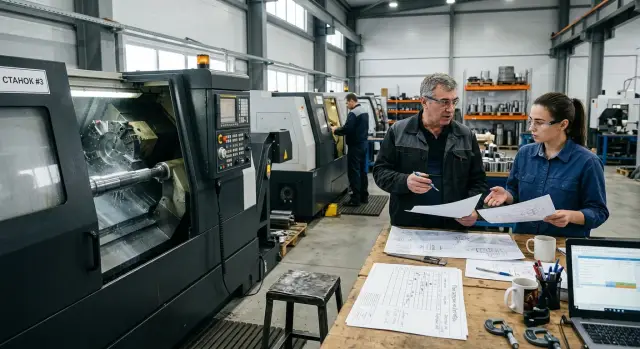
Why one machine stops coping
Overloading rarely begins with a breakdown or a sudden spike in sales. Usually the shop simply becomes cramped. Orders increase by 15–20%, while the processing queue nearly doubles. This happens because the machine isn't only cutting. It also waits for setup, tool changes, first-part checks, and urgent insertions between batches.
One CNC lathe handles the flow well while parts are similar and the schedule is predictable. But once the shift mixes small batches, repeat orders and rush parts, the plan starts to fall apart. Yesterday the operator ran a long series; today they remove fixtures, fit another chuck, adjust the program and re-establish the dimension. On paper that looks like 30–40 minutes. In reality it takes a noticeable share of the shift.
Rush parts hit the schedule hardest. A client asks for a few pieces “yesterday,” they get placed out of order, and the whole day shifts. One batch isn't finished, the next is already waiting, and the machine keeps switching between tasks. The more of these interruptions, the less productive machining time remains.
Frequent fixture changes also eat up capacity quickly. The operator swaps jaws, changes tool holders, checks tool extension and then regains a stable dimension. Work becomes tense. This doesn't always cause big scrap, but extra measurements, fine-tuning and small mistakes occur more often.
You can usually spot overload by simple signs:
- the machine schedule is booked for several days ahead;
- one rush order breaks the whole shift plan;
- there are too many changeovers for the current volume;
- the operator spends more time setting up than cutting;
- idle time between batches has become common.
If the shop reaches this point, the problem is no longer planning discipline. One machine is simply at its limit. A second lathe is needed not "for future growth," but to restore a normal rhythm and stop losing hours to constant switching.
First find the bottleneck
Looking only at the order queue can lead to the wrong conclusion. A machine may be booked the whole shift, but that doesn't mean it's cutting metal the whole time.
Take a typical week and break it down by hour. Record separately how long the spindle actually runs the program and how much time goes to setup, tool changes, material handling, first-part inspection and waiting for the operator or setter. Even a simple log for 2–3 weeks gives a clear picture.
It's useful to track at least four things:
- hours of pure machining;
- hours of changeovers and setup;
- downtime due to tooling or fixtures;
- time spent inspecting the first part.
The difference often surprises. A machine may be scheduled for 60 hours a week, while pure cutting takes only 28. In that case a new machine alone won't remove the delay. First you need to understand why nearly half the time isn't producing parts.
Then split orders into repeat and one-off jobs. If the shop produces the same items week after week, changeover losses are usually low and the main bottleneck is cycle time. If there are many different orders, production often stalls not because of machining itself but due to constant changeovers and first-part checks.
There's a quick test. Look where the queue grows. If parts pile up at the same operation with stable setup, the problem is usually a long cycle. If the queue increases on days when the product mix changes, the cause is almost always changeovers.
This accounting helps choose a second lathe without guessing. If the numbers show a lot of pure cutting, the shop hit a capacity limit. If time is eaten by transitions between batches, you need not just another machine but a different operating format.
When it makes sense to get the same machine
An identical machine works where the parts flow is already steady. If the shop runs almost the same range for months and most time is spent producing parts, the most direct move is to add a second identical turning center.
The advantage isn't only the machine itself. You get familiar setup, the same work logic and proven fixtures. The operator doesn't need to learn a new interface, the process engineer won't have to rewrite procedures from scratch, and the risk of small errors after start-up is lower.
This option is especially good when you need to quickly increase output. If the first machine is nearly fully loaded, a second machine of the same model often offers the fastest path to growth. Some batches move to the new machine and current due dates stop being critical.
A common example is a shop that consistently turns shafts and bushings of one size group. Fixtures are already assembled, jaws are debugged, programs have been fine-tuned after dozens of runs. In such a setup a new but different machine may only add extra work. The identical one delivers predictable results almost immediately.
There is another benefit. Two identical machines provide backup. If one stops for maintenance, a pump, the chuck or a minor fault, you can quickly transfer program, tooling and jobs to the neighboring machine. Production doesn't stop completely.
A duplicate usually pays off if repeat parts generate most revenue, fixtures and tooling are already chosen, staff are confident on that model, and increased output is needed in the near term without a long ramp-up.
When it's better to get a more flexible model
A more flexible model is needed in a different situation: load increases not because of one repeating part but because orders keep changing. Today the shop turns a long steel shaft, tomorrow a short stainless bushing, the day after a housing part requiring different clamps and tools. The second lathe should not simply copy the first. It should cover tasks where the first runs into limits.
This is usually visible in a simple pattern. One machine runs quickly and calmly only for part of the range, while for the rest production is forced to conform to the machine. The operator changes fixtures more often, cutting tools are reset for nearly every batch, and small orders break the whole schedule. The machine is busy, but output still drops.
A more flexible model helps when you need to take parts of different lengths, diameters and materials without compromises. It doesn't have to be the most powerful or the most expensive. Often what's more important is that switching from one batch to another is simpler and shorter.
This option usually fits if batches are small and frequent, different materials alternate regularly, some parts fall outside the first machine's range, and setup time consumes a significant portion of the shift. Another clear signal is the sales department turning down clients not because of price but because the shop can't handle a mixed load.
A good example is a shop that started with one turning center for serial bushings and shafts. While orders were repeatable everything worked. Then small batches arrived: flanges, short axles, parts from different steels and aluminum. The first machine managed, but only at the cost of constant stops. In that case a more flexible model brings more benefit than a second identical machine because it reduces not just spindle time but the whole preparation between batches.
When to dedicate a machine to one family of parts
If the same group of parts takes almost the whole month, a general-purpose machine starts to work against itself. Repeat batches sit in queue next to one-off orders, the setter repeatedly changes jaws, tools and programs, and rush parts disturb the familiar serial work. At that point a dedicated machine for one family of parts often provides more value than another universal center.
The signal is simple: you return to the same items almost every day. For example, the shop regularly turns bushings in a narrow diameter range or housings with similar geometry. For them you've already selected jaws, cutters and cutting modes, and operators know the cycle almost by heart. That means the work is ripe for a separate flow.
The effect appears when repeatability is truly high. You set up fixtures for the family once and then don't waste time on frequent changeovers. This is especially helpful if parts use the same clamping method, a similar toolset, stable cutting modes and nearly identical operation routing.
Then the second lathe takes predictable series, and the first stays freer for nonstandard orders, experimental runs and rush jobs. The queue shortens not because there are more machines, but because you stop mixing different work in one schedule.
But it's easy to make a mistake here. Some buy a dedicated machine too early, when the part family hasn't yet held a stable volume. A few months later the load drops and the machine stands idle. So look not at one good month but at repeatability over a quarter or longer.
Check three things: how many hours per week this family already occupies, how much time its changeovers take, and how many rush or higher-margin orders you lose on the first center while running the repeating series. If the numbers match, a dedicated flow usually works very cleanly.
How to choose the second machine step by step
When orders grow, don't buy a machine based on a feeling or a catalog. First break down the shop load by numbers. Otherwise you may buy a machine that looks convincing on paper but changes little on the shop floor.
The working scheme is simple.
- Take the last 3–6 months and list all parts produced in that period. Next to each indicate volume, cycle time, setup time and profit per item.
- Split the flow into three groups: repeat parts, rush orders and one-off jobs. Then it becomes clear what loads the machine most.
- For each group try three scenarios: the same machine, a more flexible model, or a dedicated machine for one family of parts.
- Count not only the purchase price. Add fixtures, tooling, shop floor space, utility connections, operator training, commissioning and service.
After this analysis the picture usually becomes clearer. If 60–70% of the load comes from similar parts with similar setup, a duplicate often wins. It's easier to implement, operators adapt faster, and you get extra output almost immediately.
If orders jump around and the product range has widened, look toward a more flexible model. It can cover more job types, but its initial cost is usually higher. Here it's easy to overpay for features you'll use only occasionally.
A dedicated machine for a part family makes sense when one group constantly interferes with the rest. For example, if the first turning center spends the day on shafts and bushings while rush small batches wait in line, a specialized machine may have a greater effect than another universal machine.
Look not at rated power but at the bottleneck. Suppose the first machine is booked 11 hours per shift including queue and changeovers. The new option should remove that queue. If a second lathe frees only 2 hours but another scenario frees 5–6 hours, the choice is obvious.
Example from a typical shop
A small shop ran on one CNC turning center and produced three groups: shafts, bushings and small flanges. While orders were steady, the machine met the plan. Then volume increased and delays began. Rush batches queued up and the operator increasingly removed fixtures and reset tools.
The owner first considered a second machine of the same type. The reasoning was clear: familiar kinematics, known cutting modes, easier training and tool inventory. But the numbers told a different story.
Over two weeks the shop logged where the shift time went. Shafts ran in series of 60–100 pieces with almost no program corrections. Bushings arrived in small lots of 10–20 pieces. Flanges required frequent jaw changes and fine adjustments. The operator made 4–6 changeovers per shift, and too much time was lost on small batches between cycles.
It became clear the queue wasn't caused by long shaft series — the first machine handled those well. The bottleneck was small batches, where time was lost on transitions rather than cutting.
After the tally the owner lost interest in buying an exact copy. A more logical choice was a more flexible model better suited to frequent product changes. The first machine stayed on repeat parts, mainly shafts and some bushings that returned often. The new machine handled small batches and parts with daily-changing setups.
After separating flows, things calmed. The first center ran longer without stops, and the second didn't disturb it with constant changeovers. Lead times for small orders shortened and the shop stopped missing delivery dates.
Many workshops in Kazakhstan see a similar picture. If you're deciding which machine to add, don't look only at the monthly part count. First check which orders most often break the shift into pieces. They usually tell you what the next machine should be.
Mistakes when buying a second machine
Growing orders often push shops to a hasty purchase. The most common mistake is simple: buying a second machine based on someone else's example rather than your own load. Your neighbor's solution may work for them, while your bottleneck is somewhere else.
Price also misleads. People look at the machine price and forget about chucks, jaws, tool holders, measuring equipment, commissioning, training and service. The “cheap” option can be more expensive after a few months because fixtures are delayed and downtime eats the savings.
Another mistake is choosing an overly versatile model for straightforward repeat work. The idea "let it do everything" sounds attractive, but if the new machine will mainly run one family of parts, extra flexibility just raises cost and complicates commissioning. For that work a clear configuration tuned to the specific flow usually wins.
People issues cause no less trouble. A machine won't run, maintain itself or rewrite programs on its own. If the shop has only one skilled setter and they're already overloaded, a complex machine can add to the queue rather than increase output.
Before buying check four things:
- what actually stands in the queue most often;
- the full cost of a complete setup, not just the machine;
- which parts will run on it in the next 6–12 months;
- who will be the setter, operator and first responder on faults.
Mistakes aren't made because of a bad brand. They're made when you buy a second lathe simply as "another machine" rather than as a response to a specific shop overload.
Quick checklist before deciding
Run the purchase through a short filter. If you can't clearly answer at least one question, you risk buying the wrong machine or buying too early.
First list the parts you're paying for. Not "something for future orders," but specific items: housing, shaft, bushing, flange, batch size, material, required accuracy. With the list on paper it's immediately clear whether you need another identical turning center, a more flexible model, or a dedicated machine for a repeating family.
Then convert that list into hours. The new machine should get load from month one, not sometime later. If current orders provide 120–140 hours per month, that's a solid base. If it's only 30–40 hours and the rest depends on a manager's expectations, the decision is weak.
The check usually boils down to four points:
- you have a parts list and clear monthly volumes;
- you calculated how many machine hours the new lathe will take immediately after start-up;
- the shop has enough space, electrical capacity and at least one operator or setter;
- payback is based on existing orders, not on "if a big client appears."
The third point is often underestimated. You can bring in a machine quickly, but preparing space, power supply, tooling, extraction, lifting and staff usually causes delays. The equipment sits, payments start, and output doesn't grow.
Be strict in the payback calculation. Use only what the shop already receives: current orders, average margin, real load, tooling and service costs. Hopes for a new market can be kept as a bonus, but don't build the whole calculation on them.
A simple example: a shop turns three families for two steady clients. One family takes almost half the current machine time. If the new lathe takes that flow in the first month and there's space and a relief operator, the decision looks sound. If the load appears only "after the season," wait and recalculate.
What to do next
Make a single sheet with numbers on load, changeovers, scrap, lead times and margins by order. When everything is visible in one place, the decision about a second lathe becomes calmer. You compare not feelings but three clear scenarios: buy the same machine, a more flexible model, or a dedicated machine for one family of parts.
After that, discuss the task with suppliers. A good conversation starts not with a list of options but with your parts: where the queue builds up, how often the operator reconfigures the machine, which materials and tolerances occur most, and how many hours are lost between batches.
If you need not only selection but commissioning, consider companies that cover the full cycle. For example, EAST CNC supplies CNC turning centers for metalworking and helps with consultation, selection, delivery, commissioning and service. This is useful when you choose not just a machine but a working scheme for growing orders.
Start from the shop's problem. The new machine must remove a specific loss of time or money. Otherwise the purchase will stay an expensive spare on the floor.