
Quick-change tool systems: where they pay off
Quick-change tool systems deliver output where setup time eats into a shift. We'll cover series sizes, changeover time and the break-even threshold.
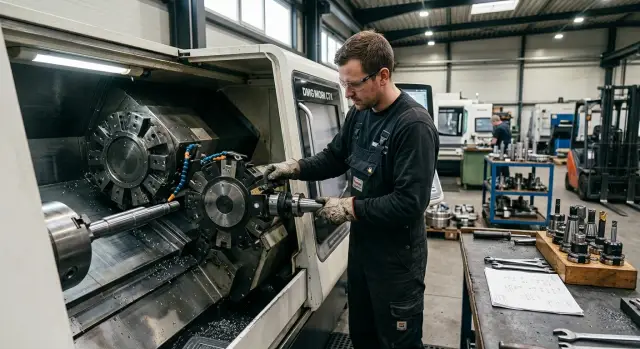
Why there's so much debate
Quick-change tool systems are often discussed as if they either immediately save the shop or are completely useless. The reality is simpler: both views can be right depending on the conditions.
One area saves 6–8 minutes on every changeover and produces noticeably more parts per shift. Another buys expensive holders and adapters and only sees higher costs. The debate comes from mixing two different things: time saved on a single tool change and the real increase in output over a day or month.
If a machine is stopped rarely, even a noticeable minute saving barely changes the result. If an operator changes tools and repositions the setup many times per shift, those same minutes add up to hours.
So the first question is always the same: how often do you perform changeovers? Not in theory, but from shift logs, the foreman's memory for recent weeks, or machine data. If changeovers repeat regularly, the system is worth considering. If a machine runs the same part for three days without changing tooling, the benefit is often weak.
Before buying, quickly check four things: how many changeovers occur per shift or week, how many minutes each takes, whether size/position must be rechecked after the change, and how much an hour of CNC downtime costs.
The debate is also fueled by the habit of buying tooling "because everyone else has it." That's a common mistake. Someone picks a system because a supplier calls it a modern standard. Someone else wants to standardize the fleet. But real need depends on batch sizes, changeover frequency and the cost of downtime—not fashion.
In series metalworking the effect is usually seen in shops with short runs, frequent changeovers and tight schedules. There every extra stop hits output. Where runs are long and tooling changes are rare, expensive holders can take too long to pay back.
A sober approach is simple: look not at the price of a kit, but at how often the machine stops. If changeovers happen several times a day, the debate quickly becomes numbers. If they happen once every few days, the purchase often looks nice but unnecessary.
Where time is lost without a quick-change system
On a machine you more often lose not minutes of cutting, but short pauses between them. Individually they seem small, but over a shift they become significant downtime.
The first loss starts when the toolholder is changed. The operator removes one tool, fits another, tightens the clamping and re-establishes stick-out. With a conventional mount there's always a risk to miss length or position a little. On paper that's 3–5 minutes. In practice it's often more: there's another batch waiting, parts lying around, distracting questions, or a colleague needs help.
After the change there's almost always a size check. Few continue the run without a first part or at least a trial cut. You need to measure the part, compare to tolerance, make adjustments and check again. If the part is tight, one change can stretch into several small adjustments.
There are quiet losses that rarely appear in reports. The needed insert is at another machine. The wrench went to a neighbour. The correct clamp exists but not at hand. Even if the tool itself is found quickly, 2–3 minutes go to finding small items.
In a shop with multiple machines the problem grows. One setter helps two or three machines, and each waits its turn. While he checks stick-out on one CNC lathe, another sits idle with the door open. Formally the machine is functional. In reality it's not producing.
The most costly downtime often appears after the first part. Size seems OK, but after a few parts it drifts a tenth or two and the operator adjusts again. Those repeated tweaks accumulate and almost nobody counts them separately. Here quick-change systems often give a real effect: not because the swap itself is magically precise, but because the baseline after a change fluctuates less.
If the run is short, these losses may seem tolerable. But when the same changeover repeats many times a week, the shop pays not only in minutes but in lost output.
What you pay for besides the holders themselves
The cost of holders is obvious. Other expenses often surface later, after the shop has started switching to quick-change tooling. Those secondary costs change the economics.
The first layer is base holders, adapters and mounting hardware for different tasks. One kit rarely covers all operations. If a machine performs external turning, boring, threading, cutoff and drilling, each operation needs its own set. Otherwise the operator will still change tooling manually and the value of quick change drops.
Next is quantity. On paper it's easy to buy one holder per operation. In real series work that's not enough. While one assembly sits on the machine, another is needed for presetting, and a third as a spare for wear or minor repairs. Without spares any breakdown becomes downtime again.
The budget usually grows for familiar items: measuring tools to set and verify stick-out, space for presetting off the machine, spare adapters for frequent operations and proper storage—cassettes, racks or cabinets.
Many underestimate measurement and presetting. Quick change delivers output only when tools are assembled, measured and ready to install. If the operator still tunes sizes at the machine after each swap, you paid for speed but only partly got it.
Training is another cost. The operator must understand assembly order, tightening torque, cleaning mating surfaces and storage rules. A small mistake quickly eats the whole benefit: runout increases, size shifts, and cutting tools wear faster.
Finally, storage discipline is needed. Quick-change systems have many precise surfaces. If adapters are mixed together and get chips and dirt, problems start that are hard to trace back to the cause.
So count not the price of a single holder but the price of a working kit. For CNC machines that usually means tooling, measurement, spares and clear working rules.
Where the system truly increases output
Quick-change systems make a noticeable difference where the shop frequently reconfigures work. Today one batch runs, tomorrow another, and then the shop returns to the first. In that pattern time is lost not in cutting but in constant tool changes, setup, measuring stick-out and trial parts.
The effect is especially clear on similar parts. Suppose the shop turns several shafts or bushings with close dimensions. The operator fits the same set of inserts, drills and boring sleeves again and again for different orders. If holders and adapters are already assembled to the right dimensions, the machine returns to cutting faster.
Money is gained not only from faster swaps. It's gained where downtime is costly. If a CNC lathe sits idle for 20–30 minutes several times a day, the shop loses both machine hours and operator time. On short and medium runs that loss often outweighs the price difference between conventional tooling and quick-change systems.
Good results usually appear when several conditions align. Batches change several times a week, setups repeat on similar parts, identical tools are preset to size, and machine loading is steady without long gaps between jobs.
An inventory of identical assemblies is especially important. If you have only one holder for everything, the operator will still spend time moving and measuring. If you have two or three identical holders ready for common operations, changeovers become much faster. Then the system works as intended.
For shops with steady order flow this often produces a real increase in weekly or monthly output. The machine runs less idle, the operator does fewer repeat actions, and the first good part appears earlier. If loading is sporadic and similar setups occur rarely, that effect disappears.
When it only increases the bill
A quick-change system does not bring automatic benefits. If a machine cuts the same part for hours and rarely changes tooling, expensive holders and adapters just tie up capital.
This is most noticeable on long runs. The setup is done once and the machine runs shift after shift. In that case saving a few minutes at each change hardly affects output.
Sometimes the shop looks for losses in the wrong place. The machine is idle not because of setup, but due to uneven order flow, late blanks or the operator being on another machine. A new system won't add parts at month end in that situation. It will just increase tooling costs.
A similar case is where tooling changes are rare and the operation mix stays almost the same. If two or three positions cover the work continuously, conventional holders often do the job without extra expense. Overpaying for a full kit may take years to recoup.
Discipline is another issue. Quick-change works only where assemblies are labeled, stored and not mixed. If adapters are jumbled and marking exists only in the setter's head, time is lost to searching, checking and remeasuring. On paper the system is fast; in the real shift it is not.
Another frequent mistake is buying the whole kit at once. People purchase cassettes, holders and spares for future parts while actually using two or three positions daily. The rest sits on the shelf and the shop takes a long time to recover the money spent on items that aren't used.
A simple example: a small turning shop runs one order in a large batch for three weeks. During that time tooling is changed only by wear. If that shop buys an expensive quick-change system without real need, it won't speed output. It will just increase tooling cost.
In such cases check three things first: how many changeovers you truly perform per shift, what actually limits output, and whether tooling storage is organized. If the answers are weak, postpone the purchase. Fix the disorder, then pay for an expensive system.
How to calculate payback step by step
Payback is best calculated from your own shifts. Two shops with identical machines can have very different numbers: one changes tools three times a day, another fifteen.
First, measure how long a single changeover currently takes. Use an average, not the best case. If an operator sometimes does it in 6 minutes but usually takes 11, use 11 in your calculation.
Then count frequency: how many changeovers per shift, per week and per month. For short runs this usually matters more than the price difference between a conventional holder and a quick-change kit.
Next, estimate real time savings, not promised ones. If the current change takes 10 minutes and the new system will take 4, the saving is 6 minutes per operation. If part of the time is still needed to position the tool and check the first part, those minutes can't be counted as pure gain.
A convenient formula is simple: take the average current change time and the average time after switching, find the difference, multiply by the number of monthly changeovers to get saved minutes, then convert to hours.
Then translate minutes into money. There are two honest options. First, calculate how many extra parts you can make on the same machine. Second, convert saved time to machine hours and multiply by your internal machine-hour rate.
A small example: a shop runs short batches on a CNC lathe. One changeover now takes 12 minutes and will take 5 with new tooling. Saving is 7 minutes. If there are 6 changeovers per shift, over 22 shifts a month that's 924 minutes or 15.4 hours of spindle time.
Compare the annual savings to the total cost of transition. Look not only at the base kit, but also spare holders, adapters, consumables and operator training. A common mistake is counting only the initial purchase and then being surprised by the bill six months later.
If annual savings exceed total costs and the machine is truly busy, the system usually makes sense. If spindle free time already exists and runs are long, the numbers often don't add up: you saved minutes, but they didn't convert into output or revenue.
Example calculation for a small shop
Take a turning area with one CNC lathe and short runs. Per shift the shop runs 5 batches of 30 parts. Between batches the operator changes 4 toolsets, sets reference and runs a check pass.
Without quick-change tooling each change takes about 18 minutes. That is 72 minutes of pure setup per day. If average cycle time per part is 4.5 minutes, the machine produces about 90 parts per shift.
Now the same day with quick-change holders and preassembled cassettes. A change takes 6 minutes instead of 18 because the operator doesn't rebuild the whole assembly and hardly touches the stick-out. Four changeovers take 24 minutes. Savings are 48 minutes per shift.
Those 48 minutes give roughly 10 extra parts at the same 4.5-minute cycle. Production rises from about 90 to about 100 parts. For a small area the difference is noticeable: nearly a third of an extra batch per shift without buying another machine.
But costs go beyond holders. Suppose a quick-change kit for one lathe costs 1,400,000 KZT for main holders and basic mounts, 600,000 KZT for adapters for frequent operations and 500,000 KZT for a spare preset assembly. Total investment: 2,500,000 KZT.
If the shop earns 3,000 KZT margin per part, 10 extra parts per shift give 30,000 KZT. At full load that's about 660,000 KZT per month over 22 shifts. In that mode the investment can pay back in roughly 4 months.
Generally the picture by series size looks like this. For very small runs (up to 10–15 parts per setup) the effect exists but payback can stretch, especially if changeovers are few. For medium runs (roughly 20–80 parts) savings usually show faster: setup eats a lot of time and the gain immediately affects output. For large runs (100+ parts) expensive adapters may not give clear benefit if tooling changes are rare.
For a small shop the conclusion is simple: a system pays where the machine changes setups many times per shift and each stop reduces output.
Mistakes when choosing and launching
Most money is lost not on the system itself but on wrong calculations. Shops buy quick-change tooling because "it's faster" without checking how many changeovers actually occur. If a machine changes tooling two or three times a week, expensive holders can pay back very slowly.
Another mistake is lumping all operations together. Rare swaps and frequent changes can't be averaged without separation. For one part you may have a stable monthly run, while for another you run small batches of 20–50 parts with constant tool swaps. The first group hardly feels the difference. The second can increase output.
Many expect savings but continue to assemble tools at the machine. Then the system loses its purpose. Sleeves, inserts and adapters must be prepared in advance, off the machine, with clear references and corrections. Otherwise the operator spends the same minutes, just at a different stage.
It is also bad when nobody measures time before and after launch. Without numbers the conversation drifts to feelings: "it's more convenient," "seems faster," "less hustle." That's not enough to decide on a purchase. You need simple data: how many minutes a change took before, how many after, and how many such changes per day or week.
A practical error is buying too few holders. In theory tooling changes quickly. In practice one kit travels between machines and operators wait for the right assembly to be free. Queues at machines eat the benefit.
Before launch check each machine: how many changeovers it gets, which operations repeat, whether tools can be assembled and measured off the machine, who will time before and after launch and whether there are enough holders to avoid sharing between machines.
A simple example: a CNC lathe in a small shop changes tooling six times per shift. If each change becomes 8 minutes shorter, that's 48 minutes a day. If changes are only one per shift, the picture is very different. So calculate not "shop average" but by specific series, machine and work schedule.
Quick checklist before buying
Test the purchase against your work rhythm, not a catalog. If the shop changes batches several times per shift, quick-change systems often make sense. If the same part runs for weeks, the effect may be weak.
Before requesting a price answer a few simple questions. How often do you switch from one batch to another and how many minutes does each change take? Can tools be preassembled and measured off the machine? How many identical positions must be kept ready simultaneously? Who will be responsible for labeling, storage and tooling order? And in what period should the kit pay back?
The second question often decides everything. If a setter can preassemble a toolholder, check stick-out and deliver a ready assembly to the machine, the spindle stands idle less. If every tool is still adjusted in the spindle, part of the benefit is lost.
Then count not one holder but the whole set. On paper a system may look affordable, but in practice you'll find you need duplicates for neighboring machines, spares for wear and special items for common parts. The bill grows faster than expected.
You also need someone to keep order. Without clear labeling adapters get mixed up, lengths shift and searching for the right assembly eats the minutes you wanted to save. A simple storage rack and basic rules are more useful than loud promises.
Set a payback period from the start. For a small shop be strict: count only real reduction in setup time, without guesses about future order growth. If the kit is supposed to pay back in 4–6 months but actually takes a year or more, postpone the purchase or buy the system only for the most frequent operations.
A good sign is simple: short batches, off-machine preparation, and identical positions repeating every day. A bad sign is long runs, rare changeovers and poor tooling order.
What to do next
Arguing about the value of such tooling in general is pointless. It's far more useful to collect your own changeover data for at least two weeks and rely on facts, not impressions.
Record not only total downtime. Capture details: which machine ran, how many tool changes occurred, how many minutes each change took, whether there were stick-out adjustments and corrections, and whether scrap appeared after restart. Often at this stage it's already clear where a quick-change system can increase output and where it won't.
Then choose one group of parts rather than the entire fleet. Better pick repeating series where setups recur: identical housings, shafts, bushings, typical flanges. For one-off jobs the picture blurs and calculations easily go awry.
Start sensibly with operations where tool change is frequent. If an operator several times per shift removes and installs the same assembly, time is lost quickly. If a part spins for hours without a changeover, expensive holders may only raise tooling costs.
Before buying, match the tooling to the machine. Check turret type and interfaces, allowed stick-out and rigidity, through-tool coolant if needed, holder sizes and space in the work area, and limits for mass and layout. Mistakes here are common: you count minute savings but don't check whether the kit fits the machine without losing rigidity or access.
Pilot a single machine and one part family. Compare two things: minutes saved per change and parts produced per month. Then holder payback is visible without guesswork.
If you need tooling selection for a CNC lathe, EAST CNC can discuss not only the machine but tooling, commissioning and service as one task. That's useful when you want to test on a pilot area before buying spare adapters for the whole fleet.