
New-Parts Launch Technologist: When a Workshop Needs One
A launch technologist for new parts is not needed in every workshop. Here’s how to tell when series output is slipping and new orders are eating time and money.
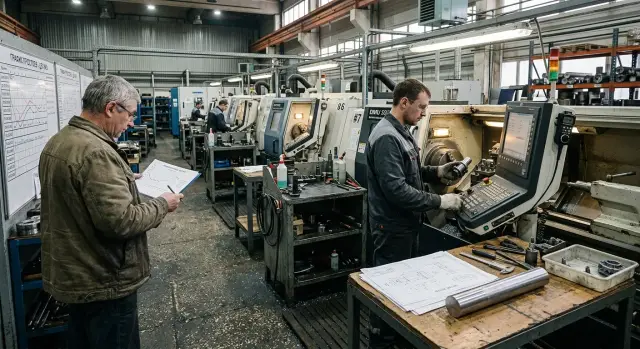
What happens when the launch is left to the setter
Usually it looks familiar. In the morning, the setter is keeping the series running: checking dimensions, changing tools, watching tool life, helping the operator, and clearing minor issues. Then a new part comes in that same day. There is no stable process for it yet, there are questions about fixtures, datums, the first setup, and cycle time. Formally, the launch is also their responsibility, so they go where the problem is loudest.
The point is not that the setter is weak or unable to cope. The problem is the setup itself. Series work likes rhythm, while launching a new part keeps breaking that rhythm. While the setter is busy with the new order, the series waits for a decision on scrap, correction, or a tool change. When they come back, the launch context is already lost. Half an hour later everything repeats: the size is off, the blank is not clamped properly, the program adds an unnecessary pass.
From the outside, it often looks like a pile of small things. Five minutes here, ten minutes there, one more trial cut, one more call to the supervisor, one more program tweak. But that is exactly how hours add up. The series stops more often, the new part takes longer to launch, and the shift turns into constant firefighting. By evening everyone is busy, but less has been done than planned.
This is especially visible where machines are tightly loaded. One unresolved launch question pulls the next one with it: the first part is not ready for inspection, the process approval slips, the fixture is ordered later, the real cost is calculated later. The series area also loses pace in the meantime. In the end, the shop pays twice: for the slow launch and for the drop in current output.
If this pattern repeats every week, it is worth rethinking the roles honestly. The setter is needed at the machine where production is already running. Launching a new part needs dedicated time and a person who brings the process to a stable state instead of getting distracted every twenty minutes.
One question usually clears things up quickly: who in the shop is responsible specifically for bringing a new part into stable series production? If there is no clear answer, the launch is already floating between people. And losses grow not because of one mistake, but because of the way the work is organized.
Which losses grow fastest
When there is no technologist for launching new parts, the shop almost always loses not from one big failure, but from frequent small misses. The most expensive one is machine time. The setter keeps the series running, then gets pulled to a new order, checks the drawing, edits the program, selects tooling, makes a trial pass. The series machine is either waiting or running below normal performance.
These switches quickly eat up a shift. Even if each return to the series takes only 15–20 minutes, that adds up to several hours a day. On paper the machine is busy all day. In reality, the useful output is lower. You can see it almost right away: the series plan falls behind, even though the new part has not yet reached a normal rhythm.
Then other losses start to grow. More blanks are used for trials and trimming, tools wear faster because of extra changeovers, the program is edited several times in a hurry, and fixtures are adjusted at the last minute. The first batch more often produces scrap or borderline dimensions.
These losses rarely come one at a time. If the setter rushes back to the series, they do not always have time to calmly check the result after a correction. Then repeat adjustments appear in feed, datum setup, tool stick-out, and sometimes even in the sequence of operations. One evening of chaos can easily turn into two days of small fixes.
Deadlines also start slipping earlier than it seems. A series order is missed not because the new launch took the machine for a week. A few short stoppages, a couple of urgent changeovers, and one bad start are enough. The client does not see the internal reason. They see the delay.
The first batches are especially hard. People often try to push them to shipment at any cost. In the end, the shop spends material, machine hours, and QC time, and then still comes back to fixing what could have been caught during the launch stage. This is exactly where a separate person for new parts often pays off faster than it first appears.
What signs show the shop has reached its limit
The first sign is not in reports, but in the rhythm of the shift. Setters work to plan less and less often and spend more and more time putting out urgent fires: a program needs tweaking, tooling has to be selected for a new part, or they need to help the operator whose series machine has stopped. The day is fully occupied, but new launches barely move.
Then the familiar chain starts. New parts are pushed aside and launched after a crisis, at the end of a shift, or on a weekend. People work overtime, get tired, and still end up making more trial parts than necessary. That is a direct sign: the launch no longer fits into the normal flow; it is being held together by the personal effort of a few strong people.
Another symptom is that the series runs normally only while the supervisor is constantly nearby. If the shift cannot calmly handle the current output without their help, the margin for organization is basically gone. The supervisor lives between two fires: supporting output while also pulling new orders through. No one can work like that for long.
This is especially noticeable at the machine. The drawing, program, tooling, and fixture do not come together ahead of time, but at the moment of the first setup. Then the setter is not launching a part; they are putting together a puzzle on the fly. On turning machines, that quickly turns into extra hours: first the datum is adjusted, then it turns out a holder is missing, then they go back to cutting parameters again.
There is also a less visible but very accurate sign: the same questions repeat from order to order. Which datum should be used first? Which tool should machine this section? Where should the allowance be kept? If the shop discusses this from scratch every time, then the decisions are not being embedded in the process. People remember things, but the system does not keep them.
Usually the limit looks like this:
- the setter keeps the series going and prepares the new part at the same time;
- the supervisor intervenes in the shift every day;
- the launch of a new part depends on overtime;
- the first good part appears later than promised to production.
At that point, a separate launch technologist is needed not for a pretty structure, but to give the shop back a normal rhythm. If that is not done, losses will keep building quietly: through deadline shifts, extra passes, and stressful work at the machine.
When a separate technologist is already worth the cost
This role pays off not when the shop simply has more people, but when new launches regularly throw series work out of rhythm. If the setter keeps switching between production and urgently pulling a new part through, the shop loses on both the series and the new order startup.
It is better to calculate by monthly losses, not by salary. One new part launch takes hours for tooling selection, the trial program, the first setup, measurements, and corrections. If the machine is not making series parts during that time and the operator is waiting for decisions, losses grow faster than what the time sheet shows.
A simple example. One new order takes 6 hours from a strong setter. Another 3 hours are lost because the machine is idle or running in bursts while the size and parameters are being tuned. If there are four such launches a month, the shop is already losing dozens of hours of useful machine time. Add first-batch scrap, urgent rework, and deadline shifts on series parts, and part of the separate specialist’s salary stops looking like an unnecessary cost.
If pilot orders are rare, a separate person is not always needed. When a new job appears once a quarter, this work can still be handled by senior setters or the area technologist. But if new parts come in almost every week, that is no longer a one-off burden. It is a separate function.
Usually the decision matures when several things line up: new parts come in regularly, the setter is pulled off the series for the first launch, the first good part takes too long, tolerances are chased at the machine, and the same questions are solved again for every order.
The more complex the part and the tighter the schedule, the more expensive every hour of trials and stoppages becomes. If the shop runs not only series production but also constant preparation for new orders, a separate launch specialist often costs less than doing everything as an afterthought.
How to divide the work step by step
If the shop keeps pulling the setter between the series and new parts, the order has to be strict. Otherwise, the launch lives right at the machine, and that is almost always more expensive. You need a person who is responsible specifically for preparing new launches, not for solving problems as the shift goes on.
That employee should not have their own series running in parallel. If they prepare a new part in the morning and then run off to save a stoppage in another area after lunch, the purpose of the role is lost. A launch technologist works properly only when they have time to review the task before handing it over to production.
For each new order, it helps to lock in the same sequence:
- First review the drawing: datums, tolerances, questionable dimensions, material.
- Then build the routing and identify the bottlenecks.
- After that, choose the fixture, datum setup, and tools.
- Next, prepare the program and check the file version.
- Finally, make a trial batch, measure it, and make corrections before handing it over to series production.
The setter should receive not a raw task, but a ready package. It usually includes a marked-up drawing, the routing card, a tool list, fixture data, the program, and the results of the first inspection. Then their job is simple: set up, adjust, confirm the cycle, and start the series without unnecessary guesswork.
On turning machines and machining centers, a lot of time is spent on the same questions. How to clamp a similar part, which insert or drill already gave a clean dimension, which cutting parameters keep tool life stable. If this is not written down, the shop pays for the same mistake every time. A simple database of standard solutions is usually enough: material, similar part, tooling, parameters, and notes on datum setup.
Once a week, it helps to do a short review. Not for reporting, but to see where the launch again started eating into series time. The reason is usually found quickly: the fixture was not ordered, the drawing was approved too late, the program was not checked, or the first-part inspection was forgotten. After a few such reviews, the process becomes noticeably more solid.
A simple example from the shop floor
A small turning section runs a steady series: every day it makes the same part for a regular customer. The schedule is clear, the setup is established, and people are in rhythm. Then an urgent new order arrives for a different part that needs a fast first result.
The section manager takes the usual route and assigns the launch to the same setter who is running the series. They take the machine off its current job, change the clamping, load the program, and start trialing the first part. On paper, it looks like a couple of hours. In practice, it almost always takes longer.
The first part rarely goes smoothly. The setter adjusts the tool stick-out, trims the cutting parameters, clarifies the datum setup, and measures again. While they are pushing the launch through, the series is stopped. The operator is waiting. The supervisor is shifting the deadline on the current order. If there is only one strong setter in the shop, the whole queue starts to fall apart by the end of the shift.
By the next day, the section has several losses at once. The series order ships late. The new order produced one good part, but it took extra time and several blanks. The setter spent the whole day jumping between two tasks, so they were more tired than usual and started making small mistakes.
When a separate launch person appears in the shop, the picture changes not because of magic, but because the work is divided. They review the drawing in advance, prepare the routing, choose the tooling and clamping, check the program, and already know what needs to be measured on the first part. The setter no longer has to find the solution on the fly and instead works to a clear plan.
The difference is usually visible quickly: the series follows its own schedule, the new order launches faster, first-batch scrap is lower, people move less between urgent and current tasks, and the supervisor has a better picture of the real lead time. The shop does not become bigger, but it starts wasting much less time.
Where people most often get it wrong
The first mistake is trying to close the launch with overtime and bonuses. For a short period, this seems reasonable: the setter stays after shift, finishes the first part, and in the morning goes back to the series. After a couple of weeks, the system breaks down. People get tired, the first setup takes longer, scrap appears later, and series orders start slipping.
The second mistake only looks good on paper. A manager appoints a launch technologist but does not free them from shift emergencies. If a machine stops, tooling fails, or a series batch needs to be changed urgently, this person is immediately pulled back into the shop floor. In the end, they do not finish the routing, the fixture, the cutting parameters, or the first-part inspection. The position exists, but the separate function does not.
What breaks a launch in practice
Problems grow fast when an incomplete set of part data is handed over for launch. A drawing alone is not enough. You need the current version, material, blank, tolerance requirements, a clear inspection plan, a tool list, and an understanding of which machine can actually run the part without extra rework. Otherwise the shop starts guessing everything on the spot.
Another common mistake is arguing based on impressions. One supervisor says the launch takes a couple of hours, another is sure the series barely suffers. As long as nobody counts the losses, the discussion goes in circles. It is enough to gather the numbers for a month: how many hours were lost to repeat setups, how many series parts were not made on time, how much scrap and rework the first launch produced, how many times the machine sat idle waiting for a decision. After that, it becomes clear where the money is being lost and where there is just noise.
The last mistake is the most stubborn one: the shop swaps people around, but does not change the process itself. Today the new orders go to the strongest setter, tomorrow to a separate technologist, the day after to the supervisor. If the incoming review of the part, fixture preparation, trial launch, and handoff to series production are all done loosely, the result will not change. Process matters more than heroics here. Even a good specialist cannot carry a launch if each time they start almost from zero.
At EAST CNC, the official representative of Taizhou Eastern CNC Technology Co., Ltd. in Kazakhstan, the blog often covers equipment and launch practices. That is a useful reference for shops that are reviewing new-part launches, machine selection, and service at the same time.
A quick check before deciding
The decision is usually visible not by feeling, but by a few simple numbers and one question about responsibility. If the shop has been arguing for several months about whether it needs a technologist for launching new parts, start by looking at the last 4–6 weeks.
First, see how many new parts come into production each month. If it is one or two jobs, the launch can often still be handled by setters without much harm to the series. If there are already six, eight, or more new parts, every first trial starts taking time away from current orders.
Then check how often the series is stopped for trials and corrections. One short stop is still manageable. But if a machine is pulled away from stable work several times a week to check a new program, tool, or clamp, the losses are no longer just in the launch—they are also in shipments.
It also helps to count the number of trial parts before the first good batch. When the shop consistently gets there with one or two parts, the process is still under control. When it takes four to six pieces, and more for complex jobs, the problem is almost never one person, but the fact that launches are being handled in fragments.
The quick check looks like this:
- the number of new parts per month is already greater than what setters can calmly handle between series jobs;
- the series is stopped for trials and corrections several times a week;
- it takes noticeably more than one or two parts to get the first good one;
- different people make decisions about fixtures, programs, and cutting parameters;
- there is no single person who carries the launch from the drawing to stable output.
The last two points are often underestimated. If the supervisor chooses the fixture, the setter edits the program, and the section manager decides on the first good part, the launch almost always stretches out. Nobody is holding the whole chain together.
A simple example. A shop takes on 7 new parts a month. For each part, they make an average of 3 trial pieces, and the series is stopped twice for corrections. On paper, that looks minor. In reality, machine hours, material, and the attention of people who should be keeping production running are being lost.
If at least three items from the list have become the normal picture, a separate role no longer looks unnecessary. That means the shop needs a person who is responsible for the launch from the start until the part is running at a normal rhythm without constant returns to trials.
What to do next
First, remove the arguments and guesswork. If it seems in the shop that new parts are hurting the series, that needs to be confirmed with numbers. Without them, the decision is almost always postponed, and losses keep growing.
Start with simple tracking for new launches. You do not need a big report. A single table is enough, where the supervisor or shift lead records three things: how many minutes were lost to downtime, how many parts went to scrap, and how many times the program, tooling, or cutting parameters had to be edited again. In just two or three weeks, it will become clear where the shop is losing the most.
Then choose one area for a short test. It is better not to take the whole shop, but one clear zone, for example a group of turning machines where new orders often come in. For one month, split the roles so one person runs the series and the other handles new part launches. Do not change everything at once. One area gives an honest picture without extra noise.
To keep the test from falling apart, create a short launch standard. It should fit on one or two pages and work on the shift, not sit in a folder. Usually four things are enough: what must be ready before start, who checks the first part and when, which deviations can be corrected immediately, and where changes are recorded so the next batch does not start from scratch.
A good standard does not require extra paperwork. If a person spends more time writing than launching, the process will be abandoned quickly.
After a month, compare the result with normal work. Look not only at scrap. Often the main effect is elsewhere: the series runs more smoothly, setters jump between tasks less, and new orders stop getting stuck halfway through. If, after such a test, the separate technologist removes constant disruptions, the role can already be considered effective.
If the shop often launches new parts on turning machines and machining centers, it helps to look wider than just the people on the shift. Sometimes the bottleneck sits in the whole chain: machine, tooling, commissioning, and service. EAST CNC works in this area in Kazakhstan, supplies metalworking machines, and covers the full cycle—from selection and delivery to commissioning and service support. That is especially important where the goal is not to pull off one launch, but to make the process calm and repeatable.
The worst option here is simple: leave everything as it is and hope the setters will somehow carry both the series and the new parts. Usually they won’t. The losses just build up more quietly than anyone would like.
FAQ
When does a shop already need a separate technologist for launching new parts?
An independent technologist is needed when new parts come in almost every week and the shop regularly pulls the setter off series work for them. If the first good part takes too long, series output slips in deadlines, and the same questions about datum, tooling, and fixtures keep coming up in every order, the role is already paying off.
Why not simply assign launches to the setter who is running the series?
Because the two tasks pull the shift in different directions. Series production needs a steady rhythm and quick decisions at the machine, while launching a new part requires time to review the drawing, fixtures, program, and test runs. When one person is torn between both, both jobs slow down.
Which losses grow fastest if launches depend on the setter?
First, the shop loses machine hours. Then extra trials, trimming, tool wear, and urgent program edits start to grow. After that, deadlines slip on both the series and the first batch of the new part.
How can you quickly check whether the shop has already hit its limit?
Look at the last 4–6 weeks. If the number of new parts has grown, the series is stopped for trials several times a week, and it takes more than one or two parts to get the first good one, the shop is already working at the limit. Another clear sign is that nobody is fully responsible for the launch from drawing to stable output.
Who should be responsible for moving a new part into series production?
This person should carry the launch from start to finish. They review the drawing, choose the datum setup, prepare the fixture and tooling, check the program, run the trial batch, and only then hand the job over to series production. If responsibility is spread between the supervisor, setter, and section manager, the launch almost always takes longer.
What should the technologist prepare before handing the part over to series production?
The setter should receive not a raw task, but a ready package. It usually includes a marked-up drawing, the routing, fixture details, the tool list, the program, and the first inspection results. Then they can start the series with a clear plan instead of figuring things out on the fly.
Are there cases when a separate technologist is not needed?
If new jobs come in rarely, for example once a quarter, a separate person is not always necessary. In that case, a senior setter or the section technologist can still handle it without much damage to the series. But once launches become regular, this setup quickly stops coping with the load.
How can you test the idea without restructuring the whole shop?
Start with one area for a month. Split the roles so one person runs the series and the other handles only new parts, and at the same time track downtime, scrap, repeat edits, and the time to the first good part. That kind of test quickly shows where the shop loses money and time.
What mistakes most often break new-part launches?
The shop most often tries to solve the problem with overtime instead of a proper process. Another common mistake is appointing a launch technologist and then immediately pulling them into shift emergencies, so they never finish the job. The third mistake is simple: people are moved around, but the launch process itself stays rough.
How do you know role separation has worked?
Look at more than scrap alone. A good result shows up as a steadier series, fewer stoppages, a faster move to the first good part, and fewer repeat edits to tooling, the program, and cutting parameters. If the supervisor deals with fewer urgent breakdowns, the role separation worked.