
Manufacturing Medical Parts: Cleanliness and Traceability
Manufacturing medical parts starts with getting documentation, packaging and in-process control in order. We look at where the risks grow.
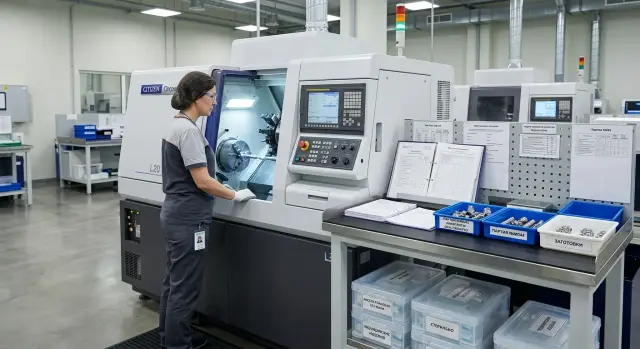
Why a medical order quickly changes shop processes
A standard batch and a medical batch follow different rules. In a regular order the client mostly looks at size, material and lead time. In a medical order they immediately ask for the part's history: which blank it came from, which machine processed it, who operated it, how it was cleaned, where it was stored and in which tray it was passed on.
This changes not only inspection, but the whole shop routine during a shift. Any small thing that used to be routine can become a point of dispute at acceptance. Oil residues, chips in a pocket, mixed-up trays, unreadable marking — these are no longer "we'll fix it later" but a risk to the whole batch.
The first impact usually falls on discipline between operations. You cannot just take a part off the machine and move it along with a neighboring batch. For each blank and every part it must be clear where it came from, which operations it passed, who confirmed dimensions and surface condition, and which container it was placed into after processing.
If an error occurs at one stage, the problem rarely stays local. An operator may put parts from two runs into one tray. Dimensions might be within tolerance, but traceability is lost. Then sorting, rechecking and disputes about which parts are acceptable begin. In the worst case the whole batch may be questioned, even if the defect was found in only a few pieces.
The same applies to cleanliness. If chips or traces of coolant remain after turning, the next station receives damaged surfaces, dirty packaging or false inspection results. A medical order quickly reveals weak spots that in another industry might go unnoticed.
Therefore producing such parts soon requires tighter order: separate containers, clear labeling, clean transitions between operations and records without gaps. Without that even a good machine and a precise program won't save the batch from return.
Where cleanliness requirements come from
In medical orders cleanliness demands typically arise earlier than the shop expects. The issue isn't just the part's appearance. Tiny chips, oil residues, grinding dust and even lint from ordinary rags create risk. If any of this gets on the part before packaging, the defect is often discovered too late.
The first thing to do is separate the area where chips fly from the place where parts are inspected before final packaging. When turning, blow-off and inspection happen side by side, dirt constantly returns to an already cleaned surface. Even a careful operator can't fix that if the part's route is poorly arranged.
Open trays also stop being a small detail. Open containers are convenient but collect dust from aisles, coolant splashes, accidental chips from gloves and benches. For medical components adopt a simple rule: after an operation the part goes into a clean closed tray, not left on a cart or in a shared box.
Cleanliness cannot rely on verbal agreements. It should be described as a standard operation: who removes oil, what exactly is used to clean the surface, which wipes are allowed, when solutions are changed and who verifies the result. Without this, one shift may wash parts carefully while another just wipes with whatever is on hand.
Usually a short clear procedure is enough. After each operation the operator removes visible chips and oil. Then the part goes immediately into a closed tray labeled with the batch. Before packaging an inspector separately checks surface cleanliness and internal cavities.
It’s better to check cleanliness before packaging, not after shipment. Once transported it’s hard to tell where dust or oil traces appeared. It's far cheaper to catch the problem on the shop floor while the batch is nearby and the contamination source can be found in a day.
In practice this looks simple. The housing after final machining is cleaned according to instructions, placed in a closed tray, and the inspector examines threads, grooves and internal cavities. If the part passes, it's packed immediately. That procedure removes disputes and avoids re-washing the whole batch.
What to track from the first batch
If a customer finds a questionable dimension in three months, you should be able to know in minutes which material was used, who processed the part and where the neighboring pieces from the same batch went. In medical orders this discipline quickly becomes the norm. Without it defects are hard to localize and the entire production can be questioned.
Build traceability from the first delivery, not after the first complaint. Start with material: record the heat or material batch number, certificate number and supplier. If the material was stored in several locations, record that too so remnants aren't mixed.
Next is the blank. Each blank batch needs its own number, receipt date and clear link to incoming inspection. When the shop takes blanks into production the record should show which receipt they came from. Otherwise, in a week it's easy to lose the link between material and finished part.
Each operation should have a short history: which machine did the processing, what tooling and cutters were set by the setup technician, which operator ran the batch, when the operation started and finished, and which dimensions the inspector checked. That information is enough to spot where a risk appeared. If, for example, housings for a medical pump are out of fit, you'll quickly see whether the disputed parts share the same machine, tooling or shift.
Keep measurement results, not just a "pass" mark. Save actual values. For disputed parts note who inspected them and why they were kept, reworked or rejected. These records often save you from re-sorting the entire batch.
The final stage is often remembered too late. The finished part must be linked to its tray, packaging, marking and shipment date. Then you can find not just the batch but the exact box or tray the customer received.
Good traceability shouldn't be complicated. If a record doesn't let you find the material, processing route and shipment point within 10 minutes, there's a gap in the system.
Which documents change first
When the shop takes a medical order, the first change is usually not the machine but the documents around it. If a foreman could keep part of the information in his head before, that's now a risk. You need records that clearly show who worked on the batch, when and at which operation.
Typically you update the routing card, the cleaning and visual inspection form, the procedure for re-sorting and isolating rejects, and the drawing revision log.
The routing card should be more detailed than for a regular order. It should show not only operations and machines but also inspection points, material batch number, operator name, date, time and part status after each stage. If a part went to washing, recheck or rework, the card should reflect that. Otherwise in a week no one will remember where the issue occurred.
A separate cleaning and visual inspection form is needed almost immediately. It should record the cleaning method, who performed it, when the inspection was done and what was observed. The phrase "part is clean" solves nothing. A note like "no oil film, no chips found, no scratches on control surfaces" is far more useful.
Rules for re-sorting and isolating rejects are often underestimated. They shouldn't be. If a doubtful part is found, staff must know actions immediately without calls and guesses: where the batch is stored, who marks it, who decides, and whether it can be mixed with acceptable parts. For medical orders the usual answer is — do not mix.
Store drawings and their revisions by version rather than overwriting files. You need a clear trail: which version was used for a specific batch, who approved the change and from what moment the shop switched to the new requirement. Otherwise you might end up releasing half the parts to one dimension and half to another.
If a company already has service and production discipline, implementing this order is easier. But even a small shop doesn't need a thick manual — short forms, unified rules and the habit of filling them the same day are enough.
How to set up control between operations
When a part goes through five or six operations, the risk grows not at the machine but between machines. Problems most often occur when removing the part, washing, transferring to a tray or after a setup change. For a medical order these moments are enough to trigger an investigation.
First mark the points where parts most often get dirty or lose their history. Usually those are manual handling without gloves, a common bench near abrasives, mixing trays after washing, and temporary storage without a label. No need for a complex diagram — a simple route from the first operation to final packaging with notes on who handles the part is enough.
Then assign responsibility. One person should not be "responsible for everything" — that makes records a formality. It's better to split checks across transitions: the operator after machining checks initial dimensions and tray number, the supervisor or inspector checks cleanliness and absence of chips, and the person at the next stage confirms they received the right batch and quantity. After a setup change the operator checks the first parts again, even if the program didn't change.
A simple log at each transition helps. Often six columns are enough: date, operation, machine, tray or batch number, quantity and the verifier's signature. If a deviation is found, write the specific reason, not a general phrase: coolant mark, smeared marking, scratch on the face, dimensional discrepancy.
Never lose the tray number. If the marking rubs off, the label falls off or parts are transferred to an unmarked container, stop the batch immediately. Reconstructing history from memory is almost always futile.
In-process control only works when it's quick and clear. If checking takes ten minutes per basket people will bypass it. So control points should be short but placed where an error is costly: after the first operation, after washing, after each setup change and before transfer to the next area.
Changes in packaging and labeling
Packaging for a medical order stops being a final formality. It directly affects part cleanliness, batch history and whether the client accepts the delivery without extra questions. You can machine parts well but put them into dirty containers or mix batches — and the problem is created.
Only clean parts that have passed acceptance are packed. First washing, drying and inspection, then packaging. If a station packs parts with a "we'll sort it later" approach, packaging loses its meaning and only adds risk.
Don't mix batches in one container, even if parts look identical. One container holds one batch. Otherwise traceability is lost: it's difficult to tell which machine made the part, who inspected it and what material it came from.
Labeling becomes stricter. The label must be readable, simple and resistant to storage and transport. It should be quick to check without decoding. Typically a label needs the batch number, packing date, part name or code, quantity and acceptance status. Importantly, the label should be on each container, not only on the pallet.
Internal protection in the container also changes. For turned housings, bushings and small fits even a small scratch can trigger re-inspection of the whole batch. Use separators, cells or individual bags and close the container immediately after packing. This prevents dust and contact with neighboring surfaces.
Keep a simple record of container closure: who packed, who closed and when. A note in the routing card or in the electronic system is often enough. If a question about cleanliness or labeling arises later, the team can quickly find the specific shift and container.
Good packaging shouldn't be complicated. Its job is simple: prevent mix-ups, scratches and recontamination.
Example with a batch of housings for a medical pump
A batch of 120 housings for a small medical pump goes through turning, then milling and final packaging. But the working order is different. After turning the operator doesn't put parts into a shared box with other orders. He washes this batch separately, dries it on a clean tray and immediately records the tray number so parts don't mix with other housings.
At this stage the inspector checks not only dimensions. He checks diameters and fits and also the surface: no oil film, no chips in grooves, no marks from dirty rags. Then he verifies the tray number against the routing card. If the dimension is within tolerance but the tray number doesn't match or the marking is smeared, the batch is not passed on.
Only after acceptance does the supervisor send the parts to milling. He records the tray number, the accepted quantity, the transfer time and his note in the card. It seems minor, but this is where traceability is often lost. Suppose three of 120 parts went to rework; if the supervisor doesn't record it immediately, the next station's count won't match and no one will quickly know where the extra or missing housings came from.
After milling the inspection repeats. They again check dimensions, surface condition and conformity with paperwork. Before shipment the check is even stricter: the inspector opens packaging and looks for oil traces on the bag, insert or parts themselves. Even a part with correct dimensions can fail acceptance if the packaging collected dirt during packing.
This is how work with medical parts usually starts: not with a new complex technology but with discipline at every transition. Separate washing, separate tray, transfer record and recheck of packaging give a simple result: for any part you can quickly see who processed it, who accepted it and in what condition it left for the customer.
Common mistakes at the start
Initial failures usually look like small things. In general metalworking these are often overlooked. But in medical orders such small issues quickly turn into batch returns, extra checks and disputes with the client.
One frequent mistake is writing the batch number only on the outer box. While the box is closed everything seems fine. The problem starts when parts are distributed into trays, sent for recheck or taken to wash. At that point the link between a specific part and the batch is easily lost. Later no one can confidently say which bar produced the part, which machine made it and who checked the dimension.
It's also bad when acceptable and questionable parts are in the same tray. An operator can mark doubtful positions with a marker or a slip of paper, but such marks don't last. One transfer, one bench cleaning — and the sorting falls apart. Then inspection wastes time rechecking the whole batch and some parts may move on by mistake.
Another common issue is washing parts carefully but not recording what was used and when. For medical orders that's not enough. If oil traces or residues appear after drying, without records you can't tell whether the fault was in the cleaner, the tank, the drying regime or in storage after washing.
Sometimes an engineer or supervisor changes a drawing but leaves the routing card unchanged. The paper shows one dimension while the routing still lists the old tool, old operation or old control size. People on the shop floor end up working to two versions at once. The error appears after packaging, when the batch is already assembled and signed.
Finding a defect later is the most expensive. If discovered after packing you must open containers, recount parts, re-wash part of the batch and recheck labeling. A small defect can cost a lot of time.
At the start keep a few simple rules: label not only the outer box but every tray; separate doubtful parts immediately; record washing with the agent, date, time and responsible person; update the routing card the same day you change a drawing; look for weak spots before packaging, not after.
This order doesn't seem complicated. It protects from the most painful mistakes a shop usually makes in the first month of working with medical orders.
Short checklist before launch
Before the first run problems are usually not in machine settings but in routine discipline on the floor. If you don't check the route, tray labeling and inspection records, one disputed part can mix with acceptable ones and then you'll have to rework the whole batch.
Do this quick check before the shift starts and again after the first finished batch.
- Verify the operation route. The part should have a clear path: which machining comes first, where inspection is, where washing and where packaging.
- Check labeling on every tray. The batch number must be readable immediately without verbal explanations.
- Separate rejects and any doubtful parts. They need a separate tray and distinct marking.
- Align inspection records by date and shift. It should be clear who measured the part, when and to which batch the record belongs.
- Inspect packaging before placing parts. Dust inside the bag, marks from old containers and scratches on the cassette create problems before shipment.
It helps to take one part and walk it through the route on paper and on the shop floor. This quick run reveals weak spots: an empty field in the log, a tray without a number, an open container at the wash.
If any item raises a question, postpone the launch by an hour and close the gap. It's cheaper than explaining later why the batch lacks a full history or why a clean part arrived with dust inside the packaging.
What to do before the first medical order
Don't start a full series with the first medical order. Begin with a single trial batch. A run like this quickly shows weak spots: where parts wait without protection, where operators record data manually, where batch labels are lost after washing or transfers.
A trial batch is more useful than a general instruction. It reveals the real picture for timing, cleanliness, documentation and part movement. If an error appears on ten or twenty parts, it's easier to fix than after a large run.
During the trial run complete the whole flow without skips or a "we'll fill this in later" approach. Check the routing card and all operation records, ensure containers are suitable for clean parts and don't shed dust or chips, verify where and who applies the batch label, walk all control points between operations and watch whether parts from different batches mix on a bench or in a container.
A common startup mistake is that documents, packaging and inspection live separately. In a medical order that breaks the process on the first batch. If a part passed machining but there's no clear record of material, operator and operation time, you won't reconstruct the chain later without guessing.
Assign one person responsible for batch traceability across the whole chain. Not three people at different stations but one process owner. They check how the batch enters production, where containers change, who signs inspection and how data is collected into the final document set. This noticeably reduces confusion.
If equipment needs review for such an order, discuss it in advance. EAST CNC supplies CNC lathes, machining centers and automated production lines for metalworking and helps with selection, commissioning and service. In these projects it’s useful not only to choose a machine but also to link cleanliness and traceability requirements to the real shop process.
FAQ
Why does a medical order immediately change the shop?
Because the customer looks not only at the dimension. They want to see the part's history: material, machine, operator, cleaning, tray and transfers between operations.
What to check first for cleanliness?
Check for chips, oil, dust and lint right away. The inspector separately looks into grooves, threads, internal cavities and the surface before packaging.
When should batch traceability begin?
Start traceability from the first batch. Record the material, certificate number, blank batch, machine, operator, measurement results, tray number and shipment date.
Which documents are updated first?
Usually the routing card, the cleaning and visual inspection form, the rules for isolating rejects and the drawing revision log are updated first. That is often enough to avoid relying on memory.
How to set up control between operations?
Mark the places where the part is handled, washed, moved and stored temporarily. Then assign who checks dimensions, who checks cleanliness and who confirms tray number and quantity.
Can two batches be placed in one container if parts look identical?
No. Do not mix batches. One container = one batch, otherwise you lose the link between the part, material and inspection.
What to do with a disputed part?
Immediately separate it from good parts into a dedicated tray with a clear label. Then the supervisor or inspector decides whether to rework, reject or recheck it.
Why is batch labeling only on the outer box insufficient?
Because parts are quickly moved to trays, wash stations and rechecks. If the batch number is only on the outer box, the link to individual parts is easily lost during the route.
What mistakes are most common in the first month?
Common mistakes are skipping the wash record, not updating the routing after a drawing change, and leaving parts in open containers. Labels on trays also wear off and are noticed too late.
How to begin with the first medical order?
Start with a trial batch and run it through the entire route without omissions. Appoint one person responsible for traceability and close any gaps before a full run.