
A machine for small medical parts: stability matters
A good machine for small medical parts is chosen for thermal stability, a clean cutting zone, and repeatability — not for power.
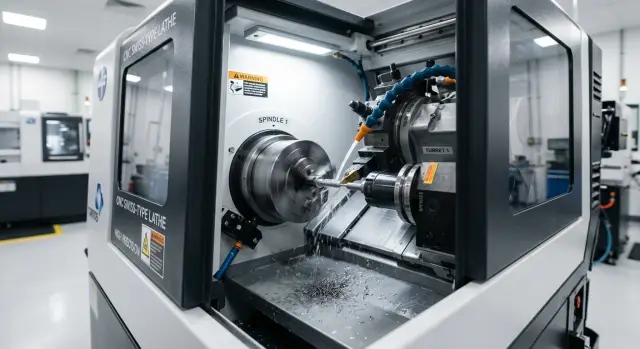
Why power does not solve the problem
When a part is small, the issue is usually not a lack of force. Even a small amount of heat changes the size, and that is already enough to fall out of tolerance. For a medical bushing, a miniature housing, or a thin pin, a few microns decide everything.
A powerful spindle by itself does not make machining more accurate. Sometimes it even gets in the way: the operator switches to a more aggressive mode, speed and feed increase, and more heat builds up in the cutting zone. For a large workpiece, that extra reserve can be useful. For a small part, it often creates a new error.
This is especially noticeable in small-batch production. The first part is within size, the third one too, but by the eighth part the size slowly starts to drift. The reason can be simple: the spindle, guides, or feed unit warmed up, and drift appeared along the axis. Power does not solve that. If the machine does not hold temperature well, the numbers on the spec sheet mean very little.
For this kind of work, one smooth pass is often better than a rough excess of force. When the tool cuts calmly, without extra vibration or sudden load spikes, the machine behaves predictably. It is easier for the operator to find the working mode, and the result depends less on whether this is the second or the twelfth part in the batch.
That is why equipment for small medical parts is chosen not by peak figures. People look at other things: how quickly the machine reaches a stable state, whether it holds size after warm-up, whether there is variation in length and diameter, and how it behaves during a long shift. That sounds less impressive than comparing kilowatts, but this is where scrap actually starts.
In practice, a stable machine is almost always more profitable than a more powerful one. It needs fewer adjustments, produces fewer trial parts, and is less likely to surprise you in the middle of a batch. For a shop that works with small batches and tight tolerances, that matters more than any nice number in the spec.
What matters for a small medical part
A small medical part quickly reveals weak points in production. Usually, the problem is not the hardness of the metal or the lack of power, but the combination of a tight tolerance, delicate geometry, and the need to get the same result across the whole batch.
First, look at the dimensional task, and only then at the material. Stainless steel, titanium, and aluminum behave differently, but by themselves they do not explain much. If the part has a short seating surface and a small tolerance, even a good tool will not save the size from drifting when temperature, tool, or cutting mode changes.
Small parts have another unpleasant trait: they almost never forgive mistakes. A thin wall bends under tool pressure. A narrow groove traps chips. A short base makes clamping finicky, and the part can shift slightly by the second or third operation.
Before starting a batch, it helps to check a few things: how firmly the part can be clamped, whether there are thin walls, small holes, and narrow grooves, what tolerance has to be maintained across the whole batch rather than on just one part, and what surface finish is required after finishing.
Many people judge quality by the first part and relax too early. For medical components, that is not enough. The first part can come out almost perfect, while the tenth one already shows a different size or a rougher surface. That is why size and surface finish are better checked after a short series, without long pauses or retuning.
The same applies to inspection. If the batch is small, that is not a reason to measure only at the end. Quite the opposite: in a small batch, an error on one part costs more. It is much wiser to set a simple control pattern — first part, several checks at regular intervals, and a final measurement.
A good sign is simple: after ten identical cycles, the operator does not have to chase size manually or rewrite the settings because of every minor issue. Parts like that show best whether the machine fits the job.
Thermal stability without unnecessary theory
For a small medical part, heat is often more dangerous than a lack of power reserve. During operation, the machine cuts metal, the units heat up, and the size slowly starts to drift. On a large part, people sometimes accept that. On a bushing, pin, or small housing with a tight tolerance, such drift quickly turns into scrap.
You should look not at a nice number in the catalog, but at how the machine behaves after warm-up. The spindle should not noticeably change the part size after 20–40 minutes of work. If the first part is in size, but later the diameter shifts by a few microns in one direction, the cause is often not the tool, but heat inside the unit.
The bed is just as important. If it changes geometry over the shift, the size will wander even with the same program. The operator will keep correcting offsets, and the batch will depend not on the machine, but on its patience. For this type of work, that is a bad scenario.
Cooling also has to work steadily. If coolant is delivered in bursts, the liquid temperature fluctuates, and the stream sometimes hits the cutting zone and sometimes misses it, there will be no stability. In small batches, that is especially frustrating: the process has not even settled yet, and the batch is already over.
At a demonstration or test, do not ask for one control part. A much more useful check is simple on-the-job measurement: measure the first part after startup, then the tenth one, when the units have already warmed up, and the last part in the series. Compare not only the size itself, but also the spread from the same reference point.
This kind of test quickly shows whether the machine holds size in real work. If a supplier such as EAST CNC organizes a demonstration, it is better to ask for exactly this scenario rather than a one-time “perfect” cut.
A good result looks simple: the operator is not fighting temperature all day. They start the series and get identical parts without constant manual adjustment.
A clean cutting zone and chip control
On small medical parts, chips are often more dangerous than a lack of power. One tiny curl at the tool edge can scratch the surface, throw off the size, and ruin the fit. On a large workpiece, that sometimes goes unnoticed. On a bushing, fitting, or miniature shaft, it does not.
That is why the cutting zone must stay clean without constant operator intervention. If chips stick to the tool or remain near the part, the job quickly becomes unstable. The first few parts may come out fine, and then the size starts to drift.
Coolant matters not by itself, but by how accurately it is delivered. The stream should go directly where the tool removes metal. If it sprays nearby, the cutting zone overheats, small chips are not washed away, and they end up back under the cutting edge. On small diameters, this shows up very quickly.
Good visibility is also needed. The screen and enclosure should protect the operator, but they should not hide the working point. It should be easy to see how the coolant stream behaves, where the chips go, and whether they remain in the chuck, on the collet, or near the stop.
Easy cleaning between batches matters just as much. In small-batch work, today it is stainless steel, tomorrow titanium, then a different geometry. If the work area is hard to wash out and clean quickly, small chips mix together, get back into the cut, and damage the surface. Five minutes of simple cleaning is better than an hour spent fixing scrap.
When watching a machine in operation, it helps to check a few basic things: do chips leave the cutting zone without a hook or tweezers, does the coolant hit the cutting point exactly, does the window stay clear and the tool remain visible during the cycle, can the work area be cleaned in a couple of minutes, and are there any cavities inside where chips collect and then fly back to the part.
If you are choosing equipment for this kind of task, ask not for a general startup, but for actual machining of a small part. A live cycle quickly shows whether the machine keeps the cutting zone clean or needs too much manual control.
Repeatability in small batches
In small-batch production, size usually drifts not in the middle of the shift, but after a setup change. Remove one blank, put in another, change the jaws or the tool — and the very first part is already different. For small medical parts, this is one of the most common sources of scrap.
That is why people look at more than the rated accuracy. What matters far more is how the machine behaves after ordinary actions: re-clamping, tool changes, a short stop, and a new start. A good machine does not force the operator to chase size after every second part.
The tooling also has a major influence on the result. Even precise mechanics will not help if the clamping adds runout. On a small bushing, pin, or screw, a few extra microns quickly turn into ovality, taper, or a jump in diameter. That is why the whole chain is evaluated together: chuck, collet, arbor, and tool seating.
The tool itself should also return to the same position without extra correction. If the operator has to manually adjust the offset every time a cutting insert is changed, it is hard to talk about real repeatability. In small-batch work, that is especially obvious: every extra adjustment eats time and increases the risk of error.
A simple test is enough before buying. Make 5–10 identical parts in a row and measure each one. Then perform a normal setup change: remove and reinstall the workpiece or tool. After that, produce a few more parts under the same conditions and compare the spread in diameter, length, and runout.
The point of the test is not one good part, but the full range of deviations. If the size shifts by even 0.01 mm after a setup change, there is already a problem. In a shop, that quickly turns into 20–30 minutes spent on measurements, trial cuts, and new corrections.
For small batches, predictability is essential. You need to know what size you will get on the sixth part, after a pause, and after a tool change. That is what makes calm work possible under strict requirements.
How to check a machine before buying
At a demonstration, almost any machine can produce one neat part. That is not enough. You do not need a pretty demo, but a check of how the equipment holds size for several hours in a row.
It is better to bring not just a general sketch, but a drawing with the most difficult areas. That might be a thin wall, a small hole, a short chamfer, runout, concentricity, or a tight diameter tolerance. If the test is offered only on a simple cylindrical blank, the result is almost useless.
A trial machining run is best done on the same material you will actually use, or at least on something very close. Stainless steel, titanium, and aluminum behave differently: heat, chips, and tool wear all change. For small parts, that is a common reason for size drift.
Measurements should be taken twice. First, on the initial parts after startup. Then, after warm-up, when the spindle, guides, and cooling have already reached working conditions. That shows thermal stability in real operation, not just on paper.
Do not judge the machine by one good part. Ask for a small batch in a row, at least 10–20 pieces, in one setup and with one program. After that, compare the spread across the batch: outside and inside diameters, length, runout, and edge condition. Only then can repeatability be checked.
It is also worth looking at how the operator cleans the work area and services the units that need daily access. Check whether it is easy to remove small chips, flush the cutting zone, reach the filters, and deliver coolant where it is needed. When cleanliness is maintained only through long manual cleanup, stability usually drops after just a few shifts.
And one more question is best asked in advance: who will handle startup and service if the machine is installed in your shop in Kazakhstan. Even an accurate machine loses its value if you have to wait weeks because of a basic setup issue or a sensor.
Example: a batch of small medical bushings
Imagine a batch of 180 small bushings for a medical assembly. The part is short, the diameter is only a few millimeters, the tolerance is tight, and the surface cannot be damaged even by a tiny scratch. The order is small, so it is not worth spending half a day on long fine-tuning and constant corrections.
In this kind of work, the machine is not valued for its power reserve. Much more important is how it behaves in the first 20–30 minutes. If warm-up is smooth, the operator quickly gets a predictable size and does not have to chase the diameter after every second part. That is the practical meaning of thermal stability: in the morning you start the batch instead of fighting a “wandering” size.
Suppose the first three parts are fine, but the tenth one suddenly shifts by a few microns. On a large workpiece, that might pass almost unnoticed. For a small bushing, such a change breaks the whole rhythm of work. The operator measures again, adjusts the offset, and makes another trial part. In small-batch production, that takes time faster than the machining itself.
Cleanliness of the cutting zone is just as important. If coolant is delivered accurately and chips do not return under the cutting edge, the surface stays even. On bushings, that is visible right away: one small chip can drag across the part and leave a mark that is hard to explain to the customer later.
Repeatability also brings direct savings. When the machine consistently gives the same result, the operator does not check every part one by one. They inspect the start of the batch, then take normal interim measurements and do not slow production with constant inspection. For a batch of 150–200 pieces, that often saves more time than a more powerful spindle.
On bushings like these, one simple thing becomes clear: a calm, steady machine is more useful than equipment with loud numbers in the spec.
Where people usually make mistakes
The first mistake is simple: people choose a machine by spindle power and catalog speed, not by how it holds size after warm-up. For a small medical part, that backfires quickly. If the size drifts by a few microns after 40–60 minutes of work, extra power no longer helps.
A fair test looks dull, but it works. The machine is brought to working conditions, identical parts are machined, and the size is compared not on the first blank, but after the series. Many people skip this step and look only at a nice trial cut on a cold machine.
The second common mistake is judging by one part. The first bushing or small adapter may come out almost perfectly, but then the spread begins: one part is within tolerance, the next is already at the edge, and the third needs correction. For a small batch, that is especially unpleasant because there is usually no time for a separate investigation.
It is much more useful to check a short series: the first part after setup, a part from the middle of the batch, the last one before stopping, and the size after a tool change. That immediately shows whether the machine keeps repeatability or whether the operator constantly has to adjust offsets by hand.
The third mistake is saving money on tooling. You can buy a decent machine and then install an ordinary chuck, a weak collet, or a cheap holder. On small diameters, that immediately creates runout. In the end, people blame the machine, although the size is drifting because of clamping, tool overhang, or an unstable part seating.
Another common oversight is putting off startup and service questions until later. The buyer discusses price, lead time, and configuration, but does not ask who will commission the machine, how the geometry will be checked, who will train the operator, and how quickly service will arrive if size deviations appear. That should be discussed before purchase.
What to check before deciding
Before buying, it is better to write down not the machine’s spec sheet, but your part requirements. One sheet is enough with three items: dimensional tolerances, required surface finish, and the usual batch size. For medical parts, the difference between a batch of 20 and 200 pieces changes almost everything — warm-up time, inspection frequency, and the cost of an error.
Then look not at a single successful sample, but at how the machine behaves in a series. If the size drifts after warm-up, if small chips build up in the cutting zone, or if the tenth part already differs from the first, the problem is not the operator. That machine will take time for adjustments and extra inspection.
A good pre-purchase check usually includes a few simple steps: a test on your actual part or on something very close in geometry, size checks before and after warm-up, evaluation of chip evacuation and access to the cutting zone, measurement of spread on at least a small series, and a discussion of who is responsible for selection, startup, and service.
If the supplier talks only about the spindle, power, and speed, that is not enough. For medical bushings, small housings, and thin elements, thermal stability, a clean cutting zone, and predictable part-to-part results are often more important.
It helps to prepare a short technical brief in advance: material, diameter, length, tolerance, surface finish, and expected output per shift. With that information, it is easier to rule out weak options right away and avoid paying extra for power that will not improve the result.
If the task is in Kazakhstan or other CIS countries, it is convenient to involve the supplier already at the evaluation stage. EAST CNC works with equipment selection, delivery, startup, and service, so from the very beginning you can check not only the machine itself, but also how startup will be organized in the shop. Additional equipment reviews and practical metalworking materials from the company are collected at east-cnc.kz.
FAQ
Why is power not the top priority for small medical parts?
Because a small part is usually affected less by weak spindle power and more by heat, vibration, and size drift. If the machine warms up and shifts the diameter by a few microns, extra kilowatts won’t help.
What should you look at first when choosing a machine for these parts?
Look first at thermal stability, a clean cutting zone, and repeatability during normal operation. A good machine reaches a steady state quickly and does not force the operator to keep adjusting offsets.
How can you check thermal stability during a test?
Ask for more than one part and run a short series without long pauses. Measure the first part, then one after 20–40 minutes of operation, and the last one in the series — that shows right away whether the size drifts.
Why can’t you judge a machine by the first part?
The first part often looks good on a cold machine. The real picture appears after warm-up, tool changes, and several identical cycles in a row.
How can you quickly check repeatability before buying?
Make 5–10 parts in a row, then remove and reinstall the workpiece or tool and repeat the cycle. After that, compare diameter, length, and runout before and after the setup change.
Why is the cleanliness of the cutting zone such a big deal?
On a small part, one chip near the cutting edge can scratch the surface, shift the size, and ruin the fit. If the cutting zone stays clean without constant manual cleaning, the machine runs more consistently.
What should you check in the coolant system?
The coolant stream should hit the cutting point directly and flow steadily, without dips. If coolant misses the zone or the liquid temperature swings, the size and surface finish start to vary quickly.
How should you control size in a small batch?
Don’t wait until the end of the batch. Usually, checking the first part, a few parts at regular intervals, and the final inspection is enough to catch size drift in time.
Where do people most often make mistakes when choosing equipment?
Many people focus only on rated power and speed and ask for a test that is too simple. Another mistake is saving money on the collet, chuck, and tool holder, then blaming the machine for scrap.
When should you discuss startup and service with the supplier?
If you have tight tolerances and a small batch, discuss startup and service right away, not after purchase. For workshops in Kazakhstan and CIS countries, it helps when the supplier not only delivers the machine but also supports selection, startup, and maintenance.