
Machine corrosion in an unheated workshop: how to reduce the risk
Machine corrosion in an unheated workshop often starts from condensation and downtime. We cover storage, preservation and winter operating routines.
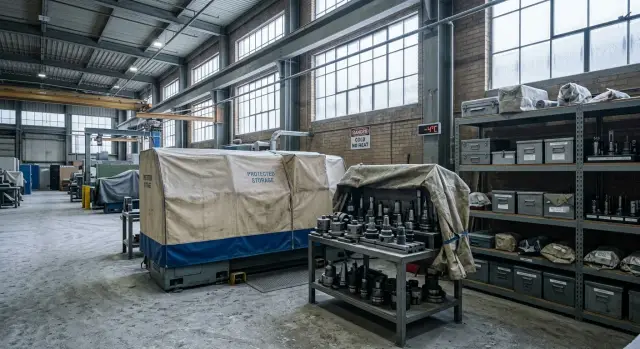
Why a cold shop causes rust
In a cold shop rust usually appears not because of visible water but because of the air. At night the metal cools, and in the morning temperature and humidity change, so moisture condenses on cold surfaces. If the machine is colder than the surrounding air, condensation appears even where the roof doesn’t leak and the floor is dry.
What hurts most is not the frost itself but crossing the dew point. This happens after a sudden warm-up, turning on heating, opening gates, or when wet transport enters. From the outside the machine may look dry, but on guides, the chuck, tool holders and inside the electrical cabinet there can already be a thin film of water.
Dirt makes the situation worse. Dust, salt residue from shoes and wheels, remnants of old coolant, and an oily film with abrasive particles hold moisture. Water stays longer and the risk of spots, orange deposits and more serious corrosion grows.
Moisture is most often held by old coolant and splashes on the table and covers, metal dust and sludge in corners and on guides, salt deposits near doors, and dirty rags and covers that quickly draw humidity.
Downtime also works against the machine. When equipment is not run for long, protective oil gradually runs off or dries. Exposed metal is left without its protective film. If the shop cycles between cold and slightly warmer conditions during this time, condensation appears and disappears several times. That cycle is worse than a steady cold.
Tooling usually rusts even faster. It is often left unpacked, without a fresh oil layer and closer to doors or an outer wall. Chucks, collets, tool holders and measuring tools collect moisture just like the machine itself, and sometimes faster.
In winter the risk comes from three factors: humid air, cold metal and downtime. Remove at least one and rust drops noticeably.
What suffers first
Open precision surfaces without a stable oil layer are hit first and where condensation forms fastest. On guides, ground planes, screws and other exposed parts rust first looks harmless: a matte mark, a dark spot, a light deposit. Later it interferes with movement and damages accuracy.
Next come the chuck, jaws, taper fits, collets and other tooling contact points. Moisture stays in gaps and the thin lubricating film disappears quickly. One rusty mark on a jaw can change clamping, and deposits in a taper prevent precise tool seating.
Many assume tools in a drawer are protected. In fact, a closed box does not prevent damp air. If drills, mills, cutters and holders are stored after use without cleaning off coolant and chips, corrosion progresses even faster.
The electronic cabinet is a separate risk zone. Oxidation there is less visible than rust on guides, but consequences appear quickly: faults, errors, unstable CNC operation. Fans draw moist air in, and moisture settles on cold connectors and terminals.
In the cold season inspect exposed surfaces daily. If a matte film, sticky residue or dark spot appears on slides, the table, chuck or fittings, don’t delay cleaning. These small actions are almost always cheaper than a routine wipe and a fresh layer of protective oil.
How to prepare a machine for the cold season
Choose a dry day for preparation, when the shop is free of dampness and sudden temperature swings. If the machine just worked, let it cool and dry. Warm surfaces in a cold room collect condensation especially quickly.
First remove everything that holds moisture. Chips, dust, leftover coolant and old oil films are not harmless. They clog corners, cling to guides and over time turn into a damp deposit. Clean the work area, chuck, table, covers and slots by hand rather than leaving small dirt for the whole winter.
Check coolant separately. If it smells, is dirty or old, don’t leave it as is. Contaminated fluid resists cold worse and protects metal less. After cleaning, wipe exposed metal parts and apply a thin layer of protective oil to guides, the chuck, collets, tapers and other unpainted places. A thick sticky layer is unnecessary — it only collects dust.
A cover helps, but not every cover. A dense film without air exchange often backfires: metal "sweats" under it. A breathable cover or a hood with a small gap works better: air flows slowly and dust doesn’t settle on the machine.
Tooling and cutting tools are better kept in dry boxes or cabinets with fewer temperature swings. Label boxes with tooling type, size and storage date. In winter this saves time and avoids exposing metal to damp air.
One more simple step often skipped: record the preservation date and the next inspection day. A note in a logbook, on a tag or in the phone prevents postponing checks, and moisture traces are noticed before they become rust or electrical cabinet issues.
How to store tooling and cutters
If rust appears regularly, start with tooling. Collets, chucks, cutters and measuring tools often suffer first, especially when metal cools at night and condensation forms by day.
A common mistake is storing tooling too low. Air near the floor is usually more humid and stays cold longer; after bringing in snow or cleaning, moisture can linger for hours. Store tools on shelves or in cabinets, not in drawers at floor level.
An external wall is also dangerous. Placing a chuck or collet right against it lets the metal cool rapidly and moisture condenses on the surface. Leave a gap between the wall and shelving for air.
Divide tooling into two zones: clean, prepared-for-storage items and those just removed after a shift. Otherwise chips, coolant and damp items enter the cabinet and transfer deposits to neighboring tools.
Typical procedure:
- wipe the tool dry after use;
- remove chips and coolant from slots and seats;
- apply a thin oil film to seating surfaces and exposed metal;
- store tooling in a dry cabinet or closed box;
- add a desiccant and replace it on schedule.
A desiccant helps in small cabinets and closed drawers. It won’t save a damp shop, but in a local storage zone the effect is noticeable. The key is not to forget the packet until spring. Change it when the indicator changes color or the filling is damp.
Before long downtime lubricate not only external surfaces but seating areas as well. Rust in those places later complicates precise mounting. A small film of preserving oil greatly eases startup after a pause.
In a small shop this is usually enough: a separate cabinet for clean tooling, a tray for tools after a shift, shelves above the floor, a gap from the wall and the habit of wiping before storage.
How to keep humidity under control
In an unheated shop the problem is often not cold but water in the air. Rust typically starts where humidity isn’t measured and small moisture sources go unnoticed.
Put at least one simple hygrometer near the machine and another by the doors if the space is large. Record readings morning and evening. After a few days you’ll see when humidity spikes and what affects it: thaw, snow on shoes, a leak by the door, or too-fast warm-up before the shift.
If humidity often stays above 60%, find the cause in the room, not just on the machine. Even a small roof leak, a damp corner near a window or water at the threshold are more harmful than they seem. Deal with these spots immediately or dampness will return every day.
A common winter mistake is heating the shop quickly right before starting work. Air warms up but the bed, chuck and tooling remain cold and moisture condenses on them. The same happens in the CNC cabinet. Raise temperature gradually without jumps.
Simple measures help:
- keep aisles clean and free of slushy snow and puddles;
- place absorbent mats at entrances and change them regularly;
- don’t store wet containers, rags or packaging near the machine;
- check corners, doors and the roof after snowfall;
- ventilate in dry daytime hours if outside air is drier.
In a small shop keeping the entrance area tidy often solves half the problem. Snow brought in on a cart melts near the machine and by evening humidity rises. In the morning a film forms on guides even though everything looked fine the night before.
For shops in Kazakhstan and other cold CIS regions this is a typical winter situation. A hygrometer, dry aisles and a calm warm-up routine are more useful than a one-time rust cleaning at season end.
How to avoid sharp temperature changes
Rust often starts not from cold but from sudden temperature swings. Metal cools at night and in the morning heating is switched on fast, causing condensation on the body, guides, chuck and tooling.
The most common mistake is turning a heater on full and starting the machine immediately. The room warms faster, but moisture condenses on metal even faster. Increase temperature steadily so air and the machine warm at nearly the same rate.
If equipment stood in the cold, don’t start it right after opening the shop. Let it rest. Even 1–2 hours is often better than an immediate start, especially for the CNC, electrical cabinet and drives.
A usual winter startup procedure:
- first enable a gentle shop heater;
- don’t point warm air directly at the machine;
- wait until the body and components are no longer icy to the touch;
- run the machine idle before machining.
Idle warm-up is not just formal. Spindle, feed, hydraulics and lubrication systems should come to working condition without load. A few minutes at low speed and smooth axis moves pay off immediately.
Also watch warm-air direction. If moist airflow from a heater or fan hits metal directly, you create water on the surface yourself. Heating should warm the shop volume, not one side of the machine.
At the end of the shift don’t leave moisture until morning. Wipe surfaces, remove coolant where it’s not needed, and renew a thin oil layer on exposed metal. Over a long winter these small actions work best.
Example for a small shop in winter
In a small shop the problem often follows the same scenario. At night it’s -5°C inside, the crew arrives in the morning and immediately turns on strong heating. Metal is still cold, air warms quickly, and water condenses on the machine. First it shows on the chuck and guides, then spreads to collets, cutters and contacts.
Early signs look harmless: a few drops on the body, a light deposit on tools, a sticky trace on exposed metal. After several days the situation worsens: orange spots, uneven limit switch operation, oxidized connectors, and constant attention to the chuck.
One small shop solved the problem without complex measures. They changed the startup order: a gentle warm-up instead of maximum heat at opening, stopped directing warm air at the machine, added a short pause before starting, and moved tooling into a closed cabinet with steadier temperature.
Another simple change worked too. Cold tooling stopped being brought directly to a warm machine. First it acclimated in the dry cabinet, then went to work. A small change, but condensation dropped.
After a few weeks the difference was visible without instruments: almost no rust spots, the chuck didn’t collect a wet film in the morning, and minor failures became less frequent. Lubricants lasted longer and operators spent less time on urgent cleaning before shifts.
This example shows a simple truth: in winter what hurts most is not cold itself but the sharp change from cold to warm and the humid air around the machine.
Mistakes that speed up corrosion
Rust in a cold shop often starts from habits at shift end. Metal rusts faster when moisture, coolant, fine chips and salt from hands or footwear remain on it.
One frequent mistake is covering the machine with a dense film and leaving it for days. It seems protective, but moisture is trapped and the machine "sweats" under the film. Guides, chuck and exposed surfaces get even more damp.
A dirty machine left overnight is just as harmful. Chips hold coolant, emulsion sits in slots and fasteners, and a thin water film forms on cold metal by morning. In such conditions rust appears in spots after only a few shifts.
Tooling is often treated the same: put in a damp wooden box or on a shelf near the doors. Wood draws moisture, dries slowly and transfers humidity to collets, cutters and gauges. Much safer is dry cabinet storage or closed trays.
A sharp warm-up before work also harms. In a frozen shop a quick blast from a heater deposits condensation on cold metal. It may not be visible outside, but water gets inside assemblies and on contacts.
The electrical cabinet suffers particularly. It’s remembered too late, after terminals, connectors and relay contacts have oxidized. After that the machine may jerk, give false errors, or fail to start.
A short rule: don’t trap moisture under a film, don’t leave dirt overnight, don’t store tooling by the doors, and don’t heat the shop with a sudden blast.
A short inspection checklist
A morning walk-around takes 5–7 minutes and often prevents rust and extra repairs. In a cold shop problems start not with frost but with unnoticed moisture.
- Check exposed metal right after opening. Droplets on guides, the chuck or collets mean condensation overnight.
- Check where tooling is stored. Jaws, collets, holders and gauges must be in a dry place, above the floor and not against an external wall.
- Look at unpainted machine surfaces. They should retain a thin oil film. If metal is dry and rough, protection has failed.
- Listen to fans and, if allowed, open cabinets. A weak airflow, unusual noise, or a damp smell often appear before visible moisture.
- Compare temperature and humidity with previous days’ records. One reading says little; a short log quickly reveals risky hours and conditions.
If the shop is idle for several days repeat this list not only in the morning but before starting the machine. For CNCs this is especially useful: metal rust is visible immediately, while moisture in the control cabinet sometimes shows only as faults.
A simple habit: saw moisture today, record it, remove the cause and check the same time tomorrow.
What to do next
Rust rarely starts from one big mistake. Usually small lapses trigger it: the machine was left dirty on Friday, tooling stored on a cold shelf without oil, and Monday brought a sudden startup. So introduce a short daily routine rather than a long plan.
Start with a one-page procedure listing actions: who wipes guides, what coats exposed metal, where tooling is stored, when heating is enabled, and who checks the CNC cabinet and connectors. A single-sheet is easy to hang by the machine and actually follow daily.
Basic minimum:
- at shift end remove chips, moisture and coolant residues from exposed surfaces;
- before weekends apply a protective treatment to quickly-rusting metal;
- store chucks, collets and gauges in a dry place, not by the doors;
- after downtime let the machine reach operating temperature before machining;
- weekly do a short inspection for condensation, rust and contact oxidation.
It’s better if one person is responsible for inspecting the machine and tooling, not just nominally but by checklist with a date stamp. When responsibility is blurred, issues are noticed too late.
Also define two modes: weekend preservation and startup after downtime. If production stops for three days the sequence should be almost the same as for a week, just shorter. Predictability beats rushing in such cases.
If the machine already had condensation, tooling shows rust spots, or failures occurred after a cold start, act now rather than wait for next winter. Prevention almost always costs less than repairs.
If you need a review for a specific machine or area, that’s a job for service rather than general advice. EAST CNC works with CNC metalworking machines and helps not only with selection and supply but also with commissioning and maintenance. When a shop regularly has moisture, deposits and cold-start faults, a practical inspection is usually more useful than general recommendations.
FAQ
Why does the machine rust if the shop seems dry?
Most often the cause is not visible water but condensation. Metal cools overnight, and when the air warms or becomes more humid in the morning, a thin film of moisture forms on cold parts. This can happen even with a dry floor and no leaks. Moisture settles fastest on guides, the chuck, tooling interfaces, and inside the electrical cabinet.
Which is more dangerous in winter for the machine: frost or condensation?
A sudden crossing of the dew point is more dangerous. Frost itself doesn’t wet the metal, but rapid heating, open doors, and humid air create instant condensation. If you eliminate temperature shocks and humidity, the risk of rust drops significantly even in a cold room.
Which parts rust first?
Open precision surfaces suffer first: guides, ground planes, screws, the chuck, jaws, taper seats and collets. Tooling often rusts before the machine because it’s frequently left without oil and near doors or external walls.
Can I cover the machine with plastic overnight or for the weekend?
A dense plastic cover often does more harm than good. It traps moisture and the metal "sweats" under it, leaving surfaces damp in the morning. A breathable cover or an enclosure with a small gap works better: it keeps dust off and allows slow air exchange.
How to prepare the machine for the weekend or long downtime?
First remove chips, dust, residue of coolant, and old dirty oil films. Wipe open metal and apply a thin layer of protective oil to guides, the chuck, tapers and collets. If downtime will be long, record the preservation date and the next inspection date so fresh moisture and early spots aren’t missed.
Where is it best to keep tooling in winter?
Store tooling above the floor in a dry cabinet or closed drawer, and don’t place it directly against an exterior wall. Near the floor and walls metal cools faster and attracts moisture. Before storage, wipe tools dry, remove chips from seats and bores, and apply a thin oil film to exposed areas.
How to know if the shop is too humid?
Place at least one hygrometer near the machine and read it morning and evening. If humidity often stays above 60%, look for causes in the building: wet entrance, leak, damp corner, or snow carried inside. Record readings for several days. That quickly shows when humidity spikes and what triggers it.
Can I heat up strongly in the morning and start the machine right away?
No. When air heats quickly but the machine remains cold, moisture forms on metal immediately. Heat the space gradually and don’t direct a hot airstream straight at the machine. After a pause, let equipment run idle before loading it.
What to do if brown spots have already appeared on the metal?
Don’t wait until the next shift. Remove deposits with a gentle cleaner, wipe the surface dry and renew the protective oil. If spots are on tapers, jaws, or guides, avoid aggressive rubbing — you can damage precision surfaces and ordinary wiping won’t be enough.
Should I check the electrical cabinet in winter and when is service needed?
Yes, check it regularly. In the cold, moisture forms not only outside but also on terminals, connectors and contacts, leading to false errors and unstable startups. If the cabinet smells damp, fans run differently, or the machine began failing after cold nights, call service. A quick wipe may no longer suffice.