
Which Parts Benefit Most from an Inclined-bed Lathe
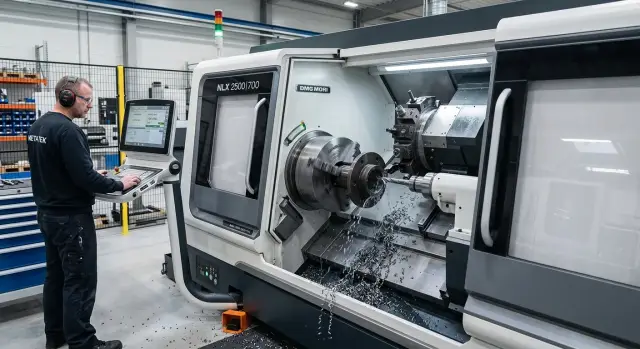
We explain which parts benefit most from an inclined-bed lathe: where chips fall away more easily, when stability improves, and how automation becomes simpler.
What's the problem
The same part can behave very differently on different machines. Dimensions on the drawing may be identical and cutting parameters almost the same, yet one machine keeps the process calm while another quickly wraps chips around the tool, soils the reference surfaces and causes extra stops.
The reason is rarely a single component; it's the overall layout. It matters where chips fall, how the workpiece is fed, how rigid the tool support is, and how easy it is to remove waste from the cutting zone. So the question of which parts are better suited to an inclined bed can't be answered from a catalogue or a single lucky example from a neighboring shop.
Most often chips spoil the process. If chips don't fall down and to the side, they return under the tool, scratch the surface, heat the cutting zone and push dimensions out of tolerance. Sometimes the problem seems minor, but it quickly goes beyond tolerances: a lump of chips builds up on the jaws, clamping worsens, and runout increases.
This is especially noticeable on materials that produce long, ductile chips. Stainless steel, low-alloy steels and some tough alloys usually behave worse than brass or cast iron. The part geometry also makes a big difference. Deep bores, grooves, long overhangs, thin walls and frequent diameter transitions almost always complicate the cycle.
Batch size matters as much as material. For a one-off job the operator can stop, remove a wrap and fix the process. In a run of 300 or 3,000 pieces every such pause costs time, and dimensional spread becomes more expensive than a setup change.
So an inclined bed is not needed for every turning operation. If the part is short and simple, the material breaks chips well, and the batch is small, the difference can be almost unnoticeable. But if the part tends to collect chips, requires consistent repeatability and is produced in series or with automatic feeding, layout starts to affect the result every hour of the shift.
In practice, answer three questions: how chips behave in the real cycle, whether size drifts after several dozen repeats, and how many manual interventions are needed between loading and unloading. If there are problems, it’s often not the cutting parameters but the wrong machine layout.
Which parts are most often moved to an inclined bed
Workshops typically move not every part but those where a conventional lathe begins to lose pace because of chips, stops or uneven behavior in a series.
The first large group is medium-length shafts with several diameter transitions. These parts often have rough and finish passes, face cutting, a groove and sometimes threading. In series production it’s important that chips do not hang on the chuck or catch on the tool. On an inclined bed chips usually fall away more easily and the cutting area stays cleaner longer.
Bushings, rings and short housings with internal boring are also frequently transferred. Especially when boring, grooves and facing are done in one operation. These parts are not the most complex by themselves, but they quickly reveal the difference between calm running and constant manual cleaning.
A separate case is materials and geometries that produce long, stringy chips. This is clearly seen on parts with continuous cutting and few interruptions. If chips form a bundle, wind around the workpiece or remain in the working area, shops almost always consider an inclined layout.
Series positions gain the most. When a part runs tens or hundreds of pieces in a row, even a short delay each cycle turns into hours lost per shift. If the operator repeatedly opens the door, removes chips and checks whether the tool has been caught, the layout is already hindering production.
So workshops usually move not the most "complicated" parts, but the most inconvenient for flow — parts that need a clean cutting area, consistent cycle repeatability and reliable preparation for automatic feeding.
Where chip evacuation matters most
Chip evacuation matters where chips not only interfere but immediately spoil the process. First, look at the material and where chips go during cutting. Usually this reveals fastest whether a machine will run smoothly or require constant attention.
The first group is ductile steels and stainless steel. They produce long, clingy chips that like to wind around the part, tool and chuck. On a straight layout they more often stay in the working area. On an inclined bed they fall down by gravity and cutting runs more evenly.
The difference is particularly noticeable on internal operations. During boring, holemaking and internal grooves chips often accumulate near the chuck or remain inside the part. Then they return under the tool, scratch the surface and shift dimensions. When the layout helps chips leave the cutting zone faster, such repeated contacts happen less often.
Another common case is a long cycle without constant supervision. If the operator checks the machine every few minutes rather than standing next to it, any chip hang-up quickly becomes a problem. First the risk of scratches grows, then repeatability worsens, and finally cleaning stops begin.
This is crucial when the machine works with a barfeeder, robot or parts catcher. Automation does not like disorder in the machining area. If chips catch on jaws, trays or finished parts, the line loses rhythm. In these conditions an inclined bed often provides more predictable operation simply because the working area stays clean longer.
Chip behavior is worst in four scenarios: the material produces a long ribbon, the operation is internal, the cycle runs long without frequent operator checks, or the machine is part of an automated cell. A simple example is a stainless bushing with internal boring and a finish pass. If chips remain inside, surface quality suffers immediately. If chips fall away fast, the machine holds stable turning longer without unnecessary stops.
When an inclined bed gives steadier machining
Steady machining is needed not only for a nice surface but where size must not vary from part to part and where the operator doesn’t want to clean the area every half hour.
An inclined bed often wins when the part undergoes several operations in one setup. Rough pass, finish pass, facing, groove and threading happen one after another, so the machine must quickly remove chips from the cutting zone. When chips don't collect under the chuck or wind around the tool, cutting runs calmer and the surface comes out cleaner.
This is clearly seen on series parts — bushings, fittings, hubs, short shafts and similar positions where uniform results across a batch are required. If the layout helps chips fall down rather than hang around the part, scatter in cleanliness and dimension is usually lower. The operator also benefits: they intervene in the cycle less often.
Problems often start not from rigidity but from excess chips. They get under the tool, scratch the surface, disturb tool re-entry and spoil the finish pass. So chip evacuation on a lathe directly affects stability, especially when multiple operations are performed in one setup.
A good candidate for this layout looks simple: the part requires several consecutive operations without reclamping, the batch is large, the material produces long or sticky chips, and the line works with automatic feeding or robotic unloading.
Automation changes a lot. If unloading must run without stops, any chips left in the machining area quickly cause failures. They interfere with grabs, soil reference surfaces and cause random stops. For automated turning this is a common source of downtime.
In practice this is visible in series metalworking for automotive components, construction equipment and medical parts, where repeatability matters. If a part is machined in one or two simple passes and chips are short, the difference can be small. But when the cycle is tight and the batch long, the steadier operation is apparent quickly.
How to evaluate a part step by step
To understand whether a part suits an inclined bed, look at the part’s behavior in production rather than the machine name. It’s more useful to break the process down once than to constantly fight wrapped chips and extra stops.
First gather basic data: length, diameter and weight. A short bushing, a heavy flange and a long shaft load the machine differently. These sizes determine clamping, support, vibration risk and how convenient loading and unloading are for the operator or loader.
Next assess the material. Steel, stainless, aluminum and cast iron all give different chips. If the material produces long chips, chip evacuation on a lathe quickly becomes a direct cause of stops, surface scratches and extra manual cleaning.
Then count how many operations are performed in one setup. If the part needs turning, drilling, boring, threading and grooving without reclamping, layout demands immediately grow. In those cases stability depends not only on rigidity but on where chips go during the cycle.
After that check who loads and unloads the part. If an operator does it, evaluate blank weight, loading height and safe removal time. If you plan automation, look at blank feeding, repeatable orientation and how the part exits the working area without extra moves.
Only then compare the full-shift picture: minutes spent cutting, how often the operator stops to clear chips, whether chips damage the surface, pauses during loading and unloading, and how many parts go to scrap or rework.
A simple example is a coupling 60 mm long and 80 mm diameter made of stainless steel. On paper the cycle times may differ very little. But if a setup includes a groove, thread and boring, the difference often shows not in seconds but in the number of stops. For layout choice this is far more honest than catalogue figures.
A shop example
In one shop they turn a steel bushing in batches of 500 pieces. Externally the part is simple but internally there is a bore and a groove. Extra work starts at these transitions: chips come out long, catch on the tool and form a lump near the chuck.
On a straight layout the operator intervenes more often. He stops the cycle, opens the machining area and removes tangled chips by hand. For one part this seems minor, but over several hundred pieces such pauses eat time and break the rhythm.
The problem isn’t limited to stops. When chips accumulate near the tool they come back under the cutter, scratch the surface and make it hard to keep consistent results from first to last part. If the bushing will be assembled further, the difference becomes noticeable quickly.
After moving the part to an inclined-bed machine the picture usually changes. Chips don’t lie in the working area and fall away under their own weight. As a result the process runs calmer and the operator approaches the machine less often.
In the shop the effects are immediate: cycles run smoother, the tool doesn’t work inside a pile of chips, surface consistency across the batch improves, and the working area stays clean longer. This is especially noticeable on internal boring and grooves, where chips like to wind and return to the cut.
There is another practical plus. When the cutting area is cleaner, automation runs without surprises. Barfeeding handles chips on the chuck or dirt on reference surfaces poorly. If the part must be fed in series, a clean working area makes the process calmer and more predictable.
For these bushings layout choice doesn’t decide seconds on the datasheet but how often human intervention is needed per shift and how many uniform parts the shop outputs.
Common mistakes
The most frequent mistake is simple: people move a part to an inclined-bed machine just because the new machine looks more modern and convenient. That’s a weak argument. If the old layout already holds size, cycle time is short and chips don’t interfere, the change may bring little benefit.
Another mistake is looking only at one operation. For example, the rough pass on a new machine runs better, but later facing, cutoff, runout check and unloading take as much time as before. The shop ends up with a more expensive way to do the same cycle.
Many problems come from the basic mechanics that weren’t checked beforehand. Knowing diameter and length is not enough. Check what chuck fits without compromise, whether axis travel is sufficient, if the tool will collide with jaws, how tailstock pressure works and whether a turret has enough access.
Before deciding check at least five things: the real range of diameters and lengths in the batch, the clamping method and repeatability of the clamp, chip behavior on rough and finish passes, access for loading and unloading, and how often per shift the operator must clean the working area.
Error often hides in the word "batch." A test part may look good, but the real series tells a different story. During the day the operator stands nearby and quickly removes long chips. At night the same process may fail after an hour. So judge chip evacuation not by a single good part but by a full shift.
A good example is a long bushing made of ductile steel. In a test run it machines normally. But in a 300-piece series chips start winding, cleaning time grows, and automatic feeding stops looking simple. Then the question changes: where does the new layout actually reduce manual intervention and keep the process running unattended?
One more expensive mistake is buying a machine without a clear commissioning plan. Who will do setup, who writes the first process plan, who trains the shift, and who will respond if something goes wrong? If these points aren’t discussed, even the right layout will give weak results.
Quick checks before deciding
If you’re deciding whether to move a part to an inclined bed, look at the part’s behavior in a series rather than the catalogue. The first part often looks fine on almost any layout. A short run on a batch shows chips, size and downtime much more honestly.
A simple sign is this: the machine cuts more than it waits for cleaning. If the operator reaches for the chip hook every 10–15 minutes, the problem is no longer minor. Such a part often needs a layout where chips fall away on their own without constant intervention.
Before deciding check several things:
- Chips fall down by themselves and don’t hang on the chuck, tool or part.
- Size holds not only on the first part but after 20–30 pieces in a row.
- The operator rarely opens the machining area to remove wraps and clean the cutting zone.
- Blank feeding, unloading and handling run without catches or manual corrections.
- Cleaning doesn’t eat the whole shift. The machine should stop because of tool wear or measurement checks, not because of chips.
If at least the first three points fail, consider switching seriously. This is especially clear for parts that produce long, ductile chips: bushings, pins, shafts and housings with deep cuts. For these jobs a convenient layout quickly changes the usual shift rhythm.
There is a simple test. Take a part that already causes arguments in the shop and run a small series without unnecessary pauses. Watch not only surface cleanliness but how often the operator approaches the door, how often the cycle is disrupted, and whether chips interfere with feeding or unloading.
If the series runs smoothly, size stays stable and the cutting area remains clean without manual cleaning, the answer is usually clear. If quality appears only under constant supervision, the scheme relies on the operator rather than the machine. That’s a bad sign for series production.
What to do next
Start with a list of parts, not a debate about the pros of different machines. Take batches from recent months and mark positions where long chips form, the operator often cleans the working area, or size drifts in long runs. These parts will show fastest where an inclined bed makes a noticeable difference.
Separately collect parts you want to move to automatic feeding and unattended output. If a part runs in series, repeats often and must reliably meet size, the machine layout choice matters a lot. Then chip evacuation becomes part of the normal cycle rather than a secondary issue.
It’s useful to summarize in a short table: part number, material and diameter, chip behavior in the current process, batch size and repetition frequency, and the need for automatic feeding or long unattended runs. With that table the conversation becomes practical and you can see where an inclined bed really helps and where the current layout is already adequate.
Then show not only drawings but real production runs. Drawings show geometry; runs show how often the operator intervenes, where chips build up, where time is lost and how steady the machining is. When comparing layouts, test them on your parts, your materials and your typical volumes.
If you need practical support, EAST CNC has a blog with equipment reviews and metalworking advice. The company supplies CNC lathes, helps with selection, commissioning and service, so discussions can be based on real parts and production runs.
When two or three series positions show fewer stops and more consistent sizes after comparison, the decision usually becomes obvious.
FAQ
What does an inclined bed give in everyday work?
It helps most where chips interfere with the process. On this layout chips fall away more easily, the cutting area stays clean longer, and the operator stops the machine for manual cleaning less often.
Which parts most often benefit from an inclined bed?
Workshops most often move bushings, rings, short housings, fittings and medium-length shafts with several diameter transitions. The difference is especially clear when boring, grooves, facing and threading are done in a single setup.
When does switching to an inclined bed change almost nothing?
If the part is simple and short, the material produces short chips and the batch is small, the change may be negligible. In such cases a standard layout often handles the job fine.
For which materials is an inclined bed more useful?
It is most noticeable on stainless steels, ductile steels and similar alloys that produce long, sticky chips. Brass and cast iron usually behave more calmly, so the effect there is often smaller.
Does an inclined bed help with internal operations?
Yes — especially for boring, hole making and internal grooves. When chips don’t remain inside the part and don’t return under the tool, the surface comes out cleaner and dimensions stay more consistent.
Does it make sense to use this layout for series and automation?
Yes. Series production shows the difference fastest. If the machine receives barfeed automatically or works with a robot, a clean machining area reduces failures and manual interventions.
How quickly can I tell if my part suits this layout?
Look at three things: how chips evacuate, whether size holds after 20–30 consecutive parts, and how often the operator opens the machining area. If chips hang on the chuck, size drifts, or cycles are frequently stopped, the part should be tested on an inclined-bed machine.
Does an inclined bed solve repeatability issues with size?
It helps when chips interfere with the finish pass, soil the reference surfaces, or get under the tool. If the cause is weak clamping, the wrong tooling, or unsuitable cutting parameters, changing layout alone won’t fix it.
What do people most often get wrong when choosing?
People often rely on a nice-looking test part or cycle time alone. It’s better to compare a full shift: stops for cleaning, size behavior across the batch, loading convenience, and barfeed performance.
What should be checked before buying a machine or moving a part?
Start with parts that already cause extra stops: long chips, manual cleaning, or batch variation. Run a short series on the real material and compare not just seconds on the datasheet but interventions, surface cleanliness and cycle stability.