
HSK or BT for a Machining Center: Which to Choose
HSK or BT for a machining center: a straightforward comparison of rigidity, RPM, tooling cost and service convenience for the shop and procurement.
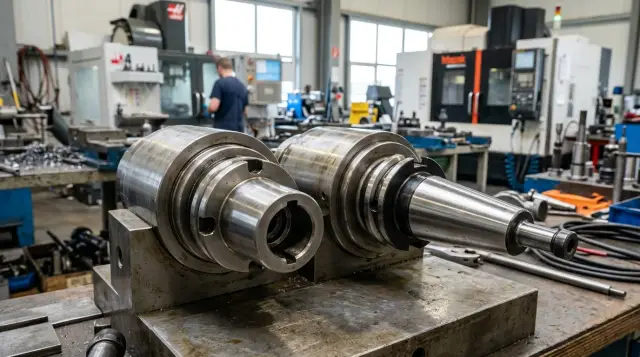
Why this choice affects the whole machine
When HSK and BT are compared for a machining center, it often looks like a single line in the specs. In reality the choice affects more than the taper. It touches the spindle, the set of holders, tooling availability, maintenance and even recovery time after a failure.
A mistake at the start can add costs for years. At first the difference seems small and looks like a machine price issue. Later you find you need different holders, different clamps, a different set of consumables and a new service routine. If one system can be bought quickly in your region while the other is delayed, machine downtime will quickly eat up any savings.
There is also the manufacturing side. For heavy cutting you need confident performance with large tools, understandable service and normal tooling availability. For high speeds the priorities change: how the interface behaves at speed, seating precision and stability during frequent tool changes.
So don’t start from an operator’s habit or the phrase “we've always done it this way.” First look at the parts and operating modes. A shop making large steel housings and a cell machining small parts with long finishing passes often come to different decisions.
Before choosing it helps to fix a few simple facts: what materials you cut most often, which tools you usually use, where you have more roughing and where finishing occurs, and how quickly you can buy tooling or call service. It sounds basic, but those questions usually help make a sensible decision.
If a company runs mixed orders and works without large deadline buffers, tooling availability and spindle repair can be more important than impressive catalog numbers. That's why equipment suppliers, including EAST CNC, usually ask not only for the machine model but also about part types, tool change frequency and service plans. That conversation often saves more money than choosing by habit.
How HSK and BT hold the tool
The difference between HSK and BT starts with how the tool sits in the spindle. With BT the holder fits into the taper and a drawbar pulls it into the spindle. The main contact is along the taper. The scheme is simple, well known and long established across many shops.
HSK works differently. The holder rests on the taper and also against the spindle face. That creates a dual contact. As a result the assembly is tighter and the tool position tends to repeat more stably, especially when the machine frequently changes tools and runs in different modes.
You feel this difference not on a drawing but in machine behavior. BT often handles standard tasks well: housing parts, serial machining and typical cutting regimes. But when load increases or with long overhangs the operator may hear vibration earlier. It shows up in sound, on the edge of the part and sometimes on surface finish.
HSK usually behaves more compactly. Because it bears on the face, the system better resists axial movement and is less prone to micro-shifts. That doesn’t make BT a bad choice — the mechanics of the interfaces are just different and this gives a different character in use.
There is a day-to-day aspect too. BT tool changes are familiar to many setup technicians. For HSK the cleanliness of seating surfaces is particularly important. If the spindle face or contact zone is dirty, the system will quickly show runout or marks on the surface. But with careful handling HSK often delivers a more consistent repeatability after each tool change.
In short: BT holds the tool by taper and drawbar force, while HSK uses taper and spindle face together. That explains differences in sound, vibration, surface finish and how predictable the fit is after each change.
Where rigidity makes a noticeable difference
Rigidity becomes most obvious where the tool and spindle face significant lateral loads. That is roughing, deep pockets, long overhangs and working in hard materials. In these modes any weakness quickly shows: vibration increases, dimensions shift and cutting edges wear faster.
If you compare HSK and BT only by the catalog, the difference may seem small. On a short endmill at calm cutting parameters both options often give acceptable results. But when the shop removes a lot of metal per pass or uses long tools, interface nuances start affecting the part rather than the machine's nameplate.
The simplest indicator is a long tool overhang. The longer the overhang, the faster any weak point in the chain reveals itself: spindle, holder, adapter, the tool itself. Quiet behavior on short tools doesn't guarantee a rigidity reserve.
Differences are most noticeable when roughing steel with large chip loads, machining deep cavities and high walls, boring where small vibration moves the dimension, or when using long drills and cutters. In these cases rigidity affects three things at once: part size, surface quality and tool life. If the tool wanders in the cut, operators usually reduce feed or depth. The part is produced, but cycle time increases and the productivity margin disappears.
A clear example: a shop makes housings and brackets from steel and cast iron. On the finish face the difference between interfaces may be nearly invisible. But during rough pocketing with a long cutter problems appear quickly: ringing is audible, walls show marks and inserts wear unevenly.
So rigidity cannot be judged by a rule of thumb. For one shop BT covers all tasks without questions. For another HSK provides a steadier cut and fewer compromises. The best approach is to test on your own parts: take two or three operations repeated weekly and compare not only dimension but cutting sound, tool life, surface variation and cycle time. Real differences show up in those details.
What changes at high speeds
When the spindle spins faster, the tool holder behaves differently. Power and machine rigidity matter, but balance, runout, heating and how the interface maintains contact with the spindle also come in.
At normal regimes the difference between HSK and BT can be moderate. At high speed small issues become noticeable quickly. Slight runout, extra overhang or weak repeatability immediately affect surface and dimension.
HSK is often chosen for fast finishing and high-speed work. The tight seating usually helps keep size and surface more stable. This is especially clear with small tools, machining aluminum, thin walls, fits and other operations where tiny runout spoils the result.
BT is commonly chosen where shops run in a moderate spindle range and prefer not to change familiar tooling. That choice is logical: BT tapers are familiar, tooling is common and service can be simpler. If most work is not at the spindle’s limit but in normal ranges, BT often meets requirements without extra expense.
It’s easy to make a mistake here. A buyer sees a spindle rated 15,000 or 20,000 rpm and immediately reaches for the “faster” solution. A more useful question is: at what speeds will the machine operate for most of the shift?
If the shop cuts steel mostly at 6,000–9,000 rpm, the difference may be smaller than expected. If work involves many small cutters, drills, finishing passes and short cycles, HSK usually performs better.
A simple check: look at speeds for 70–80% of the workload, which tools you use most, how many finishing operations you have and how easy it is to buy the required tooling. After that check the advertising top speed often proves irrelevant to actual operations.
How much tooling and maintenance cost
Price differences often appear not on the machine invoice but a month after startup. The machine is just the beginning. The shop then buys holders for different operations, drawbar nuts, adapters, tools and sometimes balancing for high-speed work.
Comparing HSK and BT, BT is usually cheaper initially. Holders for BT are often easier to source and vendor selection is wider. HSK can cost more, especially when you need precise holders for high-speed, repeatable finishing.
Count not one holder but the whole kit. One machining center rarely needs only a few holders. You need reserves for drilling, roughing, finishing, threading, urgent changeovers and parallel work on multiple parts. At that point the difference between the systems becomes tangible.
Another often-missed item is spindle and clamping unit service. If repairs require rare parts or complex logistics, downtime costs more than any initial discount. For shops in Kazakhstan this is particularly sensitive. If the necessary tooling or spare parts aren’t nearby, waiting easily shifts delivery dates.
A small example: a shop buys a vertical center for small to medium batches. With BT the initial tooling cost is lower and holders can be added as orders grow. With HSK the shop spends more upfront but may gain in high-speed performance and stability if parts require high rpm and frequent tool changes.
So it's better to look at the full year cost, not a single price. Ask the supplier who stocks tooling in your region, how spindle service is handled and who is responsible for commissioning. Those questions quickly reveal which option is really cheaper for your shop.
How to choose for your parts
Start the choice not with brand arguments but with your parts. Many buyers look at the machine spec and forget daily shop work. That’s a common mistake.
First collect a list of 10–15 typical parts. Note material, dimensions, mass, tolerances and the operations that repeat most. That real data is far more useful than focusing on one complex part that comes twice a year.
Then follow a simple checklist:
- Separate heavy roughing from finishing. If you have lots of rough steel cutting, deep passes and large tools, requirements differ from a shop that mainly finishes with small tools and high surface quality.
- See where you remove most metal. For heavy removal you need stability under load and reasonably priced tooling. For finishing you care more about seating precision, runout and tool behavior at speed.
- Count the startup tooling set. You need more than the showroom five holders: stock for changeovers, breakdowns and parallel work. This is where budgets often run over.
- Match real spindle speeds to tasks. If steel parts run at moderate speeds the advertised top rpm matters little. If you cut a lot of aluminum with small cutters and high-speed finishing, the upper range matters.
- Ask the supplier who handles commissioning, training and service. Clarify how quickly tooling and consumables arrive, who helps after startup and what to do if the spindle has an issue.
If a shop makes housings from steel and cast iron, frequently changes tools and runs average rpms, BT often proves simpler and cheaper in daily work. If parts are small, precise, produced in long runs and mostly finished at high speed, HSK deserves closer attention.
Working through this checklist with your parts makes the decision much easier. It stops being about advertising or habit and becomes about what actually earns money every day.
Example for a shop with mixed orders
Imagine a small shop that makes flanges, housings and short shafts in small batches. Today they need 40 parts for a line repair, next week a batch of pump housings, then a different item again. In that environment the HSK vs BT question quickly becomes practical.
The most common problem isn’t nameplate specs but daily routine. Orders change, tools change, and tooling inventory shouldn’t become expensive chaos. If the shop already has experience with BT taper, startup is usually easier: holders are familiar, the selection is large, initial budget is lower and service clearer for the foreman and setup tech.
BT is often chosen where diverse work must be covered without a sharp cost increase. For flanges, simple housings and short shafts that often suffices, especially if the machine does not run at very high rpm every day.
But the picture changes if the shop bets on finishing geometry and high speeds. When many orders require fine finishing, tight fit tolerances and long shifts with quick transitions, HSK often looks stronger. It performs where holding size and surface consistently matters more than just removing metal.
In short, for mixed orders the pattern is often this: if the shop wants a predictable budget and an easy start without changing habits, BT usually provides a smoother entry. If revenue comes from precision finishing and high-speed work, HSK can justify the extra cost faster.
This is especially noticeable in Kazakhstan. Small manufacturers often work with mixed orders and carefully count every purchase. Many therefore start with BT and move to HSK later when specific parts or customer requirements demand it.
Common mistakes when choosing
Most mistakes aren’t about the interface type itself but about how future machine use is estimated. Buyers see HSK or BT on a spec sheet and assume that’s enough. In reality the interface should be chosen for parts, cutting modes, tooling inventory and a service plan for years ahead.
The first mistake is picking an interface simply because it appears on a desired machine model. A catalog gives a general picture but doesn’t answer the simple question: what do you cut every day? If you run shafts, flanges and repetitive operations at moderate rpm one choice may be clearly better. If many small parts, high speeds and tight tolerances dominate, the picture is different.
The second mistake is comparing only the spindle’s peak rpm. It sounds convincing, but shops rarely run at maximum. It’s more useful to look at normal operation: typical rpm, real feeds in programs and how often heavy rough milling occurs.
The third mistake hits budgets hardest. Many count the price of one holder and relax. Later they find they need a full tool magazine set, plus reserve, adapters, balancing, nuts, collets and consumables. After that the price gap between systems looks very different.
Another error is postponing service questions. While the machine is new buyers often don’t worry. But the first runout issue, wear at the seating or a broken clamping part quickly shows how accessible service is and whether needed items are in stock. If holders are rare, downtime costs more than any startup benefit.
Typical case: a shop buys rare tooling because it looks good on paper. Months later one holder fails and replacement takes weeks. The machine, program and order are ready, but there’s nothing to run. That is a more real problem than debates about which interface is “more modern.”
Quick checklist before buying
Before purchase stop and ask a few questions that quickly rule out an option that looks good on paper but will add hidden costs:
Start by listing the parts the machine will make most often. If you have many small precise operations, frequent tool changes and strict runout requirements, one interface may give more predictable results. If the shop mostly removes ordinary volumes of metal on typical parts, paying extra for a more expensive clamping system may not be justified.
Then honestly assess spindle speeds — not maximum but the speeds the machine will run most of the time. If you rarely go high there is no point paying for an advertised top end.
Next count tooling for startup. You need not five holders from a sales photo but a full set for a working shift, changeover and backup. This is where budgets commonly overrun.
Also clarify who will service the spindle and how fast spare parts arrive. If service is far away and parts take weeks, any initial saving disappears. This is especially critical for Kazakhstan and nearby markets.
One more often-overlooked point: team habit. If the process engineer, setup technician and operator are experienced with one interface, switching adds not only benefits but also a period of mistakes, re-adjustments and extra checks. Sometimes that’s acceptable and worthwhile. Sometimes it isn’t.
A useful test is simple: imagine the first month after startup. How many holders will you buy immediately, who will monitor the spindle and what happens if one tooling item fails? If answers are clear, the choice is nearly done.
What to do next
If the HSK vs BT decision stalls, return to your parts rather than catalogs. Look at material, tool overhang, usual spindle speeds and tolerances. Then it usually becomes clear where you need a rigidity margin and where paying extra for tooling is unnecessary.
Next, count not only the machine price. Differences appear later in holders, clamping parts, balancing, delivery times and ease of service. If the shop runs small batches and often changes setups, serviceability and tooling availability affect daily operations.
When talking to a supplier ask for a concrete startup package: which holders are included in the first delivery, what consumables will be needed in the first months, what is in stock, who handles commissioning and how spindle and clamping service are organized. That conversation quickly moves the debate from “what’s better in general” to practical decisions.
It helps to take two or three typical parts and go through them with the supplier. For one part BT may be perfectly adequate without extra expense. For another, where high rpm and consistent seating matter, HSK will give more predictable results. That is how the choice becomes practical, not theoretical.
If you need such analysis for your shop’s real tasks, EAST CNC often helps exactly at this stage: consulting, equipment selection, commissioning and service. For companies in Kazakhstan this is especially useful when you must evaluate not only the machine but tooling availability, startup timing and ongoing maintenance.
When the decision is made, write it down. Make one list of holders, consumables, tools, service terms and a startup date. That simple document saves money more reliably than any presentation.
FAQ
What is the simple difference between HSK and BT?
HSK seats against the cone and the spindle face, while BT mainly relies on the cone and a drawbar. In practice, HSK often gives a steadier fit during frequent tool changes and at high speeds. BT is simpler and more familiar for many shops.
Which is better for my shop: HSK or BT?
For heavy roughing of steel, housings and typical cutting modes, BT often covers tasks without extra cost. When you have many finishing passes, small tools and high spindle speeds, HSK is often preferred. Look at the parts you will run every day rather than advertising claims.
Is HSK always more precise than BT?
No. HSK by itself does not solve all accuracy issues. If tooling is poor, seating surfaces are dirty, or tool overhang is long, you will still lose size accuracy. HSK more often helps keep repeatability stable, but the result depends on the whole chain.
Is BT really cheaper to operate?
Generally yes: BT is usually cheaper at the start. Holders and tooling for BT are often easier to find and the starter kit is typically less expensive. But count the full set of tooling, spares and future service costs, not just one holder.
Will I need to replace all tooling when switching from BT to HSK?
Yes. Switching normally requires replacing holders and some related tooling. Plan such a move in advance rather than after buying the machine. If your inventory is built for one standard, that sunk cost affects the final choice strongly.
How important is tooling and service availability in the region?
In Kazakhstan and neighboring countries this often matters more than catalog differences. If a holder or spindle part takes a long time to arrive, downtime quickly erases any purchase-time savings. Check who stocks tooling locally and who services spindles before buying.
What to choose if we have varied orders and frequent changeovers?
For mixed orders many shops start with BT because the initial budget is lower and tooling is more familiar. That works well for flanges, housings and short shafts in small batches. If your income depends on precise finishing and high speeds, HSK can pay off faster.
Should I base the choice on maximum spindle RPM?
Look at the speeds the machine will run most of the time, not the maximum on the spec sheet. If most work stays in a moderate range, the advertised top speed changes little. For frequent small-tool, high-speed finishing the difference between interfaces becomes more important.
How can I quickly check my choice before buying a machine?
Take 10–15 typical parts and list material, overhang, share of roughing vs finishing, typical spindle speeds and required tooling. Ask the supplier to cost startup tooling, service and delivery times. After that practical calculation, the argument usually ends by itself.
Is it hard for the team to switch from one interface to another?
The transition goes smoothly if the process engineer, setup technician and operator learn the new routines and tooling arrives without delay. Without preparation people often detect runout, mix components and spend time on extra checks. If the team is used to one standard, plan adaptation time.
What should we do after making the decision?
List the holders, consumables and service conditions in one document and set a commissioning date. That simple list saves money more reliably than any brochure and prevents surprises after the machine arrives.