
How to assign shift roles when setters can’t keep up
How to split shift roles when one setter can no longer keep up: who prepares tooling, who starts the machine and who checks the first part.
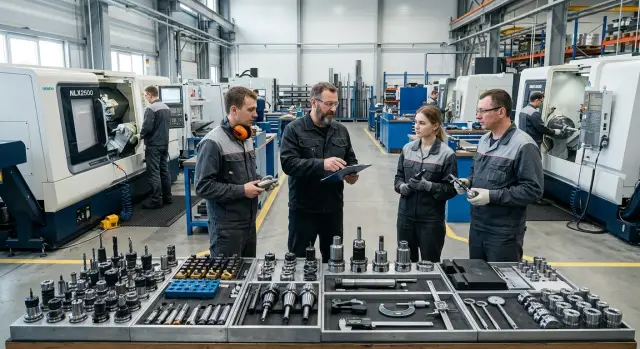
When one setter becomes the bottleneck
If new batches queuing for launch become normal, the problem is no longer the number of machines. The shop is stuck on one person. He removes the previous fixture, installs the new one, checks tooling, runs the first part and answers operators’ questions. While he walks to one machine, the others wait.
You can see it in the shift rhythm. The foreman plans several changeovers, but in reality they happen one after another, not in parallel. Any rush job breaks the whole schedule. The setter abandons one machine mid‑task because an operator is already waiting at another.
The most costly downtime often looks ordinary. The machine is ready, the program is loaded, the tooling is almost assembled, but the first part hasn’t been measured yet. It sits nearby while the setter deals with a problem at the next station. As a result the shop loses not an hour at once, but many 10–20 minute gaps during the shift.
Operators notice this before the reports do. They come more often asking “when can we run?” and stand longer between batches. If people in a CNC area wait for the setter more often than for material or a crane, you’ve found the bottleneck.
Usually the picture is the same: new batches pile up at the start and middle of the shift, one machine waits for a changeover, another waits for the first‑part measurement, the operator can’t start without confirmation, and small glitches and adjustments disrupt the whole plan.
This happens often on growing shops. For example, two more CNC lathes were added but the shift roles weren’t reviewed. Equipment becomes faster and more varied while the workflow stays the same. Then the weak spot is not the technology but the organization.
If you already see these signs, the question isn’t whether to hire another all‑round setter. First understand how to split shift roles so changeover, tooling preparation and first‑part inspection aren’t all on one person.
Tasks that mustn’t be in the same hands
When one setter does everything at the start of a shift, the shop quickly hits waiting time, not machine limits. He removed the old fixture, went to get a collet, returned without the correct insert, then starts the program and hits the first failure. While he’s tied to one machine, the others are idle or running an old cycle longer.
The most common mistake is simple: one person is assigned tasks that need different pace and attention. Setting up requires focused time. Tool selection needs pre‑assembled kits. First‑part inspection requires calm measuring and a decision whether to release the machine to series. If one person does all this, constant switching costs minutes. In the first hour those minutes turn into a serious delay.
Avoid mixing fixture and tooling preparation, program start and troubleshooting, first‑part measurement and parallel setup of another machine, as well as small errands like collecting inserts, finding a wrench, calling quality or the warehouse.
It’s not that the setter is weak. These tasks interfere with each other. When someone sets a machine, they need an uninterrupted block of time. When they check the first part, they mustn’t be distracted by the neighbor machine. Otherwise you risk approving a dimension that hasn’t been properly confirmed.
On the shop floor this is obvious. One machine is ready to start, another lacks a cutter, a third waits for measurement, while the setter is dealing with a feed fault. Formally he’s busy every minute. In reality the shift start falls apart.
Look not at job titles but at task conflicts. Anything that requires full attention in the first 30–60 minutes is better split between people. Then setups go faster, the first part won’t hang in the queue, and small questions won’t consume the whole shift start.
How to split work into roles
When one person both sets the machine and hunts for tooling and runs to measure first parts, the shop starts waiting on him. With six machines this becomes obvious: one is ready to start, another has no cutter, the third waits for approval.
To rebuild the shift, list the entire workflow from order to stable series. Don’t write general phrases—write actions: receive the order, select the fixture, assemble tooling, install offsets, do a trial run, take the first part, check sizes, make corrections, hand the machine to the operator.
Then divide these actions into two groups. The first is urgent—when the machine actually stands waiting for someone. The second is preparatory—can be done beforehand or in parallel while another machine runs a cycle.
A common working scheme looks like this:
- the setter installs the fixture, sets tooling offsets, runs the trial and makes corrections;
- a separate employee prepares tooling, assembles holders, checks wear and keeps a kit ready for the next job;
- an inspector, foreman or trained employee quickly checks the first part;
- the operator runs the series, watches the cycle and reports deviations immediately.
A dedicated tooling person often gives the fastest effect. The setter doesn’t spend 15–20 minutes hunting inserts, assembling a holder and checking if everything came from the warehouse. He arrives with a ready kit and starts faster.
For first‑part control use a simple rule: let whoever can measure without delaying the shop do it, not necessarily the person whose job description says so. If the inspector is far away and arrives in half an hour, the first part will block the flow. If a trained nearby employee can confidently check critical dimensions, give the task to them and leave disputed cases to the inspector.
Leave the setter only what keeps the machine. If he still pushes the tooling cart, searches drawings and carries the first part to inspection, roles haven’t been divided. He’s simply overloaded by the new plan.
Who prepares tooling before the shift
If the setter runs between the cabinet, the machine and the measuring station at the start of the shift, the shop loses time before the first part. The most common mistake is assuming the setter will “grab tooling on the way.” On a growing shop that doesn’t work anymore.
Tool preparation should be a separate task. The setter must install, set offsets and start the machine—not search for the right holder or replace a worn insert at the last minute.
Usually this work is given to a toolroom person, storekeeper or kitting clerk when the part mix is stable, or to an experienced operator freed from starts. Who exactly does it depends on the shop. The important thing: the task must have one owner, not “whoever has time.”
Before the shift they assemble a kit for each job individually. Not a general cart “for today,” but clear sets for the specific batch and specific machine. This prevents mixing cutters, holders, drills and gauges between orders.
A quick check of tooling condition is needed before issuing the kit. An insert may still cut but give poor surface; a holder can have play, a collet may show runout. Skipping this stage costs not five minutes but an hour‑and‑a‑half for stopping, finding the cause and redoing the setup.
Simple markings also help. On the cassette, the tool and the gauge put brief notes: job number, machine, operation, size or correction if needed by your internal rules. The fewer verbal checks, the less confusion.
A tidy flow looks like this: the kit is assembled, checked, labeled and delivered to the machine before the batch start. The setter arrives and begins immediately. The operator sees which kit belongs to their launch and doesn’t touch someone else’s.
On a six‑machine lathe cell this produces a noticeable effect in the first week. Even if each preparation takes only 15–20 minutes, moving prep out of the setter’s hands frees him several hours per shift. That time is better spent on starts, corrections and first‑part control.
Who is responsible for the first part
One person should not handle the first part from run to series approval. When setters can’t keep up, that scheme collapses first: the machine moves to the next changeover while nobody has properly confirmed the first part. The error carries into the batch and is caught too late.
A simpler workflow: one employee starts the program and watches the first cycle—usually the setter. He checks how the machine behaves, whether there’s excess load, if the tool works correctly and whether size changed after the first correction.
Once the part is taken, another employee immediately measures it. This can be the inspector, the shift foreman or an operator who has a clear measuring area and authorization to perform such checks. Their task is to quickly measure several dimensions that determine the run.
Typically they check the datum, one or two dimensions with the tightest tolerance, fits, thread or a critical diameter for assembly, and visible tool marks, burrs or obvious form deviation.
Then the shift lead or senior on the shop makes the decision. They don’t remeasure everything; they look at three things: what the first cycle showed, what the inspection measured and which corrections the setter already made. If the picture is clear, they allow the series. If not, the part stays as trial, a correction is made and the run repeats.
This chain removes disputes and duplicate work. The setter is responsible for the start and machine behavior. Inspection is responsible for the first‑part dimensions. The foreman decides about the series.
One more rule without which the scheme fails: record all notes immediately in the setup card or shift log. Not later, when someone is free, but at the moment: which tool was used, what correction was made, which size was obtained, who approved the run. On a shop with several machines this saves hours, not minutes. The next shift sees the situation immediately and doesn’t repeat checks from scratch.
How to hand over work without losses
Losses start not at the machine but at shift handover. One setter leaves, another arrives, the operator waits and important details stay in the previous person’s head. In an hour the shop loses more time than on the setup itself.
Handover should take a few minutes and give a clear status for every machine. If the shop grows, normal shift order won’t work without this—especially where setup, tooling preparation and first‑part inspection happen in parallel.
A short note per machine is enough. Not a long report, but 4–5 lines: what’s in progress, which operation stopped, what corrections were made, any risk on size or surface. This format is read immediately, not postponed.
Keep corrections and remarks in one place. Don’t split them between a notebook, a phone note and a scrap of paper at the station. When records are scattered, the incoming shift starts with guesses. Better one log, one table or one handover sheet kept where everyone sees it.
Mark tooling separately. The common confusion is simple: the kit looks ready but isn’t complete. Then the setter wastes 15–20 minutes just figuring out what is assembled and what isn’t. Short statuses like “complete,” “waiting for inserts,” “needs measurement,” “ready to install,” “removed and sent for replacement” remove that uncertainty.
This order cuts unnecessary calls between shifts and duplicate checks.
Start‑of‑shift shouldn’t be left to chance either. Five minutes of quick review often saves half an hour of bustle. The lead, the setter and the operator walk the problem machines: which one has the first part, which waits for tooling, which shows a size deviation. After that everyone knows their area.
If the shift starts calmly, keeping the pace after that is far easier.
Example for a six‑machine area
With six machines one setter can manage until a busy day arrives. Then the usual scene appears: one machine is in changeover, another waits for the first part, a third needs a cutter change, and the rest wait for decisions. While one person runs between machines, launching new batches stretches into hours.
For that area it’s better not to look for a "universal hero" but to split roles. Then each person does their part without extra fuss.
The setter handles the machine: installs the fixture, applies corrections, launches the run and hands it to the operator. A separate person prepares tooling: in the morning they assemble kits for the first launches and before lunch replenish worn or finished items. The inspector checks the first part and disputed dimensions when size floats or tolerance doubts arise.
In practice it’s simple. The shift starts at 8:00. Before launch each machine already has a tooling kit, holders are labeled, inserts checked, and gauges in place. The setter doesn’t go to the warehouse looking for the cutter. He begins the first changeover and then moves to the second.
When the first part is ready, the inspector measures only what affects the launch. If the key dimension is in tolerance, the setter doesn’t wait extra 20–30 minutes for a full cycle and goes to set the next machine. If one size is borderline, the inspector checks that size specifically instead of repeating a full inspection without reason.
Before lunch the tooling person walks the area again. They assemble kits for the second wave of launches, replace worn items and close small gaps that usually stop work after 13:00. The work is routine but it removes half the chaos.
As a result the setter runs less, is distracted less often and completes four or five starts per shift instead of two. On a growing shop that’s a noticeable change.
Common mistakes
The most common mistake looks logical on paper. The shop grows, there are more machines, and the manager simply adds a second setter to the shift. But the workflow stays the same. Both people run between the same urgent tasks, interfere with each other and still can’t keep up.
This happens when roles aren’t fixed step by step. One setter starts a changeover, the second searches for a missing tool, then both wait for the first part and the operator doesn’t know whom to call. There are more people but no more clarity.
Overload often starts before machine launch. Tool preparation stays with the person already responsible for setup, corrections and helping operators. That’s a bad habit. While they assemble holders and check inserts and gauges, the machine stands.
Another frequent mistake is leaving first‑part control in limbo. Formally someone is responsible, but in practice the part waits until the inspector, foreman or setter is free. In that order no one is sure who should go first and who decides on the series.
The “everyone can do everything” scheme also fails. It sounds convenient, but in practice people constantly pick up others’ tasks, forget their own and spend time clarifying. For a small area it may work, but when load grows these overlaps quickly turn into persistent delays.
There is also a quieter mistake: minor downtimes aren’t tracked. It seems harmless—7 minutes here, 12 there, another 15 waiting for measurement. By the end of the shift it adds up to an hour or more. That’s why the shop may have no big failures but the plan still shifts.
A short checklist
When a shop grows, failures usually start not with breakdowns but with small delays. One batch waits for the setter, another machine looks for tooling, and first‑part measurements are recorded later from memory. The foreman needs a short checklist to review several times a day.
The check takes a few minutes but quickly shows where the shop loses pace.
- No new batch should be stuck in the queue for launch. If two or three jobs already pile up for the setter, one person carries too many tasks.
- Tooling, holders and fixtures should be at the machine before the start command. If they are searched after stopping a series, time is wasted.
- The operator or inspector writes down first‑part measurements immediately after the check. Measurement sheets must not live in someone’s pocket, on a scrap of paper or in someone’s memory.
- Every machine should have a clear status: “preparing,” “setup,” “first part,” “series,” “waiting.”
- The foreman should always know who prepares tooling, who starts the machine and who checks the first part. If you need calls and questions to find out, roles aren’t divided yet.
It helps to track not just whether tasks are done but how long they take. If tooling is at the machine only five minutes before start, that’s risky. If the first part was measured but the note appeared after half an hour, that’s a failure too.
On a six‑machine area this check quickly reveals the bottleneck. Often the issue isn’t slow people but one employee preparing tooling, doing setup and waiting for inspection at once. Work seems to go on, but series start with delays at almost every machine.
A good sign is when the foreman looks at the area and immediately understands what’s happening at every machine and who’s responsible. If it takes a long time to figure out, it’s time to reorganize the shift.
What to do next on a growing shop
Don’t change the whole shop at once. First test the new scheme on one shift and one group of machines. It’s easier to see where roles work and where people still wait for each other.
A test on 2–3 machines for one week is enough. Pick the shift where launches usually lag and set a simple order: who prepares tooling, who does the setup, who measures the first part. If the scheme works, delays will be visible in the first days.
Look at numbers, not impressions. Compare time from shift start to stable output before and after the change. Also record minutes spent finding tooling, how often a machine waited for a setter and how long the first part took to get approval.
Track four points: launch time per machine, downtime due to tooling and fixtures, number of repeat adjustments after the first part and how often work depended on a single person.
If the difference is clear, don’t leave the new scheme informal. Fix roles in a short one‑page procedure. No long descriptions—just who does what before the shift, who joins during startup and who is the contact if production stops.
A written rule helps even experienced shifts. People argue less about boundaries and new employees learn the order faster. A good sign: the foreman can open the sheet and check where the failure is in a minute.
When the shop grows further, problems may come not only from roles but from the equipment fleet itself: machines of different ages, extra changeovers, weak service spare stock. At that point compare the expansion plan with EAST CNC. The company supplies CNC lathes, machining centers and automated lines and helps with selection, startup and service. For plants expanding in stages this helps match new machines to a proper shift organization rather than patch problems after launch.
A well organized shift gives a simple result: launches run smoother, the first part arrives faster and the shop depends less on a single strong setter.
FAQ
How do I know one setter is slowing the shop down?
Look for simple signs: operators ask “when can we start?” more often than they wait for material, new batches pile up at the start of the shift, and the first part sits by the machine waiting to be measured. If changeovers happen strictly one after another and any urgent job breaks the whole plan, the shop already depends too much on one person.
Which tasks should be taken off the setter immediately?
Remove tasks like searching for and assembling tooling, running around for fixtures and taking the first part to inspection. The setter should focus on what keeps the machine running: installing the fixture, setting offsets, doing the trial run and making corrections.
Who should prepare tooling before the shift starts?
Usually a dedicated toolroom worker, kitting clerk, storekeeper or an experienced operator (who isn’t assigned to start machines) prepares tooling. The important thing is one responsible person so each batch’s kit is at the machine before work begins.
Who is responsible for the first part?
Typically the setter watches the first cycle and makes corrections, a different employee—inspector, shift lead or trained operator—quickly measures the key sizes, and the foreman or senior gives the go‑ahead for series production. This way the machine doesn’t wait on one person at every step.
Should I hire a second setter right away?
Not always. Adding a second setter without changing the workflow usually just doubles the confusion: both run between the same urgent tasks. First separate startup, tooling preparation and first‑part inspection, then decide if more people are needed.
How to divide work on a shop with six machines?
For six machines, a simple scheme works: the setter handles the machine—fixture, corrections and handover; a separate person prepares and delivers tooling kits; an inspector or trained employee measures the first part; and the operator runs the series and reports deviations. That reduces long pauses between launches.
How to hand over the shift without losses?
Keep a short note per machine: what’s in progress, where it stopped, which corrections were made, any size or surface risks and the tooling status. A few lines save the incoming shift from guessing and calling around.
What should be recorded after launching the first part?
Record job number, tooling, correction, first‑part measurements and who approved the series—immediately after the check. If you delay, the next shift starts the same checks again and wastes time.
How to start reorganizing roles without causing chaos?
Don’t change the whole shop at once. Test the new roles on one shift and 2–3 machines for a week. Assign who prepares tooling, who starts the machine and who measures the first part. The trial reveals issues without large‑scale disruption.
How to tell if the new scheme is working?
Compare time from shift start to stable output, number of times machines waited for a setter, delays caused by tooling, and time to approve the first part. If those numbers drop, the scheme works. If not, find where tasks slipped back to one person.