
Gauge Set for the Shop: How to Remove Redundant Items
A shop’s gauge set grows from separate decisions, not just parts count. Learn which thread, plain and special gauges are essential and how to cut redundant items.
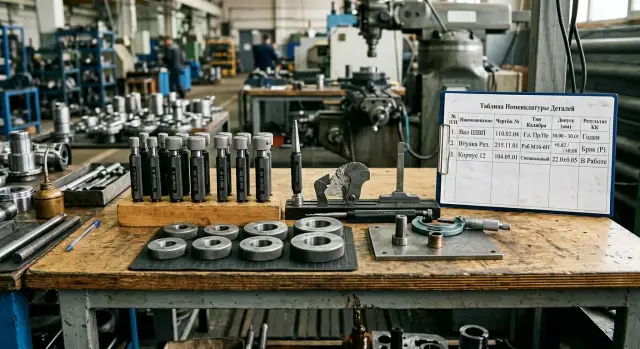
Why a gauge set grows quickly
A gauge stock swells not because of a huge part range, but because of small decisions that aren’t checked against each other. One operator orders a thread go gauge for a new part, another gets a nearly identical one for an adjacent size, and a month later purchasing adds two more “just in case.”
Similar gauges accumulate fast. Sometimes the only difference is the purchase card. The thread is the same, the tolerance the same, the inspection method the same, but the tool is already listed as a separate item. If the shop has no common table of sizes and tolerances, the same task gets solved with different tools.
At first such purchases seem safe. In practice they complicate inspection. When a controller has five similar gauges on the desk, time is spent not on checking the part but on choosing the right tool. Mistakes are easier, especially if the marking is similar and changeovers happen quickly.
Extra gauges also cause accounting headaches. They need storage, calibration, searching, write-off and repurchase. Even if each item is cheap, the total cost rises with quantity.
One size group rarely needs a separate gauge. If several parts share the same thread and the same tolerance zone, one set of thread gauges often covers all checks. The same applies to plain gauges: if the fit matches, different part shapes don’t always require separate tools.
Usually the set grows for four reasons. Parts are created individually without a consolidated size list. Purchasing looks at each drawing separately rather than at the actual tolerance groups. The shop keeps stock for rare or discontinued items. And finally, some sizes could be checked with universal instruments, but separate gauges are still bought.
If you look not at part names but at repeating sizes and tolerances, the extra items become visible immediately. After such an audit the set almost always shrinks and inspection runs more smoothly.
What to collect before choosing gauges
If you build the set from a craftsman’s memory or old requests, duplicates appear almost immediately. First you need to understand which parts the shop actually inspects, where inspection happens and which sizes repeat from shift to shift.
It’s better to start with groups, not a list of every part. For a turning shop these are usually shafts, bushings, housings, fittings and threaded parts. If several items use the same M20x1.5 thread and the same tolerance, that is one inspection task, not five reasons to buy similar gauges.
Next, collect dry data from documents: nominal, tolerance, fit, thread pitch, tolerance zone. For holes note whether they are through or blind. Duplicates often surface at this stage. Parts look different on drawings, but the controlled size is the same.
Then check where the inspection takes place. A size can be checked after finishing, before the next operation and at final inspection, but a gauge is not required at every station. If a micrometer at the operator’s bench is enough between operations, and go/no-go control is only needed at the end, the purchase list shrinks noticeably.
Inspection frequency also changes the set composition. A size checked 30–50 times per shift is worth a dedicated gauge. A size appearing once a month on a rare part can often be left to universal instruments if the tolerance allows.
It’s easiest to put everything into one table. Six columns usually suffice: part group, controlled size, tolerance, thread or fit type, inspection point and inspection frequency.
Base the table on drawings, process sheets and inspection cards. A craftsman’s memory often misleads. Old nomenclature may be gone, but the habit of keeping a gauge for it remains. On shops with CNC this is common: parts change faster than tooling and purchasing lists.
When this summary is ready, extra items are obvious. Some sizes repeat, some are checked too rarely, and some don’t need a separate gauge at all.
How to go through the nomenclature step by step
Selecting gauges one drawing at a time will bloat the stock. It’s far better to start from repeating sizes and the shop’s real checks.
First take the list of parts the shop produces each month. Use only the live nomenclature: serial items, frequent changeovers and sizes operators measure constantly.
Then go through the list in this order:
- Combine repeating threads, hole and shaft fits into one table. If the same M24x1.5 thread appears in ten parts, that is one control group.
- Group parts by inspection method. Shape may differ but the same gauge can work.
- Separate series production from one-offs. Gauges are usually justified for series sizes; universal measurement often suffices for rare items.
- Mark sizes checked every shift. These most affect workflow speed.
- Compare the table with recent defect records. If the shop regularly finds problems on a certain thread or fit, strengthen control there.
On a small turning shop this analysis quickly clarifies things. Instead of buying for every part you often end up with a short list: several thread positions for common sizes, a couple of plain gauges for common fits and 1–2 special solutions for tricky features.
After this sorting the list usually trims itself. Purchasing starts to rely on actual load, inspection frequency and weak spots in defect records rather than fears.
Which thread gauges to get first
Start from drawings and orders, not from a catalog. List all metric threads the shop checks daily or at least weekly. Often the first set includes M6, M8, M10 and M12, but the exact list should come from the last 3–6 months of production.
For serial parts it’s better to buy the full set at once. For internal threads that means go and no-go plugs. For external threads — go and no-go rings or calipers, whichever suits the part and the workstation.
A simple priority works: cover threads that appear almost every shift first. Then add sizes for steady repeat orders. After that get gauges for parts with high defect rates or strict acceptance control. Rare pitches are sensible to postpone until they have a confirmed production plan.
A dedicated gauge for an uncommon pitch often sits idle for months. If an M14x1.25 thread appears quarterly for a single batch, buy it only for a confirmed order or ongoing program. Otherwise the set grows with little benefit.
Storage also affects workflow. Keep internal and external thread gauges in separate compartments and label them by type, size and pitch. When plugs and rings are mixed up, the operator loses time and more often grabs the wrong gauge.
If the shop checks many pieces per shift, account for wear. Go gauges are used most and wear out first. For the busiest sizes keep a spare go gauge or plan replacements in advance. No-go gauges wear slower but still need regular verification, especially for series parts.
For a small turning shop this approach is usually sufficient: cover frequent metric threads with full sets, avoid buying rare pitches without a plan and monitor wear on heavily used sizes.
When plain gauges are needed
Plain gauges are useful where the size can be measured but the fit repeatedly causes disputes. Typically these are recurring shafts and holes with tight tolerances checked on every batch. If acceptance keeps returning to the same sizes, a gauge saves time and prevents arguments.
Don’t buy a gauge for every nominal. If an operator checks a size confidently with a micrometer or bore gauge in 20–30 seconds, a dedicated gauge usually doesn’t pay off. The cabinet fills up while only a few items get used.
Look not only at the drawing but at process behavior. The same diameter on paper may require different approaches. If the machine holds the size stably with small scatter, a micrometer is enough. If the size drifts to the tolerance edge, varies between batches or depends on insert changes, include a plain gauge in the set.
The logic is simple. For shafts prefer calipers or rings for fits that are constantly assembled. For holes use plugs on sizes that cause acceptance disputes. Special gauges for grooves are rarer but justified when width or depth affects assembly and routine measurement takes too long.
In a small turning shop this becomes obvious quickly. Bearing journals are better checked with a plain ring if they have caused returns. Bushings with precise bores are convenient to close with plugs. An external housing diameter that measures well with a micrometer and rarely shifts does not need a duplicate gauge.
A practical rule: if a size is checked tens of times per shift, a plain gauge is usually justified. If it appears once a month, rely on a good measuring tool and avoid adding extra items.
Where special gauges are unavoidable
A special gauge shouldn’t be bought “just in case.” It’s needed when a complex profile repeats and the operator can check it faster, while quality gets fewer disputes.
Special gauges often pay off not by higher accuracy but by time savings. If a universal instrument takes 3–5 minutes per check and a special gauge reduces it to 20–30 seconds, the benefit quickly becomes visible. This is especially true where a CNC shop runs series without long pauses.
Such gauges are usually required in clear cases: shaped grooves where the whole profile must be checked at once; cones where the fit must assemble without adjustment; radii and transitions that are hard to measure reliably with templates and micrometers; parts with complex datums where errors arise from interacting surfaces rather than a single dimension.
If the profile is rare, don’t rush to buy. A part made once a month is often better inspected with universal tools. Yes, measurement will take longer, but money won’t be tied up in a gauge that mostly sits in the cabinet.
Consider not only the gauge price but the cost of an error. One scrap of an expensive blank, extra setup time or a dispute between operator and QC can cost more than the special gauge. If a part runs in a stable series and inspection is really difficult, a special gauge is usually justified.
Three questions are enough. Does the profile repeat often? Does the shop lose time on measurement? Is a missed defect costly? If the answer to all three is yes, a special gauge is likely needed.
Example for a small turning shop
A small shop that turns bushings, shafts and fittings in small batches usually does not need a big gauge cabinet. If the same parts repeat week to week, build the set for those sizes, not for everything that ever appeared on a drawing.
Suppose the shop constantly makes M20x1.5 and M24x1.5 threads and works with two hole fits. The resulting set is short. For daily control buy only what’s used each day: thread gauges for the two common threads and plain gauges for the two common hole fits.
If some parts have external threads and others internal, split the kit by control type. Practically this might be two sets of go and no-go thread gauges for M20x1.5 and M24x1.5, plain plugs for the two constant hole fits and 1–2 reserve items for a size that often recurs in orders or as a replacement during calibration.
That’s enough for a master or controller not to waste time looking for a universal solution when a quick pass/fail decision is needed. For small batches of 20–50 pieces extra micrometer checks and repeated tolerance calculations slow everything down.
Special gauges are rarely kept in this scheme. Usually keep one if a part has a groove or profile that’s cumbersome and slow to measure with regular tools. If that groove is checked almost every shift, a special gauge pays off quickly. If it appears once every two months, buying it makes little sense.
A simple guideline: most inspection should be covered by frequent sizes. Handle the rest as repeat orders appear.
Common purchasing mistakes
Extra items in purchasing almost always come from haste. Procurement opens a catalog, sees a long list of sizes and tries to cover everything. The shop ends up with a box of gauges, some of which are hardly ever touched.
The most common mistake is simple: picking gauges from a catalog rather than from actual parts. If the same threads, fits and diameters repeat in production, there’s no need to buy all neighbouring sizes. One thread gauge can cover several items if size, pitch and tolerance zone match.
The opposite extreme also happens. A separate item is created for every drawing even though the parts differ only in length, chamfer or material while the controlled size is the same. Two parts with M20x1.5 and the same tolerance do not require two separate go/no-go sets.
Money is usually lost through a few simple slips. People count only purchase price and forget wear, calibration and replacement. They don’t keep a spare for the busiest sizes, so production stops if a gauge is lost or damaged. Thread, plain and special gauges are stored together without clear labeling. They don’t record which gauge is used for which control and keep buying old items even after the part mix changes.
Messy storage quickly turns a normal kit into a problem. A master wastes time searching, people grab a “similar” gauge and then argue about inspection results. Simple labeling by type, size, tolerance and shop area saves more time than it seems.
Another error isn’t obvious at first: the set is not reviewed after order changes. Today the shop turns one series of housings, six months later different parts are in work, yet the gauge stock still follows the old list. If you check gauges against the actual part mix quarterly, extra items reveal themselves fast.
Quick checklist before ordering
Order a gauge not for every size but only for sizes that occur regularly in production. If the same size repeats in several common parts, that’s a strong signal. Such a gauge won’t end up in the cabinet after a week; it will be used daily.
A second sign is clear: the operator checks the size every shift. On high-frequency inspections universal tools usually lose out on time. Micrometers and calipers offer flexibility, but on the line they slow work when you need a quick good/bad decision.
Before ordering run a short check:
- the size repeats in several common parts;
- it’s checked every day or almost every day;
- universal tools take extra time on every batch;
- an error on this size causes scrap, rework or a return to the machine;
- the shop already has clear rules for storage, tracking and replacing the gauge.
If four or five items match, take the item without long debate. If one or two match, keep it on universal instruments for now.
Also verify storage routines. Even a needed gauge causes confusion if nobody knows where it lives, who is responsible for its condition and how to replace it when worn. On a small turning shop this quickly creates extra searches, shift disputes and repeated measurements.
A good order is straightforward: a repeating size, frequent checks, time loss with regular tools and a clear process for using the gauge after delivery. If any of these is missing, pausing before purchase is often better than buying immediately.
What to do next
Consolidate the whole part list into one working table. Without it a shop’s gauge set almost always grows faster than needed. Keep only what affects purchasing: size, tolerance zone, control type, part material, inspection frequency and the number of identical operations per shift.
With data in one place extra items are obvious. Often the list contains gauges that check the same size in different ways while one clear method would suffice. Sometimes an old gauge is kept “just in case” though the part hasn’t been produced for a long time.
The logic is simple. Mark serial parts that run daily, separate rare and one-off orders, remove duplicates by sizes and fits, check where universal control is enough and where a dedicated gauge is required, and record who and how often will use each item.
Prioritize series parts first. They create the main workload and downtime from missing gauges costs the most. Buy rare items later when an order proves repeatable.
If you launch a new turning shop or add another CNC, review the list immediately. A new machine changes part routing, tooling and inspection approach. After such a review you may remove some old gauges as well as add new ones.
Assign one person responsible for the list. That person tracks which items are actively used, which sit idle and which need replacing due to wear.
If you are also selecting metalworking equipment, handle this together with shop start-up. EAST CNC, the official representative of Taizhou Eastern CNC Technology Co., Ltd. in Kazakhstan, supplies CNC lathes, machining centers and automated lines and helps with selection, commissioning and service. Working together makes it easier to decide which operations can stay on universal measurement and where dedicated gauges are truly needed.
The sooner you tie the part nomenclature, inspection points and actual shop load together, the shorter and clearer the gauge set will be — and the less money will be spent on items that later just sit on a shelf.
FAQ
Where to start selecting gauges for the shop?
Start with a consolidated table based on the active part mix. Take only the parts the shop actually makes now and collect repeating sizes, threads, fits and inspection points in one place. Duplicates become obvious immediately.
What data should be gathered before ordering?
Usually the data from drawings, process sheets and inspection cards is enough: nominal size, tolerance, thread pitch, tolerance zone, fit type, inspection point and inspection frequency. Don’t rely only on a craftsman’s memory — it often pulls old, obsolete items into the list.
Can one gauge check several parts?
Yes. If parts share the same size, thread pitch, tolerance zone and the same checking method, one gauge can cover several parts. Different part shape alone doesn’t always justify a new gauge.
Which thread gauges to buy first?
Buy the sizes the shop checks almost every shift. For internal threads get a set of go and no-go plugs; for external threads — go and no-go rings or calipers, whichever fits the part and workspace.
When is a universal instrument enough?
When a size is rare and the operator confidently checks it with a micrometer or bore gauge, a dedicated gauge is usually unnecessary. This applies especially to one-off orders and uncommon thread pitches.
When are plain (smooth) gauges needed?
Use plain gauges where the fit regularly causes disputes or where the diameter is checked dozens of times per shift. If the process is stable and measurement is quick, a plain gauge often just takes up space.
When is a special gauge necessary?
Order a special gauge when a complex profile repeats often, the usual check takes a lot of time, and a missed defect is costly. For rare parts a special gauge usually isn’t cost-effective and just sits unused.
How to tell that a size should be covered by its own gauge?
Look at repeatability and workload. If the same size appears in several regular parts and is checked every day, a dedicated gauge is usually justified.
How to store gauges to avoid confusion?
Store thread, plain and special gauges separately and label them by type, size, pitch or tolerance. Then the operator picks the correct tool immediately instead of comparing similar items on the table.
How often should the gauge set be reviewed?
Review the set at least quarterly or after a noticeable change in orders. If the part mix shifts, remove outdated items from the active list and keep frequent sizes available and replaced on time when worn.