
Form Tool or Several Passes: What Is More Stable in Production Runs
Form tool or several passes: we break down where setup costs are lower, tool life is longer, and the risk of profile drift on a production run is smaller.
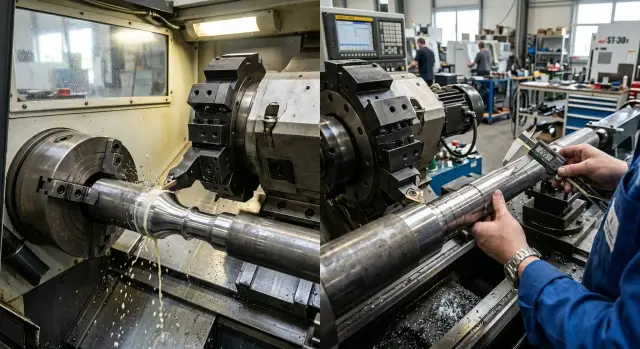
What the debate is really about on the same part
On a repeating part, the debate usually starts not with geometry, but with how the process behaves in a production run. One shop wants to cut the profile with a form tool in a single working pass. Another breaks the same contour into several simple passes with a standard tool so it is easier to hold size and adjust the settings as the batch goes on.
When people discuss “form tool or several passes,” many look only at cycle time. That is too narrow. Yes, a form tool often gives a short cycle because it cuts the whole profile at once. But this setup depends much more on machine rigidity, accurate setup, tool sharpening quality, and stock consistency. If there is extra deflection somewhere or wear changes, the error immediately runs across the entire contour.
With several standard passes, the logic is different. The profile is split into simple sections: a groove, a radius, a shoulder, a taper. The cycle is longer, but the operator or process engineer can see exactly where the deviation begins. That is more convenient when the part is finicky, the allowance varies, or you need to bring the size in quietly without risking the whole profile with one touch.
In a production run, cycle length does not decide everything. Much harder is the situation where the hundredth part goes out of tolerance and you notice it too late. Then the shop loses not just a few minutes for adjustment. You lose material, machine time, inspection, and sometimes trust in the already tuned operation. So the debate is about stability, not just speed.
A simple example: you need to machine identical stepped parts in a large batch. A form tool can quickly produce the required shape from the first pieces. But if the edge starts to wear unevenly, the profile will drift across the whole cutting zone right away. With several passes, wear is often visible earlier: first one dimension shifts, not the whole shape at once.
So there is no universal winner for the same part. If the profile is simple, the machine is rigid, and the batch is long, a form tool can give a steady rhythm. If the part is sensitive to wear and to small tool shifts, standard passes often keep the process calmer. You need to compare not the nice first part, but what happens after dozens and hundreds of repeats.
When a form tool gives a steady rhythm
A form tool works best where the profile is short and repeats many times without noticeable differences between blanks. One working pass creates the required shape right away, so the cycle stays even: fewer transitions, fewer places where variation builds up. In production, this usually gives a calm pace and a clear result on size.
In the “form tool or several passes” debate, this option often wins on a simple repeat part. For example, if a shaft has the same groove, radius, or a small shaped band, there is no point building a long chain of passes if one tool covers the profile in one go.
A good result holds only under one condition: the allowance hardly changes from part to part. If the first blank removes 0.4 mm and the next one already 0.9 mm, the load on the edge changes too much. But when the batch is consistent, the form tool cuts in almost the same mode and wear stays predictable.
The machine also needs to be rigid. If the carriage, tool holder, or the setup itself vibrates, the profile starts to “breathe”: one part is clean, the next already shows a slight wave. A form tool feels this more strongly than a standard turning tool because it engages wider and loads the cutting zone immediately.
A form tool works best in this combination:
- the profile is short and not stretched out
- the blanks come with little variation in allowance
- the machine holds the cut without chatter
- the setter can locate the tool from one clear reference
The last point is often underestimated. If the setter can quickly base the tool off one reference and check the size at two or three points, startup goes much faster. There is no need to adjust several transitions one by one and watch how one shift affects the next. On a repeat part, that saves not just minutes, but entire corrections across the batch.
In practice, a good sign is this: after the first acceptable part, the machine makes the next parts with almost no readjustment, and the operator only monitors wear. If the tenth part is close to the first and the profile does not drift, the form tool is doing its job.
When standard passes hold size more calmly
Standard passes often give a calmer result when the part profile is long and uneven. If one surface has several radii, transitions, and straight sections, a form tool loads the edge across a large area at once. Any extra allowance or local hardness in the blank pushes on the whole profile immediately. With step-by-step machining, the load is lower, and the turner or setter can better see where the size starts to drift.
In the pair “form tool or several passes,” the standard setup often wins on small batches. The reason is simple: changeover happens more often, and the time needed to fine-tune a special profile does not always pay back. If you have 40 parts today, 60 tomorrow, and then a different geometry, it is easier to keep a set of standard tools and adjust the settings on the spot than to return to one complex tool every time.
Another common case is uneven stock. One batch has a bit more allowance, another cuts harder, and a third has runout variation. In that situation, a form tool reacts more strongly to the difference between parts. Several standard passes handle that more calmly: first they remove the excess, then they bring the shape in, then they take the finish size.
This is especially noticeable when different areas of the profile need separate correction. If only one radius or one neck has drifted, the standard method lets you touch just that area. You do not need to вмешиваться in the whole contour at once. In a production run, that lowers scrap and saves nerves because the correction is localized.
A good example is a small batch of stepped bushings with two radii and a long seating surface. After ten parts, it becomes clear that the outer radius is holding, but the long straight section is slowly drifting because of heat and stock variation. With several passes, the setter changes the correction only on that section and quickly brings the size back. With a form tool, you would have to re-establish the entire profile.
In practice, standard passes are calmer where the priority is not the shortest single operation, but predictable behavior from the first part to the last. It is not as impressive in cycle time per part, but it is often steadier on size and easier to correct.
How to compare both options step by step
You need to compare them not on an abstract part, but on the one that really goes into production. Take one profile with a clear tolerance, a normal batch length, and the material you use most often. If today it is a shaft with a groove and a radius, test that exact part, not a simplified sample.
The phrase “form tool or several passes” often pushes the discussion toward theory. On the machine, it is simpler: the winner is the method that produces the first good part faster and then holds size without nervous tweaking.
First, set identical conditions. The same machine, the same operator, one batch of blanks, one coolant setup. Otherwise, you are comparing not two machining methods, but two different shifts.
It helps to go like this:
- For each option, time the period from setup start to the first good part.
- Run the same batch, for example 30 or 50 pieces, without changing material and without unnecessary pauses.
- After each group of parts, record tool corrections and the actual profile size.
- At the end, count scrap, cycle time, and cutting edge condition.
Cycle time alone is not enough. A form tool often gives a nice start: the profile appears with fewer movements. But if after 15-20 parts the operator is already changing correction on almost every second measurement, that advantage fades fast. Standard passes are often slower piece by piece, but they hold the shape more calmly over a long run.
Look not only at the last part, but at the whole measurement trail. If the size drifts gradually, the cause is usually easier to catch and fix. If the profile drops sharply, the usual suspects are edge wear, tool overhang, or overheating in the cutting zone.
It is useful to record just five things: time to first good part, average cycle, number of corrections, tool wear, and scrap rate. That is already enough to settle the debate with numbers.
If you have a fleet of CNC lathes and similar parts run regularly, this kind of test pays back quickly. One honest trial of the two setups gives more value than a week of arguments at the machine.
How much money is spent before the first good part
When people calculate the cost before the first good part, cutting time often leads the discussion off track. At the start of a production run, money is spent not only on the cycle itself, but also on tool preparation, setup, trial blanks, and inspection. So the “form tool or several passes” debate is better started not with seconds per part, but with the cost to the first stable result.
A form tool is almost always more expensive at the start. You need to make or order the profile, check how it sits in height, and cut a trial part. If the contour is sensitive to radii and transitions, one trial is rarely enough. A couple of extra blanks, the setter’s time, and repeat measurement quickly add a noticeable amount to the setup cost of the turning operation.
With standard tools, the entry is usually easier. Holders and inserts are often already on the floor, and if not, they are easier to buy and replace quickly. The program may be longer, but startup is calmer: roughing pass first, finishing pass next, then local correction on one dimension. That is not always faster in a production run, but it is often cheaper before the first good part.
You should include not only the visible costs:
- buying or making the tool
- time for setup and alignment
- trial parts and possible scrap
- profile inspection after the first cut
- new corrections after regrinding
Regrinding adds another cost item for a form tool. After regrinding, the geometry changes, even if it looks the same at first glance. The setter has to bring the corrections in again and sometimes check the profile on the part all over again. With a standard insert, replacement is usually simpler: install a new one, check one or two dimensions, and continue.
There is also an important caveat. If the profile has already been proven on the same part and the section regularly runs with a form tool, the upfront difference drops noticeably. But if the run starts from scratch and the contour has not yet been verified, several standard passes often give a cheaper first good result. This is where the hidden costs show up best: not in the tool catalog, but in people’s time, trial blanks, and repeat adjustments.
What a production run does to tool life
On the first part, both methods often look fine. The production run quickly removes the mask. When the part goes in tens and hundreds, tool life depends no longer on a pretty path, but on heat, edge pressure, and how the chips come out.
A form tool usually works with a wide contact area. That is convenient when the profile has to be produced in one pass, but the edge heats up more. Heat stays in one place, and wear progresses faster: first surface finish drops, then size begins to drift, and after that the profile itself changes. On a rigid, short part, that may be acceptable. On a long run, the reserve often runs out sooner than expected.
Standard passes behave more calmly because the load is spread across several areas of the edge or even across different inserts. Each pass removes less metal, chips are shorter, and temperature is lower. The cycle is usually longer, but the tool lasts more evenly. For a production run, that is often better, especially if scrap is expensive.
What changes tool life the most
Catalog promises mean little if the cutting conditions are chosen badly. In practice, the biggest changes come from:
- feed per revolution
- cutting speed
- depth of cut per pass
- coolant delivery to the cutting zone
- how chips exit the profile
Even a small shift in feed or speed can sometimes give you 20-30 more parts before the insert change. The reverse is also common: speed is raised a bit to shorten the cycle, and the tool starts wearing out almost twice as early.
Coolant and chip evacuation matter almost immediately. If chips rub on the form section, the edge overheats and smears the surface. If coolant does not reach the cutting zone properly, temperature rises very fast. With several standard passes, this problem is easier to control because chips do not pack the work area so tightly.
In the “form tool or several passes” debate, a production run usually chooses the option that keeps wear more even for longer, not the one that simply gives a nice first part. So you should not judge by one successful startup, but by at least a trial batch and the moment when size starts to drift.
Example on a repeat part
Let’s take a simple run: 800 bushings with one outer profile on a CNC lathe. The “form tool or several passes” debate here quickly leaves theory, because the difference is visible within the first few dozen parts.
If the process engineer knows the part geometry in advance and the blank arrives consistent, a form tool often wins on rhythm. Setup takes longer, but after the first good part the cycle is noticeably shorter: the profile is cut in one working pass, and it is easier for the operator to keep the same time on each bushing.
For such a batch, the picture usually looks like this:
- form tool: longer setup, shorter cycle
- standard passes: faster startup, but longer machining time
- with stable allowance, the form tool pays back setup time faster
- with fluctuating allowance, standard passes hold the shape more calmly
Imagine two scenarios. In the first, the blank is accurate, the outer diameter barely varies, and runout is small. The setter spends extra hours choosing the conditions and establishing the profile with the form tool, but then each bushing comes off, for example, 12-18 seconds faster. Over 800 pieces, that is already hours of machine time, not a small difference.
In the second scenario, the allowance changes from part to part. On such blanks, the form tool becomes harsher: where there is more metal, the load is higher, heat is stronger, and it is easier to get profile drift on the radius or transition. Several standard passes often give a steadier result here because the tool removes metal in stages, and the setter can tighten the finishing pass separately without changing the whole scheme.
The cost difference is clear too. If the batch is one-off or experimental, standard passes are often more favorable: less time to the first good part, less risk of reworking the tool shape or spending a long time chasing size. If those 800 bushings repeat every month, a form tool looks better with a stable blank and a clear setup.
In practice, the decision often comes down to one question: is your blank consistent every time or not? If yes, a form tool pays back the setup faster. If not, several passes usually give a calmer profile and fewer surprises in the middle of the run.
Where the profile usually goes off
The profile rarely “drifts” on its own. Usually the reason is simple: the tool sticks out too far from the holder, the same cutting conditions were used for every pass, and no one looked closely at the first parts under magnification and against a template.
A common mistake with a form tool is this: it is mounted with too much overhang so it will “definitely fit,” and then people expect a clean trace on the whole shape. In reality, long overhang adds deflection and chatter. At first the size still holds, but on radii and transitions the profile is already doing its own thing. On a repeat part, that shows up quickly: the same area starts changing from part to part.
With standard passes, the problem is different. A technologist sometimes leaves one setting for both roughing and finishing. That is convenient in the program, but bad for surface and shape. The roughing pass can handle higher load, while the finishing pass should cut calmly and predictably. If the setting is the same, the tool heats more, the edge wears faster, and the finishing trace no longer matches the intended contour.
On small radii and sharp corners, wear grows fastest. That is where profile drift first appears on the part, even if the overall size is still within tolerance. The operator checks the diameter, sees it is fine, and keeps the run going, while the shape has already moved. After 30-50 parts, it becomes visible to the naked eye.
Another common cause is late inspection. After the first 10-20 parts, the profile should be checked separately, not just one overall dimension. If that is skipped, the batch can keep going for a long time with a quiet error. Then the tool gets blamed, even though the problem started earlier.
Sometimes two different things are mixed up: tool wear and fixture play. They create similar scrap, but they behave differently.
- If the same angle or the same radius goes off, the edge is usually to blame.
- If the profile shifts differently from part to part, check clamping and play.
- If the shape does not return after an insert change, look at the setup.
- If the defect grows as the batch goes on, first check wear.
In the “form tool or several passes” debate, the most common source of trouble is not the machining method itself, but small setup details. Short overhang, separate roughing and finishing conditions, and early inspection of the first dozen parts usually help more than a long program adjustment after scrap has already appeared.
Quick check before starting the batch
Before the production run, it is better to decide based on facts, not habit. When you choose what is more stable — a form tool or several passes — five short checks usually remove half the arguments before the first part is even cut.
If the profile sits in a tight tolerance, error builds up quickly. For a simple chamfer, the difference between the two methods may be almost invisible, but for a radius, groove, or complex contour, even a small shift will immediately create scrap.
- First, fix which part of the profile cannot move. Sometimes it is not the whole contour, but one radius, groove depth, or transition edge that matters.
- Then estimate the length of uninterrupted work. Twenty parts with adjustments is one thing; 300 pieces without stopping and without changing the tool is another.
- Next, check the blank. If the allowance varies from part to part, a form tool usually gets uneven loading, while several passes tend to handle it more calmly.
- Separately decide on regrinding. If the tool will be reground quickly and accurately to a clear template, the form tool is easier to keep in production. If regrinding depends on one experienced person, the risk is higher.
- And set the first inspection in advance. Not after a big batch, but after the first few parts, when the actual tool fit and size behavior are already visible.
The error often appears exactly where the start was handled with a “we’ll see later” approach. For example, a shaft profile looks clean on the first three parts, but by the tenth it begins to drift because the forging allowance turned out uneven. On paper the conditions are the same, but in the real batch the load is already different.
A good practical rule is simple. If the part is sensitive to shape, the blank is stable, and the tool can be reground the same way every time, a form tool often gives a steady rhythm. If the allowance varies, the batch is long, and size control is strict, several standard passes are often calmer to run.
The first inspection should be taken early. For a short batch, 3-5 parts is enough. For a longer run, it is useful to check the first part, then the fifth, and again after normal wear begins. That sequence shows faster where the profile starts to drift and saves you from a pile of identical scrap.
What to do next on your floor
The choice between the two options is better made on a short batch, not by feel. Take the same blank, the same material, and the same tool batch. Then run both methods on a small volume to see not only cycle time, but also how the size behaves after the first parts.
For such a check, 20-50 pieces is usually enough. That is sufficient to see where correction grows faster, when profile drift begins, and how much time it takes to stabilize the process. If the part repeats every day, this test pays back quickly.
It is convenient to keep a simple working card for each shift. Not for reporting, but for real work at the machine. It should record:
- initial tool corrections
- size change every 5-10 parts
- number of regrinds or insert changes
- scrap and the reason for deviation
- actual time for setup and the first good part
Such a sheet quickly shows what is more stable in production. Sometimes a form tool or several passes give almost the same cycle time, but behave very differently on the 30th or 40th part. That is when the real tool life in production becomes visible.
Money is also better counted per part, not only per minute. The cost of setting up a turning operation is not just one program start. It includes setup, trial passes, inspection, corrections, possible scrap at the beginning of the batch, and machine idle time while the operator is chasing the profile. If a form tool cuts 15 seconds faster but shifts size more often and requires extra adjustment, the savings disappear quickly.
On a repeat part on CNC, the method that the whole shift can keep under control usually wins, not just the experienced setter in the first hour. That is a down-to-earth approach, but usually the most honest one.
If you need to choose a machine, tooling, and machining scheme for such a task, it is better to discuss it using your own part and your own batch. EAST CNC supplies CNC lathes in Kazakhstan, and helps with selection, commissioning, and service. For a shop, that is useful in one case: when you need to understand in advance which machine and which setup will need fewer corrections and repeat more calmly.