
Collet or Hydro-Expansion Chuck for Milling: How to Choose
Collet or hydro-expansion chuck for milling: we compare runout, stiffness, tool-change speed and help you choose the right option for your tasks.
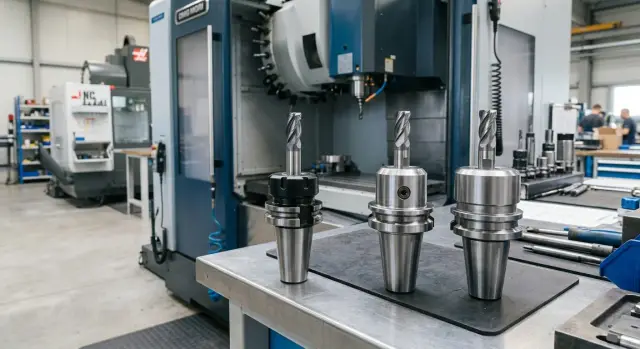
Why the choice sparks debate
The argument over what’s better for milling — a collet or a hydro-expansion chuck — keeps going for a simple reason: both work well, but in different conditions. Miss that point and one operator will praise the collet chuck while another insists you can’t get a good surface without a hydro chuck.
Problems start when general advice replaces the actual task. For a short tool and a rigid cut, a collet chuck often fits perfectly. It’s simple, familiar and convenient when you need to change cutters often. In that mode the difference is obvious: fewer pauses, quicker setup, and it’s easier to keep the pace.
But the picture changes as tool overhang increases. A long cutter reacts more to runout, vibration and tiny misalignment in the clamp. In those conditions a hydro-expansion chuck often steadies the process. Cuts come out cleaner, the sound is more consistent, and the operator doesn’t have to fine-tune the parameters by ear every time.
That’s why people argue. One shop runs short cutters on rigid parts and sees no reason to pay extra. Another mills deep pockets, thin walls or parts with long overhangs — for them, stability matters more than quick tool changes.
A wrong choice in such operations shows up fast. Runout increases, the cutter overheats, the cutting edge wears prematurely and the surface quality falls short. Sometimes they blame the cutter or the feed and speed, even though the holder is the real cause.
The guiding principle is simple: look at your operation, not someone else’s habit. Consider overhang, tool diameter, material, depth of cut, surface finish requirements and frequency of tool changes. Even within one shop the answer can differ between parts.
What changes on the machine
The difference between a collet and a hydro-expansion chuck is not a catalog spec — it’s what you hear and see in actual cutting. The same cutter can sound different, produce different wall finish and have a different life, even if cutting parameters remain unchanged.
The first thing to check is runout at the working overhang — not at the holder itself, but where the cutter cuts. On a short overhang a good collet, a clean nut and careful assembly often give very acceptable results. A hydro chuck also holds runout well, but its advantage is repeatability: remove the tool, put it back, and behavior changes very little.
Under side load the difference becomes clearer. If the cutter removes material aggressively, any small imperfection in the clamp shows quickly: noise rises, the edge dulls faster and size starts to drift. Collet chucks often tolerate rough work better, especially when you need a firm clamp and change diameters often. Hydro chucks usually run softer and don’t like overloads.
On a long cutter this is even more visible. The greater the overhang, the easier it is to excite vibration. There a hydro-expansion chuck often helps keep things steady: the tool vibrates less, the surface is cleaner and it’s easier to maintain size across a series. A collet can work on a long overhang too, but success depends more on the collet quality, the nut and the precision of assembly.
Quick tool changes also matter in daily work. A collet chuck is usually faster to reconfigure, especially in shops that frequently switch operations. But even here it’s not so simple: if the operator spends time after each change chasing the overhang and checking runout, much of the time saved disappears.
In practice check four things: runout at the actual overhang, behavior under side cut, performance with a long cutter and the time needed to change tools and return to the previous size.
If the question is “collet or hydro chuck,” the answer rarely reduces to one number. For frequent changes and general tasks a collet is usually more convenient. For long tools, finishing and stable series runs, a hydro-expansion chuck more often delivers a smoother process.
Where the collet wins
A collet chuck shines when the cutter is short and the overhang small. In that setup the tool clamps tightly, the assembly is compact and it’s easier for the operator to get a consistent result without extra fuss. For many semi-finish and finish operations that’s enough.
People often forget the shop’s normal rhythm when arguing choice. If cutters are changed several times per shift, a collet is usually handier. The operator removes one cutter, fits another, tightens the nut and continues. On small serial parts this saves a noticeable amount of time over a day.
A collet is especially appropriate for short endmills of small and medium diameter, minimal overhang, frequent tool changes and situations where it’s more practical to have several affordable holders rather than one expensive set.
There’s a practical cost advantage too. The chuck, collets and spare parts are generally cheaper than a hydro-expansion chuck of the same level. That matters when a shop needs multiple holders for different diameters — a real expense for a small business.
A good example: a section producing small housings, covers or fasteners. They commonly use 6, 8 or 10 mm cutters, run short overhangs and switch operations quickly. In that work a collet chuck often provides what’s needed: acceptable runout, fast changes and predictable costs.
But a collet works well only with careful assembly. Dirt in the seat, a worn collet or an over-tightened nut spoil results fast. If you keep collets clean, don’t use long cutters unnecessarily and replace worn parts in time, a collet chuck covers most everyday tasks without extra cost.
Where the hydro-expansion chuck steadies the process
A hydro-expansion chuck is chosen not for speed of change but for calmer cutting. It clamps the shank evenly and better damps small oscillations. This is most noticeable with long, slender cutters: a collet setup may begin to “sing,” while a hydro chuck keeps the cut quieter and more even.
On finishing passes the difference shows quickly. When a part needs a smooth surface without fine ripples or random marks, even small vibration spoils the result. A hydro chuck often helps achieve more predictable roughness because the cutting edge behaves more steadily and jumps less.
If the cutting edge chips even after you reduced the parameters and replaced the cutter, check the holder type. The problem isn’t always the cutter. Sometimes micro-vibration — heard as a light ring by the operator — causes rapid wear and an uneven trace on the part.
This is most apparent in cases such as: long endmills with large overhang, finishing steel and stainless, where the surface must be final without rework, and series production where identical parts are required from first to last.
In a series that matters more than it seems. If every tenth part needs an extra pass because of vibration marks, the shop constantly loses time, even if it seems minor at first. A hydro chuck doesn’t solve everything automatically, but it often makes the process quieter and more predictable.
A simple example: a 6 mm cutter with noticeable overhang finishing a pocket. In a collet the surface may be acceptable but sometimes wavy and tool life varies. Switching to a hydro chuck usually lets you keep parameters nearly the same while achieving a more consistent result.
If surface finish, cutting-edge life and repeatability matter, the hydro-expansion chuck often wins. If flexibility and fast changeovers are the priority, the collet is usually more convenient.
How to choose for your operation
The same machine can work well with either a collet or a hydro chuck. The difference shows up in the operation: what tool is in the spindle, how far it sticks out, what you’re cutting and what finish you expect.
Start by noting two things: cutter diameter and working overhang. That quickly clarifies the situation. Short cutters of small or medium diameter often feel fine in a collet, especially when frequent tool changes are needed. A long overhang changes the picture: vibrations increase and a hydro chuck typically steadies the process.
Then consider the workpiece material and depth of cut. For aluminum, plastics or light passes a collet often gives the needed tempo without complications. If you’re cutting steel, stainless or running heavier cuts, the steadiness of the holder becomes more important than shaving a few minutes on tool changes.
Answer four honest questions:
- Which cutter runs most of the shift?
- Is the overhang short or is the tool far from the spindle?
- Do you change tools frequently or keep the same size longer?
- Is surface finish more critical or is changeover time more important?
If priority is quick change, flexibility and familiar tooling, a collet chuck is usually more convenient. If a calm cut, lower risk of extra runout and a more even surface are important, a hydro-expansion chuck often pays off even on not-so-complex parts.
Also compare allowed runout and surface requirements. For roughing this isn’t always crucial. But in finishing, wall work, pocketing or a fit size, even a small difference shows up on the part and on cutter life.
The final decision is best made by a short test on your setup. Use the same cutter and a sample blank, make a trial cut with the collet and with a hydro chuck. Compare not only the surface but the cutting sound, spindle load, tool heating and time to change tools.
If the collet produces a clean cut and holds size, there’s no need to overpay. If the hydro chuck reduces vibration and gives a more predictable result, the choice becomes obvious.
An example from a typical shop
A small shop in Kazakhstan runs a batch of steel gearbox housings. The batch isn’t enormous, but there are enough parts that any extra stop immediately affects time. On one operation they remove stock then finish a pocket and a face.
On roughing the operator changes cutters several times a day. Tools are short, rigid and the overhang is small. There a collet chuck is convenient simply because changes are faster and tooling costs less. If the collet is clean, not worn and clamped correctly, runout stays within acceptable roughing limits and the shop keeps its pace.
Problems come later on the finishing pass with a long cutter. With the same collet the part may be within size, but the surface sometimes shows a “noise” or ripple and the edge shows slight irregularity. The operator reduces feed, makes another pass and the cycle stretches.
After switching to a hydro-expansion chuck the picture changes. The long cutter runs calmer, the cutting sound is steadier and the surface is cleaner on the first pass. Here the hydro chuck wins not on speed but on stability. It holds the long tool better and the machine reacts less to small oscillations.
In such cases the argument is resolved without theory: use a collet for a short roughing cutter, and a hydro chuck for a long finishing cutter. Not because one is always better, but because the tasks differ.
The result is simple: roughing runs faster, finishing gives a smoother surface, the operator spends less time tuning parameters and extra passes and scrap occur less often.
That’s a common approach in serial production: don’t try to pick one holder for everything, choose tooling to match the cut, the cutter length and the finish requirement.
Common mistakes in selection and setup
Many blame the holder when the issue is in small setup details. The usual culprits are excessive overhang, dirty seats and rushed clamping. Even a good collet or hydro chuck will perform poorly if the assembly is sloppy.
When comparing holders, people often forget to keep test conditions identical. One is tested with a short tool and calm parameters while the other is tested at larger overhang and different feeds. Conclusions from such comparisons are meaningless.
Excess overhang is one of the most frequent mistakes. An operator leaves extra length “just in case” and then suffers increased vibration, poorer tool life and noticeable runout at the edge. If you can shorten the tool by 10–15 mm without risking the part, do it.
A worn collet causes the same story. It may pass on roughing but ruin finishing. If a collet shows marks, the nut requires extra force to tighten or it’s been in heavy use, don’t put that set on a precision operation.
Another error is clamping a shank of the wrong diameter. Sometimes shops try to “stretch” a nearby size in a hurry. It’s false economy. The tool seats poorly, heats more and can shift during the cut.
Before running a job do a quick check:
- remove dust and oil from the spindle taper and holder seat;
- inspect collets, nut and shank for nicks;
- confirm the shank diameter matches the clamp exactly;
- reduce overhang to the minimum needed;
- compare holders only on the same cutter and with the same parameters.
A dirty taper and seat cause especially nasty issues. Everything may look fine outside, but the holder can sit with a micro-tilt. People then chase the cause in the spindle, the cutter or the feed. In a real shop such a tilt often costs more time than all daily tool changes combined.
A useful habit is simple: treat the holder as a precision element before any accurate operation, not as a disposable item. Then both the collet and the hydro chuck will perform where they’re supposed to.
Quick checks before buying
Before you pay, look at your usual work, not the catalog. The same holder gives different results on a 6 mm cutter and a 16 mm cutter, with short and long overhangs, in roughing and finishing.
Check a few things on your current parts and cutters. First, compare shank diameters of the cutters you use most. If you run several sizes, one holder rarely covers all without compromise. Then measure the needed overhang on the real operation, not by memory. An extra 15–20 mm quickly adds vibration.
Count how many tool changes happen per shift. If the operator changes cutters dozens of times, convenience and speed noticeably affect throughput. Then look at the part after the cut. Stripes, ripples, vibration marks and chipped edges tell more than specs on paper.
One more point: decide whether you need one universal holder or it’s smarter to buy two. In practice a simple scheme often works better: one holder for short, rigid operations and a second for longer, calmer work.
If you view the choice this way, the answer usually lies in combined factors. Short cutters of small diameter, frequent changes and serial work point to a collet chuck. Long overhangs, demanding surface finish and vibration-prone operations point to a hydro-expansion chuck.
There’s also a simple monetary test: what does one spoiled part, one extra pass and 10 minutes of downtime cost? If losses are noticeable, don’t pick the cheaper holder just for the initial price.
In busy shops the idea of one holder for everything rarely wins. It’s much more practical to match tooling to the two most common scenarios. That makes setup calmer and results more predictable.
What to do next
The holder debate rarely resolves in a catalog. Start by understanding where the shop loses money every day. For some it’s extra minutes on tool change, for others runout on finishing, for others vibration that shortens cutter life.
If the cause isn’t clear, don’t buy holders at random. Take one typical part and compare the current result with the desired outcome: cleaner surface, longer tool life, fewer stops or faster changeovers. One such test is usually more useful than a long argument between process engineers and procurement.
Then follow a simple plan: pick 1–2 frequent operations, choose the holder for the specific cutter, overhang and material, set identical parameters for trial cuts and record runout, cutting sound, surface trace and changeover time. If you save these results in an operation sheet or a procurement table, the next choice won’t start from zero.
This approach quickly shows what fits you. For a short cutter in a calm cut a collet chuck can give a fast, clear result. If the operation is sensitive to vibration and needs a steadier cut, a hydro-expansion chuck usually behaves more predictably. The decision almost always depends on the tool–parameters–part combination, not just the holder name.
It’s helpful to record not only the outcome but the small details: cutter brand, diameter, overhang, RPM, feed, blank material and actual tool life. In a month those notes help buy the next set of holders without repeating mistakes.
If the issue involves not only the holder but the machine, process and accuracy, discuss it early. At EAST CNC we usually start from the production task: look at the part, machining parameters and service expectations, and then recommend a solution. For shops in Kazakhstan and other CIS countries this approach is often more useful than trying to solve everything with one universal holder.