
Clamping thin-walled parts: chuck, collet or soft jaws
Clamping thin-walled parts affects runout, ovality and setup time. We explain when to use a chuck, a collet or soft jaws.
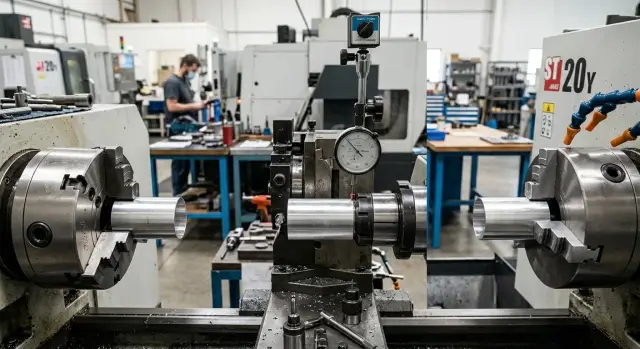
Why a thin-walled part shifts size
A thin wall doesn't behave like a solid blank. If you squeeze the part even a little, it changes shape. From the outside you don't always see it, but the cutter is already working on a geometry different from the one you expected.
The problem often starts before cutting — at the moment of clamping. The chuck or jaws press at a few points, the wall bows, and the part is temporarily distorted. While it's clamped the size may look fine. After unclamping the metal partially springs back, and the measurement shows a very different value.
That's why for thin-walled parts the key is not maximum clamping force but sufficient clamping. If you over-tighten you can easily get ovality, taper or a local dent. On the machine everything can look accurate, but after inspection the size has shifted.
How the clamping scheme changes things
The clamping method affects more than how the part is held in the spindle. It changes the part's shape during machining, the amount of runout and even how easy it is for the tool to reach the work.
The difference starts with the contact area. A standard chuck usually holds the part at three points. A collet grips almost the whole circumference, so the load is spread more evenly. Soft jaws still use three jaws, but after being bored to the required diameter they support the part much better than standard hard jaws.
On a thin-walled part you feel this immediately. The smaller the contact zone, the higher the pressure. In a chuck the most loaded spots are under the jaws, so a thin sleeve or ring easily gets a local deformation. After unclamping the part springs back and size or roundness shifts.
A collet is generally gentler. It compresses over a larger area, so initial runout is often lower even without lengthy fitting. But it doesn't always fit: if the part has a non-standard shape, a short bearing length or a wide diameter variation, a collet may not provide the needed support.
Soft jaws are an intermediate option. They don't remove three-point contact entirely, but they let you match the clamping surface precisely to the part geometry. Because of that the part is less crushed, and repeatability over a series is usually better.
There's one more often underestimated point: tool access. A chuck or jaws may block part of the face or prevent the tool from reaching a thin flange. A collet is typically more compact, so the tool can approach the clamped area more easily. This becomes important when you need to machine a short part in one setup.
Setup time differs too. A chuck is convenient when accuracy isn't strict and parts change frequently. A collet is good for repetitive runs with a single diameter. Soft jaws need boring and checking, but then they save time on repeat setups.
In practice the choice boils down to a simple question: what costs more now — an extra 15 minutes of preparation or scrap caused by deformation? For thin parts a clamping mistake almost always costs more than a careful setup before production.
When a chuck is appropriate
A standard three-jaw chuck is handy where blanks change often and the batch is small. It lets you mount a part quickly, set the overhang, make a trial cut and move on. For repair work, small series and mixed flow it's often the most practical option.
A chuck works best when the part has a solid clamping zone. Short sleeves with normal wall thickness, bar stock with diameter allowance, parts with a flange or a section that will be machined away later — in these cases the jaws hold reliably without harming geometry.
Problems start when the jaws press on a thin wall, especially near the finish area. The part pinches slightly, becomes oval, and after removal some of the deformation springs back. The size measured in the chuck was one value and after inspection it becomes another.
Clamping force matters. If you over-tighten the jaws push the thin part and create internal stress. On the machine it might look acceptable, but after unclamping runout shows up. If you clamp too lightly the part will spin or "breathe" under the cutter. Usually the answer is not stronger clamping but the minimum sufficient clamp, a short overhang and support in a stiffer zone.
A chuck is usually chosen when:
- the batch is small or medium;
- blank diameters vary noticeably;
- the blank shape is rough and a collet won't accept it;
- you need to switch quickly to a different part.
In speed the chuck wins with frequent changeovers and diverse work. You don't have to fit a collet for every size, and standard jaws tolerate diameter spread better. But for long runs of identical thin parts it's not always the best. There a collet or soft jaws usually give less runout and lower risk of crushing the wall.
If the part is simple, the batch short and the clamping zone stiff, a chuck solves the task without fuss. If the wall is thin almost along the whole length, look for a gentler method right away.
When to use a collet
A collet is good where the part easily deforms under point pressure. In a regular chuck the pressure is applied through the jaws and a thin wall can give way during clamping. A collet squeezes the diameter nearly all around, so the load is distributed and the risk of ovality and extra runout is lower.
This is especially clear on small round parts, tubes, sleeves and bar stock processed in long series. If the outer diameter in the batch is stable, a collet gives very consistent clamping from part to part. For the operator that's convenient: fewer surprises after the first cut and less fine-tuning during changeover.
With such jobs a collet often produces a calmer clamping for thin parts. The part seats predictably and its size after unclamping shifts less. This is especially useful when tolerances are tight and a few hundredths are visible on the gauge.
But a collet isn't always suitable. Its working range is narrow, and that's its main drawback. If the diameter varies, blanks come with wide scatter or you need to machine 20 mm one hour and 23 mm the next, a collet quickly becomes inconvenient. You have to change the set, and sometimes the whole clamping scheme.
Typically a collet is chosen when three conditions are met: the blank diameter is stable, the wall is thin and you need good repeatability in runout. In series work there's another advantage: the pause between parts is shorter. The operator doesn't align each blank or chase jaw positions. Insert the part, clamp, continue the cycle.
On a batch this saves not seconds but tens of minutes per shift. If a shop machines 200 identical thin sleeves from calibrated bar, a collet often wins in both repeatability and pace. But if the batch is small, diameters vary and changeover happens all day, soft jaws or a chuck may be more practical.
When soft jaws help
Soft jaws are needed where a standard chuck already starts to damage the part. This is common for thin rings, cups and sleeves with a thin wall. A hard clamp holds them securely but also pulls the size off and adds runout after unclamping.
The main advantage of soft jaws is that they're bored to the particular diameter. Because of that the part rests not in a few random points but over the required area. Misalignment is reduced, the load is spread more evenly and the part ovalizes less during machining.
Soft jaws are often prepared for one part or a very narrow size range. It's not the fastest solution if the product mix changes every half hour. But when a batch repeats and tolerances are tight, this preparation usually pays off. On a CNC lathe it's especially noticeable: fewer problems on the first part and fewer corrections during the run.
Another common case is a thin ring where visible clamping marks are unacceptable. If the jaws are bored accurately and the contact area chosen correctly, they hold the part gentler than standard stepped jaws. Marks are still possible, but the risk of dents and local deformation is lower.
After boring the jaws you shouldn't start the batch immediately. First check whether the profile matches the real clamping diameter, whether the part is supported along the working length, whether runout appears after reclamping and whether the clamp force is enough without being excessive.
If you skip even one of these checks, the point of soft jaws is lost. Formally the part is clamped correctly, but in reality it sits skewed or deforms almost like in a standard chuck.
In shops this often shows on repeat batches. At first the jaws were bored for one ring, then they tried a similar blank 2–3 mm different. It looks like it fits, but contact is not the same. Size drifts and the operator looks for a cutting cause, while the problem is in the clamp.
How to choose a clamping method step by step
Mistakes usually come not from the chuck or collet themselves, but from the selection order. If you start from the part, not from habit, clamping thin-walled parts becomes calmer: less ovality, less runout, fewer unnecessary changeovers.
First look at the part. For a thin sleeve, ring or cup pay attention not only to diameter and length but to the shape of the bearing area. If the wall is thin and contact area small, strong clamping will almost always shift size before the first cut.
Then decide what matters most: runout, ovality or cycle time. A part with loose runout tolerance is easier to hold. If tolerance is tight, you'll already see at this stage that a chuck, collet and soft jaws will behave differently.
A simple sequence helps:
- assess the part shape and wall thickness;
- check the runout and ovality tolerances;
- verify overhang and tool access;
- estimate batch size;
- do a trial clamp and measure the part before cutting.
That last step often saves the most time. It immediately shows how the part behaves under load and whether it will change shape before the first pass.
Also compare tool access. Soft jaws replicate the part profile well but sometimes block the cutter. A collet gives a neat grip but hates wide diameter scatter. A standard chuck is simpler for quick work but on thin walls often leaves marks and pulls the part into an oval.
Count changeover time before starting, not after the first rejected batch. For a small batch boring soft jaws might not pay off. For a large batch an extra 10 minutes of setup often saves hours fixing sizes.
Example: a thin sleeve with long overhang and tight runout tolerance rarely fares well in a standard chuck. In that case a trial clamp with an indicator and a check of ovality after unclamping gives a faster, more honest answer than any argument at the machine.
A simple shop example
There was a batch of 200 thin steel rings. Outer diameter 120 mm, wall 2.5 mm, runout tolerance after finishing no more than 0.02 mm. For such parts the clamping scheme decides almost everything: you can hit the indicator reading and still get scrap after removal.
On the first try the operator used a standard three-jaw chuck with hard jaws. In the clamped state everything looked acceptable: the indicator showed about 0.01 mm. But after finishing and re-measuring the ring gave 0.05–0.07 mm, and some parts showed slight ovality.
The problem wasn't the machine. The chuck squeezed the ring at three points, the wall bent slightly and after unclamping the part sprang back. You can't see this by eye, but runout went beyond tolerance.
A collet was considered, but the blank outer diameter varied a bit between pieces. So they switched to soft jaws and bored them precisely to the blank size. They reduced clamp force and widened the contact area.
After the change the picture was different. Re-mounted parts stayed at 0.015–0.02 mm, and size after removal hardly shifted. Scrap on the first 30 parts disappeared and the operator stopped pushing cutting parameters "just in case."
Most time went not into switching fixtures but into preparation: boring the soft jaws to the real diameter, setting a reasonable clamp force, checking the first part after unclamping and doing an extra control re-clamp.
This took about 35–40 minutes. After that each part was mounted without extra adjustments and the batch processed more evenly than with the first setup. If the blanks had been more diameter-stable a collet would have given faster loading. In this case soft jaws were calmer and cheaper for the whole batch.
Where mistakes happen most often
A thin wall doesn't forgive extra force. The most common mistake is simple: people clamp the part "with margin" so it definitely won't slip. The result is ovality and size drift from the very first part. For clamping thin-walled parts this trap is typical: brute force more often harms than helps.
Another mistake is measuring the part only while it's in the chuck. While the jaws hold the blank, the metal is under load and the shape looks better than after removal. Take the part off, measure it, then re-mount. The first parts of the batch are best checked twice: in the clamp and after removal.
A lot of scrap also comes when people use the usual tooling "as always" for a very thin wall. A standard three-jaw chuck is convenient but often applies point pressure. For a thin ring, cup or sleeve this is a direct path to dents and size shift. In that case a collet or soft jaws usually give a more even contact.
There are also simple causes that are easy to miss: worn jaws, chips on the seating, oil and dirt, a burr or a small misalignment when mounting. Each small issue alone seems harmless, but on a thin-walled part they quickly add up to scrap.
Another error is changing the clamping method and keeping the old cutting data. That rarely works. If you swap a collet for a chuck the load on the part changes. If you move to soft jaws the overhang, stiffness and behavior on the finish pass may change. After such a swap review feed, depth and clamp force instead of copying old numbers.
You see this quickly in practice. A part was stable in a collet, then moved to a chuck for a quick changeover and the same cutting data was kept. The machine cut fine but after removal ovality appeared and the finished size shifted. The issue wasn't the tool but that the process wasn't adapted to the new clamp.
Quick checks before start-up
A few short checks before a run take minutes but often save size and setup time.
First look at wall thickness and overhang. If a thin sleeve sticks out far from the chuck, the deformation risk grows. In that case a collet or soft jaws usually give a calmer result.
Then mount an indicator and check runout before cutting. If the part already spins with noticeable deviation the cutter won't fix it. For strict tolerance even 0.02–0.03 mm can become scrap later.
After a trial clamp inspect the contact marks. A light imprint is acceptable. A crushed edge, shiny strips or clear ovality mean the force is too high or the scheme is wrong.
Next, quickly calculate changeover time. For a batch of 20 parts long soft jaw boring may not pay off. For hundreds of identical parts it often saves hours.
Measure the first part right away and see if the next one drifts. If the first is fine but the second already shifted, the cause is usually clamping or clamp force, not the program.
The logic is simple: make sure the part sits true and without crushing, then start the run. Otherwise you'll spend the changeover time on constant adjustments instead of cutting.
Example: a thin sleeve was clamped in a standard three-jaw chuck because it's faster. The indicator showed 0.04 mm, after unclamping there were marks and the first two parts began to drift. The time lost was more than a proper clamping change would have taken.
If a check takes 5–10 minutes and removes the risk of scrap for the whole batch, skipping it is just not worth it.
What to do next
If the part is thin, don't choose the clamping method by habit. First gather basic data: the drawing, material, rough and finish sizes, overhang, runout tolerance and any requirement about clamping marks.
This list isn't for paperwork. When the machinist, process engineer and setter all look at the same data, the "chuck or collet" argument becomes constructive. It becomes clear where a standard chuck will work and where even small force will shift the size.
Then run a short trial. Often 2–3 parts per option are enough: chuck, collet and soft jaws if they fit the geometry. For each option note four things: runout after clamping, size change after removal, repeatability on re-clamping and time to change one part.
Accuracy without time context often gives a false picture. A collet may hold size better, but if the batch is small and the fixture change is long, the benefit disappears. Conversely, soft jaws may take more time up front but then the series runs smoother with fewer adjustments.
Don't rely on a single good measurement — check several repeats. If three parts meet tolerance, runout stays stable and clamping doesn't deform the part after removal, you have a working scheme.
If the issue involves not just fixtures but the machine capability, discuss it early. EAST CNC supplies CNC lathes for metalworking and helps with selection, commissioning and service. Their blog with equipment reviews and practical machining tips can also help find a working solution for a specific part and run.
FAQ
Why does a thin-walled part change size after unclamping?
Because a thin wall changes shape already at the moment of clamping. While the part is held in the chuck or collet, the cutter is cutting against a slightly distorted geometry. After unclamping the metal partially springs back and the size becomes different. Most often the reason is not the program or the tool, but an overly strong or poorly chosen clamping method.
When is a standard chuck still a good option?
A chuck works if the part has a solid clamping area and the batch is small. A chuck is also convenient when blanks change often or their diameters vary noticeably. If the jaws press near the finished thin wall, the risk of scrap grows fast. In such jobs it's better to check the part after unclamping rather than trust the in-jaw measurement.
Why is a collet better than a chuck for a thin sleeve?
A collet compresses almost around the full circumference instead of at three points. Because of that the wall deforms less, initial runout is often lower, and the part behaves more predictably after removal. Collets work best for long runs of identical round parts with a stable diameter.
When should I use soft jaws right away?
Soft jaws are chosen when hard jaws already dent the part or cause ovality. After machining the jaws to the needed diameter they support the blank more accurately and spread the load more evenly. This is a good option for repeated batches where a gentle clamp and consistent result are required.
How do I tell if I'm over-tightening a part?
Look at the contact marks and the part shape after unclamping. If you see shiny strips, dents, ovality or size drifting between setups, the clamping force is already too high. Usually the fix is not to tighten more, but to find the minimally sufficient clamp force and support the part at a stiffer area.
What should I check before starting a production run?
First check wall thickness, overhang and the clamp location. Then mount a dial indicator, do a trial clamp and measure the part before cutting and after unclamping. These few minutes often save more time than trying to correct the process during the run.
Why can't I measure only while the part is in the chuck?
Because while clamped the metal is under load. The part may look true in the jaws even though the jaws have already pushed it into an oval or slightly reduced diameter. Remove the first part, measure it separately, then re-clamp and measure again. That way you'll quickly see what the clamp itself is doing.
What should I choose for a small batch of parts?
For a small batch, people usually use a chuck if the part has a firm base and tolerances aren't too tight. It's faster to change over and better tolerates diameter variation. If the wall is thin along most of the length, saving time on a quick setup can easily turn into scrap. Then it's better to spend a little time on a gentler clamping method.
What is best for a long run of identical thin rings?
If the diameter is stable, a collet usually gives better speed and consistent repeatability. If diameter varies a bit, soft jaws often end up being calmer for the whole run. The idea is simple: on a long run it's better to prepare properly once than to chase size on every part.
Do I need to change cutting regimes after switching fixtures?
Yes. A new clamping method changes the load on the part, the fixture stiffness and behavior on the finishing pass. If you move a part from a collet to a chuck or vice versa, don't copy the old cutting data blindly. First check the first part and only then lock the regimes.