
Checking a Site for Vibration Before Installing a Machine
Checking a site for vibration helps you understand in advance where placing a precision machine would be risky. Simple measurements, clear signs, and a checklist.
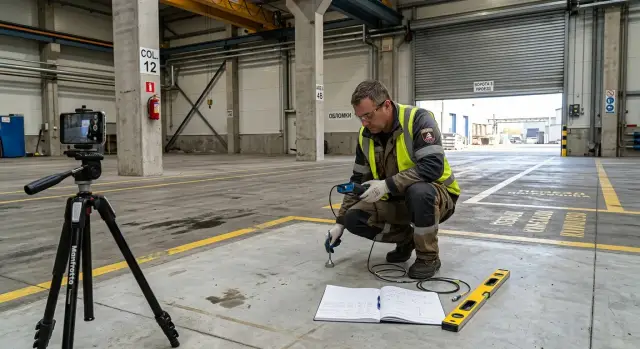
Why the site is checked before the machine arrives
Even a new machine that is assembled correctly will not give good results if the floor under it is constantly shaking. Vibration throws off dimensions, ruins surface finish, and speeds up wear on components. At first it looks minor: the mark on the part gets a little worse, and adjustments are needed more often. Then scrap, downtime, and maintenance costs start to grow.
It is much easier to catch this problem before delivery. While the area is still empty, you can walk through the workshop calmly, look at what is happening nearby, and understand where the extra vibration comes from. Once the machine has arrived, any move turns into lost time, repeated leveling, and a delayed start-up.
The difference between a quiet spot and a zone near moving equipment is usually noticeable even without special instruments. In a calm area, the floor behaves evenly. Near gates, a forklift route, a press, or an old compressor, the picture is different: the shaking comes in waves or short impacts. For a precision machine, that is a bad foundation.
The most annoying part is that the machine is often not to blame. People start looking for an error in the tooling, the program, or the settings, while the real cause is right under their feet. For CNC lathes and machining centers, the installation location matters just as much as connection and commissioning.
There is nothing to panic about. The basic check can be done on your own if you approach it calmly. Often simple observations, a few measurements during the day, and comparing several points in the workshop are enough.
Watch the simplest things: is there a constant flow of forklifts and carts nearby, are presses, hammers, compressors, and large fans running close by, does the floor behave differently in the morning, during the day, and at peak load. Check the areas near columns, floor joints, gates, and driveways separately. If you are already unsure before the equipment arrives, that is actually a good sign. It means the site is being checked in time, not after an expensive mistake.
What creates extra vibration nearby
When checking the site, do not look for numbers first. First, look for the sources of shaking around the future machine. The most common mistake is simple: people look at the empty spot, but not at what happens around it all day long.
The first source is vehicle traffic. Forklifts, pallet jacks, and heavy carts create short impacts on the floor. For rough equipment, this is sometimes acceptable, but a precision machine picks up those jolts as fine vibration. It is especially bad when the traffic route passes within a few meters of the planned location or turns nearby.
Neighboring machines with impact or pulsating loads are no less troublesome. Presses, hammers, large compressors, and pumping stations transfer vibration not only through the air, but also through the floor, foundation, and walls. The workshop may sound normal, while the slab is already receiving a repeating rhythm.
Some places look convenient, but are almost always questionable. Near gates and loading ramps, the floor often shakes from trucks entering, gate impacts, and pallet movement. If a railway line runs nearby or there is a busy road behind the wall, the background comes from outside. It may be weak, but if it is regular, that is worse than an occasional single impact.
The structure of the area itself is another story. When the machine and the neighboring heavy equipment share a foundation, vibration moves easily from one machine to another. Pits, channels, voids under the slab, the joint between old and new concrete, weakened floor zones — all of this makes the base softer than it looks.
If you are choosing between two similar points, the better one is usually the one farther from vehicle traffic, impact machines, and shared foundations. An empty corner of the workshop often beats a busy spot near the gates.
How to check the site without complex equipment
You do not need an expensive kit for the first check. The goal is not to get a perfect lab result, but to compare several floor points and quickly understand where the vibration is stronger.
The best place to start is with a handheld vibration meter. It does not replace an engineering inspection, but it works well for the first selection of a location. Take readings at several points and look not at the nice number, but at the difference between zones. If the readings near a column are consistently higher than in the center of the area, that is already a reason to be cautious.
You can also use a smartphone app, but only as a rough guide. The sensor in the phone is different, and the result depends a lot on how the device is placed. It also easily misses small vibrations. For a quick comparison, that is fine: here it is almost quiet, and two meters away the background is already noticeable. But a phone alone is not enough for a final decision.
A few very simple things help with a visual check too:
- a glass of water on a level surface;
- a coin standing on edge;
- a small metal ball or bearing;
- a sheet of paper or a notebook where you mark the point and the time of the reading.
A glass of water quickly shows tiny ripples when a forklift passes nearby or neighboring equipment starts up. A coin and a ball help you notice short jolts. It is not a precise measurement, but the problem becomes obvious right away.
A tape measure, chalk, and a notebook also come in handy. Mark at least 6–8 points on the floor, label them, and take readings at the same time: in the morning, in the middle of the shift, and during normal workshop load. Without this, the check turns into a set of random observations.
If the site is being prepared for a CNC machine, it helps to make a simple diagram. Mark the gates, forklift route, nearby presses, compressor room, and walls. Then you will see not only numbers, but a clear picture: where vibration hardly matters, and where the location should be ruled out right away.
How to run the check in one day
A normal check takes one working day. That is enough if you do not wander around the workshop blindly.
First, choose 5–8 points and mark them on a simple plan: near a column, near the gates, in the middle of the bay, near the forklift route, and at the place where you want to install the machine. Do not place the points too close together, or you will get almost identical data and will not understand how the floor behaves in different parts of the site.
Measurement order
It is best to walk the same route three times during the day: in the morning before active work, in the middle of the shift, and at full load, when almost all equipment is running. It is important to measure in the same points and in the same way. If the place, time, and method change, the comparison loses meaning.
At each point, write down not only the number, but also a short note: "the gates opened," "a forklift passed," "the press started," "fan noise can be heard," "the floor feels shaky underfoot." Later, those notes explain the jumps better than memory.
How to read the result
Do not look at one point on its own. Compare the overall pattern across the site. If the readings near the gates rise only while vehicles are moving, that is one kind of risk. If the background is higher all day in the middle of the bay, then the issue is with the zone itself.
Put the result into a simple table: point, time, value, and what was happening nearby. After that, it becomes easy to see where the vibration is occasional and where it is constant. Often the most logistically convenient locations turn out to be bad after this comparison.
If you are still unsure, repeat the reading near the column, the gates, and the middle of the bay once more at the end of the shift. Spending an extra 20 minutes now is easier than moving the machine after installation.
Which signs you can see without an instrument
During the check, it helps to watch not only the floor, but also the small signs that quickly reveal extra movement. The simplest test is a transparent glass of water. Put it at the future installation point and watch it for 10–15 minutes. If a forklift passes nearby, a neighboring press starts, or a cart rolls over floor joints, the water surface often begins to tremble.
The test may seem too simple, but it is very good at catching repeated jolts. For a precision machine, that is already enough to raise concern, especially if the ripples appear in the same rhythm every time.
What should make you uneasy right away
Another easy sign is a coin on a smooth metal plate or a level concrete surface. It does not have to jump. It is worse when the coin trembles slightly, turns, or slowly shifts without being touched. That means vibration is present even where the floor looks calm.
Sometimes vibration is heard before it is seen. Near a wall, column, or foundation, you may hear a low hum when equipment is turned on in a neighboring area. The floor and load-bearing elements carry it farther than you would expect. If the hum appears only when a specific line is running, the connection is usually direct.
There is also a very honest sign: a person feels jolts through their feet even though nobody is moving nearby. This is especially easy to notice during a quiet moment in the shift. Stand at the future machine location, stay still for a minute, and wait for normal workshop activity. If your feet catch short impacts or a slight trembling, the floor is already receiving outside load.
It is useful to compare two points. At one spot the glass is calm, but three meters closer to the column the water trembles and you hear a hum. That means the problem is not the whole workshop, but a specific zone.
If you notice two such signs at once, it is better not to give that location to a precision machine without an additional check. Later, these small things often show up as marks on the part, size drift, or extra tool wear.
A simple example from a workshop
In one workshop, the place for a new CNC lathe was first chosen in a corner near the gates. The decision seemed convenient: the machine could be delivered easily, unloading was fast, and there was free space nearby for passage and pallets. On the plan, everything looked reasonable.
The problem became visible even before installation. During normal work, the floor near the gates received short jolts every few minutes. The gates opened, the forklift drove in, lowered a load, a truck passed outside over the ramp, and a clear response moved through the slab. It did not last long, but that is enough for a precision machine.
At first, they thought the gates were the only issue. Then the area was checked more carefully: they used a phone app for measurement, placed a glass of water nearby, and noted what happened over half an hour. The water showed tiny ripples not only when vehicles passed. The phone also showed repeated spikes, even though nobody was walking nearby.
The cause was found to the side. A compressor room was working through the wall. The hum sounded moderate and familiar by ear, but the slab carried it farther than expected. In the corner near the gates, two sources came together: short impacts from traffic and a constant background from the compressor.
After that, the point was moved deeper into the bay, several meters farther from the gates and away from the compressor room. The measurements were repeated at the same hours and with the same simple methods. The difference was clear: the ripples in the glass almost disappeared, and the spikes on the phone became rarer and weaker.
This example is a quick reality check. A convenient access route does not always mean a good location for a machine. If logistics is active nearby and equipment hum is coming through the slab, it is better to spend one more day checking than later to look for the cause of scrap, noise, and unstable accuracy.
Common mistakes when checking
The first mistake is checking the site only when the workshop is quiet. In the morning, the floor may seem calm, but after a neighboring line starts or vehicles begin moving, the picture changes. One measurement, especially at a convenient moment, often creates a false sense of confidence.
The second mistake is comparing points from memory. An hour later, it is hard to honestly remember where the vibration felt stronger and where the floor was quieter. In the end, the decision is based on impression, not facts. A simple table in a notebook or on a phone is enough: time, what was running nearby, whether forklifts passed, what the meter showed, or what you noticed in the water and by feel.
The third mistake is trusting one instrument and one pass. Even if you have a vibration meter or an app, that is not enough. A budget meter can spike, a phone depends on the surface and position, and a one-time reading easily catches a coincidence. It is better to repeat the measurement several times at one point and then compare the data. If the readings vary a lot, that is already a signal.
People also often forget about the forklift route. The phrase "it hardly drives here" sounds reassuring, but even a rare heavy pass near a precision machine can still create a problem, especially if the vehicle uses the same lane repeatedly, there is a slab joint nearby, or the floor has settled in places.
It helps to look not only at the machine location itself, but also to walk 10–15 meters around it. Often that is enough to rule out a spot that looks convenient on the surface but is actually bad, even before the equipment arrives.
What to check before making the decision
It is best to make the decision only after a short but honest check. If the measurements were done in a rush, the site may seem quiet in the morning and problematic after lunch.
Before choosing the area, check a few things:
- whether there is a site plan with marked measurement points and check times;
- whether you looked at the area during normal load, not in an empty workshop;
- whether there is constant vehicle traffic, a press, a hammer, an overhead crane, or an area where heavy parts are often moved nearby;
- whether the point behaves the same at different times of day;
- whether there are joints, cracks, slab seams, gates, or an exterior wall with traffic nearby.
If you are choosing between two similar areas, the better one is usually the one farther from the gates, transport route, and impact equipment. A couple of extra meters often give you a calmer floor.
A good sign is when the notes match and the picture does not change from hour to hour. A bad sign is when the point looks quiet only at one convenient moment, then starts to "wake up" during normal workshop activity.
What to do next
If doubts remain after the first inspection, do not decide right away. Repeat the measurements on another day and at another time. Vibration often depends not on the floor alone, but on what is happening around it.
Next, compare the future machine with the conditions on the site. Look at more than just the length and width of the area. Consider the machine’s weight, foundation requirements, floor condition, joints, cracks, proximity to driveways, gates, presses, ventilation, and other equipment that creates jolts.
It is useful to gather a short set of data in advance: repeated measurement results, photos of the site and surrounding area, information about the floor condition and distance to driveways and heavy machines, as well as the connection points for power, air, and other utilities if they are needed. With that set, it becomes much easier to discuss the installation location properly and understand whether the site will work without rework.
If you are choosing a CNC lathe or a machining center, it is worth discussing this check in advance with EAST CNC specialists. The company supplies Taizhou Eastern CNC Technology machines in Kazakhstan and helps with selection, commissioning, and service support, so it makes sense to show them the site before ordering. That often saves time and avoids costly mistakes.
Sometimes the smartest conclusion is simple: it is better to change the site right away, even if it is convenient for logistics. One extra day for a repeat check is usually cheaper than moving a heavy machine and reworking the floor after installation.
FAQ
Why check vibration before the machine is delivered?
Because after delivery, changing the location is already expensive and time-consuming. You lose time moving the machine, set it up again, and delay the start-up. If you check the floor in advance, you can quickly rule out a bad spot and avoid looking for the cause of defects in the program, tooling, or settings when the real problem is the base.
Which areas in a workshop are most often bad for a precision machine?
The most problematic areas are usually near gates, ramps, forklift routes, and close to presses, hammers, compressors, and large ventilation systems. Floor joints, the seam between old and new slabs, spots near columns, and areas with a shared foundation under heavy equipment are also a concern. If you are choosing between two similar points, the one farther from vehicle traffic and impact machines usually wins.
Can the area be checked without expensive instruments?
Yes, that is enough for the first check. Take a glass of water, a coin, a notebook, and mark several points on the floor. This method will not give you an exact engineering picture, but it will quickly show where the floor is calmer and where repeated jolts appear.
How useful is a smartphone app for measuring vibration?
A smartphone is only suitable for rough comparison. It helps you notice that one point is quieter while another shows more frequent spikes. For a final decision, one phone is not enough. Its sensor and position strongly affect the result, so it is better to confirm the picture with simple tests and repeated measurements.
How do you run a proper check in one working day?
Choose 5–8 points, mark them on a plan, and walk the same route in the morning, in the middle of the shift, and during normal workshop load. Take each reading in the same way. Write down right away what was happening nearby: a forklift passed, the gates opened, a press started, or a compressor came on. Then you will see where the vibration is random and where it stays all day.
What signs of vibration can you see without an instrument?
The clearest sign is ripples in a glass of water when normal work is happening nearby. A coin is also suspicious if it trembles, turns, or slowly shifts without being touched. Sometimes the floor gives the problem away itself: you hear a low hum near a wall or feel jolts through your feet during a quiet moment in the shift.
When is it better to rule out a location immediately?
Do not hesitate to reject the spot if two signals match at once: there is constant vehicle traffic nearby and the floor is already reacting to neighboring equipment. That kind of place almost always creates extra problems. Do not place a precision machine there if the background stays high all day, not just during rare events.
What should be written down during measurements so nothing gets mixed up later?
Record the point, time, meter reading or simple test result, and what was happening nearby at that moment. Without these notes, you will not later understand why the readings jumped. A couple of short lines in a notebook help more than trying to remember everything at the end of the shift.
Should the check be repeated on another day?
Yes, if you still have doubts after the first walkthrough. Vibration often changes depending on workshop load, traffic routes, and neighboring machines. A repeat check on another day gives a fairer picture and costs much less than moving the machine after installation.
When should you discuss the site with EAST CNC specialists?
Bring in the specialists if you are choosing between several points, if the measurements look unclear, or if you are preparing a site for a precision CNC lathe or machining center. It is better to discuss the location before ordering, not after delivery. EAST CNC helps with selection, commissioning, and service, so it is useful to show them the site, photos, and your measurement results in advance.