
Bar stock for machining: why a batch causes variation
We explain why bar stock for machining causes varying tool wear and dimensional drift within a batch, and how to quickly check hardness, straightness and composition.
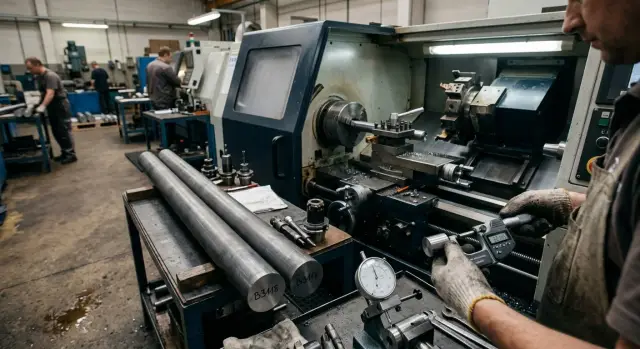
Why parts from the same batch behave differently
This is a familiar scene on the shop floor: the program is the same, the insert is the same, the cutting parameters haven't changed, and yet by the middle of the batch parts start acting differently. One part holds size easily, the next drifts by a few hundredths. The surface finish changes, and an insert that worked a long time yesterday begins to fail noticeably sooner today.
Such variation rarely appears suddenly. At first it's small: the diameter wanders a bit more, you have to correct for wear more often, the cutting edge leaves a different trace. If you look only at the finished part, it's easy to blame the machine, the chuck or a setup error. But the cause is often the bar stock itself.
One batch does not always mean completely uniform material. Hardness, straightness and chemical composition can vary within the same batch. For the machine these are not formalities but real differences in cutting. Cutting forces change, the chips form differently, and temperature in the cutting zone shifts. That leads to the most common symptoms: size drift, unstable surface roughness and unexpected loss of tool life.
It's useful to separate a one-off glitch from a repeating problem. If one part was ruined by a coolant interruption or a burr in the clamp, that's a single episode. If deviations return after a few blanks or persist through the batch, look deeper.
A simple sign that the material is at fault: you change the insert, check runout, adjust compensation, and the scatter still repeats. Sometimes it comes in waves: good parts at first, then size drifts, then it returns to normal. This is the most frustrating pattern because it easily hides as normal tool wear.
So at the first sign of repeating variation check not only the machine but also the incoming bar stock. Often that saves inserts and time spent on unnecessary readjustments.
What changes inside a single batch
A batch of bars is rarely perfectly uniform. The tag shows one size and one grade, but in practice one bar cuts calmly while the next heats the cutter more, drifts size and produces different chips. For turning this is enough to change tool life even within a single shift.
Usually there isn't a single cause. Several properties can vary inside a batch at once, each affecting cutting in its own way.
Hardness can differ slightly from bar to bar. Even a small shift is felt by the cutter immediately: edge load increases, wear accelerates, size drifts more often. Straightness is rarely perfect either. If a bar is slightly bowed, feed doesn't run as true and long parts show runout, vibration and extra diameter scatter. Chemical composition within tolerance can still behave differently. A small change in carbon, sulfur or alloying elements alters chip formation: one day chips are short and convenient, the next they elongate and spoil the surface. Add surface condition and internal stresses from rolling or drawing, and the differences become even more noticeable.
If a bar arrives for a run without incoming inspection, the shop often looks for the cause in the wrong place. The operator changes the cycle, fits a different insert, adjusts compensation, while the root cause remains in the material.
In practice it's simple. The first parts hold size, then the bar loaded into the chuck is from a different bundle and the process changes. Same machine, same program, same tool, but the cutter starts working harder and the finish cut gives different results.
Therefore don't rely on the certificate alone. It's much more useful to check a few real bars: measure hardness, assess straightness and do a short trial cut. This control takes little time but often saves an entire series and a set of inserts.
How hardness affects tool life and size
Even within one batch hardness isn't always uniform. The difference can be small, but during cutting it quickly becomes noticeable. One segment cuts easily, and after a few parts the edge dulls faster, the sound changes, and size starts to drift.
A harder region loads the cutter more. Cutting forces and heat increase, the edge dulls sooner. At first you won't see rejects, only small signs: cutting feels heavier, the surface loses a consistent shine, and the operator reaches for compensation more often despite no change in the program.
With softer material the picture is different. It may feel easier to cut, but size can still drift. Such a bar often produces long, stringy chips, causes edge build-up and notable smearing of the surface after a pass. As a result two parts from the same batch can hold or lose a few hundredths differently, even with identical parameters.
Usually the difference is noticeable early. If a zone is harder, cutting becomes harsher and more resonant, chips darken and break more abruptly. If the material is softer, chips elongate, edge build-up appears more often and spindle load becomes less steady.
When these signs repeat, don't immediately tweak compensation after every part. Otherwise the operator just masks the root cause and the batch scatter grows. Better take several hardness readings along the bar, at least spot-check hardness and watch how the same insert wears.
For the shop this is not trivial. A single hardness jump can cost an insert 20–30 minutes of life and start a chain of extra adjustments, repeated measurements and stoppages. Over a series this quickly turns into lost time and an argument about who shifted the size.
How straightness adds to batch variation
Even a small bend in a bar changes part behavior within the first seconds of machining. On the rack a bar may look fine, but when it spins the end starts to run out and the machine gets an extra deviation even before the first cut.
The problem doesn't stay only at the clamp. The chuck pulls the bar toward the axis, the guide bushing supports it in its own way, and both points are subjected to lateral load. Friction increases, noise appears, and the tool cuts the material under uneven conditions.
You won't always see this on the finished part right away. Often the first millimeters are fine, and then size starts to drift along the length. Cutting mode is unchanged, compensation untouched, tool unchanged, yet diameter in the middle and near the end walks by hundredths. On long, thin parts this shows up faster.
The reason is simple: with a bowed bar the rotation axis and the real workpiece axis don't coincide. The tool sometimes removes a little more, sometimes a little less. Add bar-feeder feed and batch variation usually increases, because each new segment enters work with its own residual bend.
How to tell a bar problem from a bad clamp
If the bar is at fault the pattern usually repeats with several signs:
- runout is visible before cutting;
- size drifts along the length, not only at the first segment;
- behavior changes after rotating the bar in the chuck;
- the bushing or feed channel shows friction marks.
With a bad clamp the picture is different. The same offset usually repeats from part to part, and after replacing jaws, cleaning the seat or checking the chuck the problem goes away. If the clamp is fine but scatter remains only on some bars from the batch, check straightness.
On the shop floor it looks very ordinary. The first part is within tolerance, the third is borderline, the sixth needs adjustment. There's a temptation to tweak compensation, although the error source isn't the machine. In that case it's more useful to measure runout before machining and compare several bars from the same delivery.
How chemical composition changes chips and surface finish
Even if the tag shows the same grade, the metal's behavior can still differ. For turning, a small variation in carbon content or alloying elements changes ductility, cutting zone heating and how the chip breaks.
In practice this is visible quickly. One bar cuts quietly and produces short chips, another at the same parameters draws long ribbons, wraps around the tool and leaves a rougher surface. Same machine, same program, different result.
The reason is simple: chemical composition affects how the metal deforms and fractures under the cutter. If the material is a bit more ductile, the chip won't break well and elongates. If the composition helps the chip break, the operator gets short segments, less wrapping and a smoother pass.
Surface finish often reacts to composition before incoming control detects anything. On paper variation may look small, but in cutting it turns into edge build-up, extra heat and fine tear-outs. Because of this, a part can look acceptable after a roughing pass and noticeably worse after finishing.
Operators usually notice the same signs: chips stop breaking, the surface becomes dull or torn, burrs on edges grow, and the tool dulls sooner. Then they have to change feed or speed mid-batch.
This type of variation is especially annoying in series production. The program is tuned for expected material behavior, but composition nudges the process off course. As a result one portion of the batch runs stably and another requires adjustment, even though the bar grade is formally the same.
A good example: two deliveries of the same steel grade for the same bushing. The first produces short chips and a clean finish after finishing cuts. The second, at the same parameters, leaves marks, draws long chips and dulls inserts faster. People often look for tool or machine faults first, while the source is the material.
Therefore the same grade doesn't guarantee the same behavior. If chips suddenly change and surface quality drops, first check the composition of the new batch as well as the cutting parameters.
How to check a batch before starting
A few simple checks before starting a series usually save more time than the adjustments later. Even a good bar can surprise if the pack contains variation in melt, hardness or straightness.
First, match the certificate with what's actually on the rack. Check grade, size and heat number. Similar items are easily mixed up, especially when remnants from a previous delivery lie nearby.
Then take not one but several bars from different places in the pack: top, middle and bottom. That way you spot variation earlier than when it reaches the machine.
Before the first part do four things. Measure hardness on several bars, check straightness with V-blocks or an indicator, run a short trial series of 3–5 parts and keep old and new batches separate. That's usually enough to avoid mixing different-behaving blanks in one setup.
Measure hardness for comparison, not for paperwork. If one bar is noticeably harder than the others, the cutter will almost always work harsher on it. First the sound changes, then load increases and after that size starts to drift.
Straightness works the same way. A bar can go into work without obvious problems but show runout at speed. Then the same program on the same machine yields different surface finish and tool life.
A trial series should be short but honest. Don't limit yourself to one part. If the first two parts are steady but the fourth shows drift or a whistle, you already see batch behavior rather than a random event.
Most time is lost on small things: not checking the heat number, testing only one bar, or mixing old leftovers with a new pack. Five to ten minutes on incoming inspection usually costs less than a tool change and sorting a whole series later.
A shop example with the same part
Imagine a simple bushing: 28 mm OD, 22 mm length, a typical series turning operation on a CNC lathe. Two packs of bar stock of the same grade arrive. On paper everything is identical, but the shift runs differently.
With the first pack everything is calm. The insert lasts nearly the whole shift, size stays steady, the operator follows the control chart and rarely touches compensation. Chips are predictable, the finish is clean.
With the second pack things change after a couple of hours. The edge dulls noticeably sooner, size begins to drift, and surface quality varies from part to part. The operator chases size with compensation every 15–20 pieces, but that only treats the symptom.
Often the problem is not the program or the insert. It's the bar and its incoming variation. Even within one grade differences in hardness and straightness become obvious quickly.
Suppose the first pack has more even hardness along the length and better straightness. The bar clamps calmly, load on the tool changes little, and cutting runs smoothly. The second pack is a bit harder and a bit straighter. On paper the difference seems minor, but on the machine it creates a different cutting regime.
Then the shop sees a familiar chain: the insert heats and dulls faster, size drifts after the tool warms up, feeding and clamping become less stable, and time spent measuring and compensating grows. Some parts go to scrap or rework.
If a bar even slightly bends, clamping is less even. Extra vibration appears, the actual load on the cutter changes, and size begins to wander through the batch. If hardness is higher or varies bar to bar, the tool alternates between easy and heavy cutting. From the outside the machine looks temperamental, while the root cause is incoming material.
That's how a small incoming variation turns into downtime. Instead of a normal run the shift spends time on adjustments, measurements and insert changes.
Where shops most often make mistakes
The most common mistake is simple: the shop increases cutting speed right away because the previous batch cut easily. If the new bar is slightly harder, the tool will sit down sooner and size drifts within the first hours. People blame the cutting mode when they should first check the material.
The second typical mistake is trusting the certificate alone. The certificate is needed but doesn't replace incoming inspection. It won't show how a specific bar behaves in the chuck, whether it has noticeable runout, whether its hardness is uniform across the batch or how it forms chips under real cutting.
Often size drift isn't the machine's fault. The operator sees variation and thinks of backlash, thermal stability or guide wear. The actual reason can be simpler: the bar runs out in the chuck, and parts shift in diameter or length from blank to blank. It's easy to miss that when everyone rushes to return size into tolerance.
Another costly mistake is replacing inserts one after another without recording the material batch number. Then the link between tool life and the specific delivery is lost. A week later nobody remembers which bar gave the insert 40 minutes and which only 15.
Confusion increases when bars from different deliveries are mixed near the machine. One leftover sits next to a new pack, the label rubs off, and blanks with different composition or straightness go into production. After that finding the cause of variation is almost impossible.
If size wanders without obvious logic, inserts wear inconsistently, chips change from part to part, and finish quality jumps within a shift — first separate batches, check bar runout in the chuck, measure hardness at least selectively and record the material number on the setup sheet. It's tedious work, but it often saves more time than yet another insert change.
Short checks before a series
Spend 15 minutes on incoming inspection rather than chasing size later. Even a good bar can cause variation if packs contain mixed deliveries or one bar differs noticeably.
Start simply. Match the batch number on the pack, the tag and the paperwork. If numbers don't match, don't put the material into the common series.
Then check more than one bar. Take the first and the last from the pack, and for a large batch add one from the middle. That usually reveals hidden variation quickly.
A useful minimum:
- compare hardness on at least two end bars;
- check straightness and runout;
- do a short trial cut on two bars and inspect chips;
- after swapping bars immediately measure a control dimension;
- write the result next to the batch number.
This check is especially useful on CNC turning machines where production runs fast and an error may stay unnoticed for a long time. The operator sees a stable program, the same parameters and the same tool, but after a bar change a part suddenly goes off by a couple of hundredths.
If any test gives a doubtful result, don't mix the material in one series. Isolate the suspect pack, make a separate setup for it and recheck calmly. That's cheaper than a box of mismatched parts and ruined inserts at the end of the shift.
What to do next in your shop
If a batch causes variation, don't write it off as randomness. A bar rarely forgives guesses: if you don't keep a simple batch record the same problems will reappear.
Start a batch card. You don't need fancy software. A spreadsheet in Excel or even a sheet at the machine is enough if the data is entered immediately rather than from memory after the shift.
Record only what helps decision-making later: batch and heat numbers, start date, hardness at several points, runout or straightness deviation, insert wear after the same number of parts and measured dimensions at critical locations.
After a few runs the picture usually clarifies. One batch holds size for 200 parts in a row, another starts to drift after the first dozens. With numbers side by side there's no need to argue about causes.
Keep steady bars separate from suspect ones before a long run. That saves both tooling and setup time. Reliable material goes to long runs and series work, while questionable packs are used for short jobs, additional checks or separate setups.
If a new batch behaves unusually compare three things first: material, tooling and parameters. Often the first reaction is to change feed or speed. Sometimes that helps, but not always. If hardness rose or composition produced different chips, a single parameter tweak won't fix the root cause.
It's helpful to keep a control set: one verified tool, one measurement route and one reference part. Then it's faster to see whether the variation source is the bar, the insert or the machine setup.
If such cases repeat often, consider broader questions: is your machine suitable for the material, blank length and required accuracy? At EAST CNC, the official representative of Taizhou Eastern CNC Technology Co., Ltd. in Kazakhstan, they work on these tasks together with equipment selection, commissioning and service. The blog east-cnc.kz also regularly covers practical machining issues and working with machines on series production.
The most practical action is simple: take the next delivery and run it through the same short incoming check. Even 20 minutes of inspection before a series often saves far more time later.
FAQ
How to tell if the variation comes from the bar stock and not the machine?
Look at repeatability. If you changed the insert, checked runout, adjusted compensation, but the size still drifts across several blanks in a row, check the bar stock and the heat number first, not only the machine.
What signs appear earliest?
Usually the diameter drifts by a few hundredths, the tool mark changes and the chips behave differently. Another early sign is the operator adjusting compensation noticeably more often, even though the program and tooling stayed the same.
Can a small hardness difference really ruin a series?
Yes. Even a small shift in hardness quickly increases edge load. In the shop this often looks like: the insert heats up faster, tool life drops earlier than usual, and size starts drifting in the middle of the run.
Why does diameter fluctuate because of a bent bar?
A bent bar causes runout as soon as it spins, so the tool removes metal unevenly along the part length. On long blanks the start may still be within tolerance, while the middle and end drift in diameter.
Why does the same steel grade produce different chips?
Because even within one grade the composition can vary slightly, and the cutter senses it immediately. One bar gives short chips and a clean finish, another produces long ribbons, builds up on the edge and leaves a rougher trace.
Is the certificate enough to start a batch?
No. A certificate is necessary but not sufficient. Check the heat number, take several bars from different places in the pack, test hardness and straightness, then run a short trial of 3–5 parts.
How many bars should be checked before a series?
For a small pack two or three bars from different spots usually suffice. For larger batches check top, middle and bottom of the pack to reveal hidden variation before starting the run.
What to do if size drifts in the middle of a batch?
Don't change compensation after every single part without investigating. Better isolate the current bar or bundle, measure runout, compare hardness with neighboring bars and run a short repeat test to see if the problem recurs.
What is best to record per batch to find the cause later?
Record only what helps compare batches later: heat number and batch ID, start date, hardness at several points, runout or straightness deviation, insert wear after the same number of parts and critical dimensions. With that data you can quickly identify which material caused issues.
Can I mix old and new deliveries near the machine?
No. Do not mix leftovers from different deliveries in one setup. Even with the same labeled grade, old and new supplies can behave differently in size control, chip formation and tool wear, and then you'll lose the trace of the cause.